

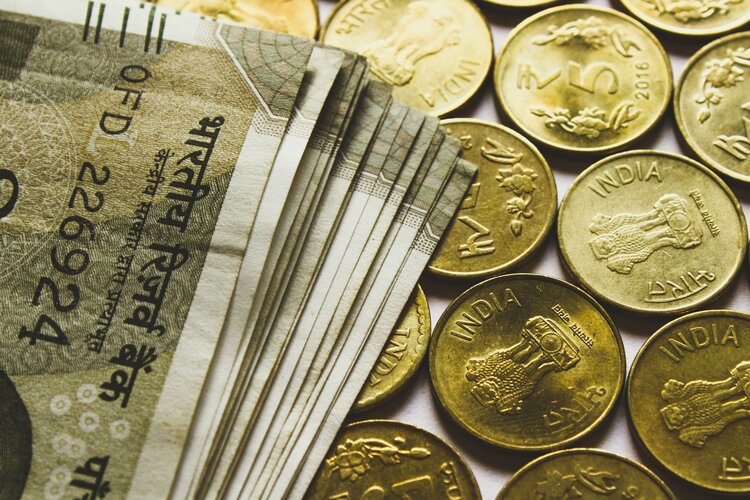
- Indian Rupee trades on a softer note amid the light trading volume.
- Fitch Ratings predicts India’s robust economic growth will boost corporate demand, offsetting global market challenges.
- Fitch Ratings anticipated India’s GDP growth of 6.5% during fiscal 2024–25.
Indian Rupee (INR) drifts lower on Wednesday amid the holiday season’s thin trading. In its latest research report on ’India Corporates: Sector Trends 2024’, Fitch Ratings forecasted that India’s resilient economic growth will boost the performance of the corporate sector and offset weaknesses from global market challenges. Furthermore, the leading credit rating agency stated that India is expected to be the world’s fastest-growing country, with resilient GDP growth of 6.5% during the fiscal 2024-25.
Despite robust macroeconomic dynamics, investors will monitor the developments surrounding food inflation and how the impending general elections in 2024 will eventually play out in shaping future economic policies. Later this week, the risk sentiment is expected to continue influencing currency movements amid the quiet session in the last week of 2023.
Daily Digest Market Movers: Indian Rupee remains strong despite global risks
- India’s current account deficit narrowed to $8.3 billion in the second quarter of 2023-24, according to the Reserve Bank of India (RBI).
- The market capitalization of India’s stock markets has surpassed $4 trillion, with the benchmark Nifty50 returning 17% this year.
- India’s total trade in GDP has expanded from around 15% in the early 1990s to nearly 50% in 2022.
- India’s foreign currency reserves were at $606.9 billion on December 8, 2023, ranking fourth among major foreign exchange reserve-holding countries, and climbed by $28.4 billion between 2023 and 2024.
- The US Dallas Fed Manufacturing Business Index for December dropped 9.3 versus -19.9 prior. November’s Chicago Fed National Activity Index arrived at 0.03 from the previous reading of a 0.49 drop.
- November’s Core Personal Consumption Expenditures Price Index (Core PCE) rose 0.1% MoM and grew 3.2% YoY. Meanwhile, the headline PCE came in at -0.1% MoM and 2.6%. YoY.
Technical Analysis: Indian Rupee clings to the longer-term range theme
Indian Rupee trades weaker on the day. The USD/INR pair remains stuck within a familiar multi-month-old trading band of 82.80–83.40. Technically, the path of least resistance is to the upside as the pair holds above the key 100-period Exponential Moving Average (EMA) on the daily chart. However, the shorter-term bullish outlook looks vulnerable, hinted by the 14-day Relative Strength Index (RSI) that stands below the 50.0 midpoint.
Any follow-through buying above the upper boundary of the trading range at 83.40 will pave the way to the year-to-date (YTD) high of 83.47, en route to the 84.00 psychological mark. On the other hand, the round figure at 83.00 acts as a key support level for USD/INR. The next contention level is seen near the confluence of the lower limit of the trading range and a low of September 12 at 82.80. A decisive break below 82.80 will see a drop to a low of August 11 at 82.60.
US Dollar price in the last 7 days
The table below shows the percentage change of US Dollar (USD) against listed major currencies in the last 7 days. US Dollar was the strongest against the Pound Sterling.
| USD | EUR | GBP | CAD | AUD | JPY | NZD | CHF | |
| USD | -0.56% | 0.03% | -1.12% | -1.12% | -0.88% | -1.05% | -0.82% | |
| EUR | 0.55% | 0.57% | -0.57% | -0.56% | -0.33% | -0.50% | -0.27% | |
| GBP | -0.02% | -0.57% | -1.13% | -1.14% | -0.89% | -1.06% | -0.84% | |
| CAD | 1.11% | 0.54% | 1.11% | 0.00% | 0.24% | 0.06% | 0.27% | |
| AUD | 1.09% | 0.55% | 1.11% | 0.00% | 0.22% | 0.06% | 0.29% | |
| JPY | 0.88% | 0.33% | 0.87% | -0.23% | -0.25% | -0.15% | 0.05% | |
| NZD | 1.04% | 0.49% | 1.06% | -0.06% | -0.08% | 0.17% | 0.22% | |
| CHF | 0.85% | 0.27% | 0.83% | -0.29% | -0.29% | -0.07% | -0.22% |
The heat map shows percentage changes of major currencies against each other. The base currency is picked from the left column, while the quote currency is picked from the top row. For example, if you pick the Euro from the left column and move along the horizontal line to the Japanese Yen, the percentage change displayed in the box will represent EUR (base)/JPY (quote).
Indian economy FAQs
The Indian economy has averaged a growth rate of 6.13% between 2006 and 2023, which makes it one of the fastest growing in the world. India’s high growth has attracted a lot of foreign investment. This includes Foreign Direct Investment (FDI) into physical projects and Foreign Indirect Investment (FII) by foreign funds into Indian financial markets. The greater the level of investment, the higher the demand for the Rupee (INR). Fluctuations in Dollar-demand from Indian importers also impact INR.
India has to import a great deal of its Oil and gasoline so the price of Oil can have a direct impact on the Rupee. Oil is mostly traded in US Dollars (USD) on international markets so if the price of Oil rises, aggregate demand for USD increases and Indian importers have to sell more Rupees to meet that demand, which is depreciative for the Rupee.
Inflation has a complex effect on the Rupee. Ultimately it indicates an increase in money supply which reduces the Rupee’s overall value. Yet if it rises above the Reserve Bank of India’s (RBI) 4% target, the RBI will raise interest rates to bring it down by reducing credit. Higher interest rates, especially real rates (the difference between interest rates and inflation) strengthen the Rupee. They make India a more profitable place for international investors to park their money. A fall in inflation can be supportive of the Rupee. At the same time lower interest rates can have a depreciatory effect on the Rupee.
India has run a trade deficit for most of its recent history, indicating its imports outweigh its exports. Since the majority of international trade takes place in US Dollars, there are times – due to seasonal demand or order glut – where the high volume of imports leads to significant US Dollar- demand. During these periods the Rupee can weaken as it is heavily sold to meet the demand for Dollars. When markets experience increased volatility, the demand for US Dollars can also shoot up with a similarly negative effect on the Rupee.
Read the full article here