

Bank stocks have finally seen a significant rally. To achieve more gains, lenders will have to prove the market was right in bidding the shares higher.
The
SPDR S&P Bank
exchange-traded fund is up about 55% to about $48 from a low this year of around $31, hit in early May. Driving the gain at first was expectations that larger banks would benefit from this year’s chaos in regional banking. That proved true:
JPMorgan Chase,
for example, bought First Republic. which has boosted earnings because the smaller bank was operating profiitably until concerns about solvency hit the sector this spring.
The stocks have risen more recently because short-term interest rates have dropped as expectations mount that the Federal Reserve will respond to falling inflation by cutting interest rates. Lower rates are expected to keep demand for goods and services increasing, which means that banks can make more loans.
That was the easy part. Now, investors need clear signs that things are going right in terms of earnings.
The expectation right now is that a mix of competing factors will ultimately equate to modest revenue growth in 2024, while profit per share of the ETF is expected to drop just over 4% to $4.67 next year. Analysts expect 2.1% sales growth for the bank ETF.
The logic is that while lower rates on long-dated loans would weigh on revenue growth, loan volume could rise. Lending is expected to be less profitable as banks charge less for loans, while pay for staff is expected to rise a bit.
That doesn’t mean bank stocks can’t continue to gain ground. Short-term rates could keep falling, which would brighten the outlook for margins because banks borrow short-term money to make loans. Demand for loans could benefit as well.
If management teams sound confident in these outcomes as they discuss the outlook after reporting the earnings, the stocks could rise.
That is especially possible because they still trade cheaply. The bank ETF trades at about 9.9 times the aggregate per-share earnings expected over the coming 12 months. It is a bit more than half of the S&P 500’s P/E ratio, at just over 19 times, and near the low end of the range of discounts at which the sector has traded historically.
The risk is that total net interest income and earnings could end up disappointing the market if rates on loans made drop too much and the volume of borrowing doesn’t grow enough. That is an underappreciated possibility, wrote
UBS
analyst Erika Najarian. But if lower rates are ultimately a positive for banks’ bottom lines, the stocks could move higher.
Either way, maybe “the investment banking side will be more attractive than consumer banking,” said Lorne Bycoff, co-founder of the Bycoff Group, an asset manager.
Goldman Sachs Group
and
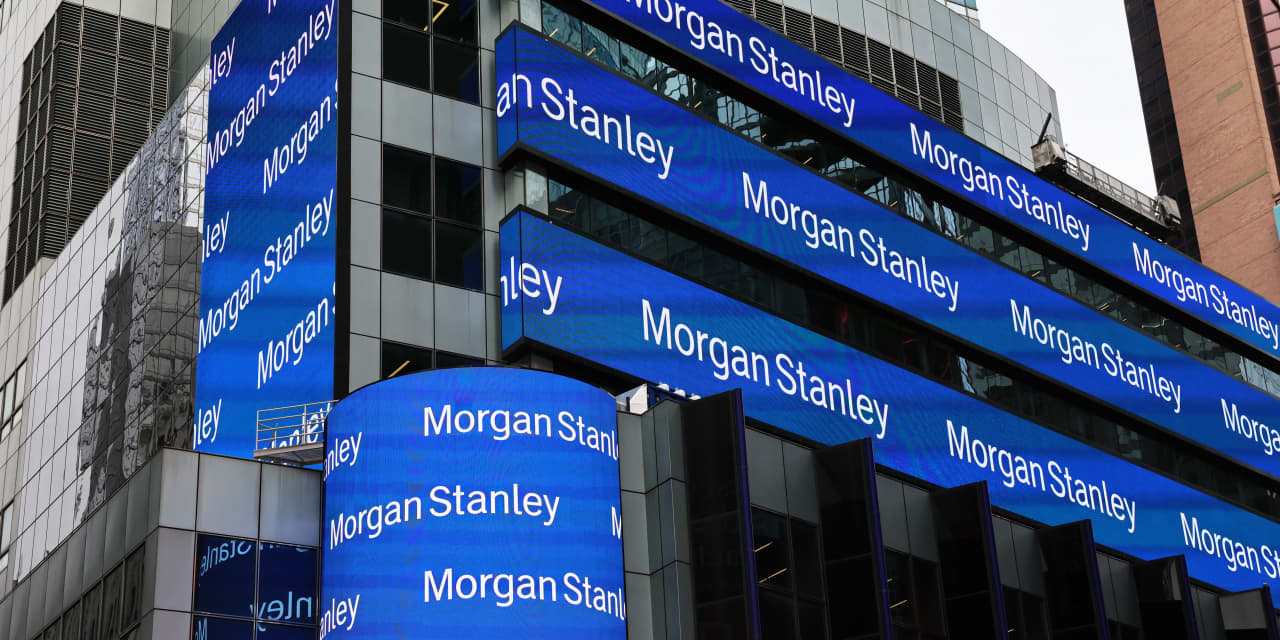
Morgan Stanley,
for instance, are less exposed to lending and more to trading and mergers and acquisitions.
Deal activity should bounce back next year after a down 2023. It costs less now to borrow the money to aquire a company than it did for most of the year, while earnings at most businesses are expected to keep rising, a combination that makes mergers more attractive. Rebounding stock and bond markets will also help the investment banks’ revenue from trading and wealth management.
Goldman’s revenue is expected to rise 10% to $50.8 billion next year, while earnings per share are expected to increase 50%. Morgan Stanley is expected to see 4% sales growth to $56.4 billion, while EPS could grow 18%, according to FactSet data.
The stocks could be the stars of the sector if the banks deliver.
Write to Jacob Sonenshine at [email protected]
Read the full article here