

Let’s start the new year with a feel-good topic to bring people together: the upcoming U.S. presidential election.
The contest looks electric—and by “electric” I don’t just mean that the two leading candidates have a combined age that predates distributed electricity by 14 years. I mean that political pitches could ring up $15.9 billion for the advertising industry, according to one of its largest firms, GroupM. That would be more than a 30% increase from the last presidential cycle, and five times the spending on the recent midterms.
It’s one of the reasons that Wall Street is mostly bullish on shares of
Trade Desk.
Another reason is that the company is a key player in placing ads on streaming services, which have been a pocket of fast growth for the industry, and are a priority for political campaigns. Investment banks Truist and Macquarie recently called Trade Desk stock a favorite. D.A. Davidson just added Trade Desk to its list of “Best of Breed” companies. The shares doubled the return of the S&P 500 index in 2023. Among 35 analysts who cover them, 25 say to buy. But there are some key risks for investors to consider, which I’ll come to.
Trade Desk was founded in 2009 by Jeff Green, who turned work experience in internet advertising and stock trading into the first online advertising exchange, then sold that one to
Microsoft,
and later left to start a more successful one with a fellow Microsoft alum. Investors who bought into Trade Desk on its first day of trading in September 2016 have since made more than 20 times their money. Revenue since then has gone from about $200 million to approaching $2 billion. It’s still growing at about 20% a year.
One selling point for Trade Desk is that its vast marketplace and real-time pricing for ads can help buyers uncover value and avoid waste, while layering on their own data to improve returns on investment. As a so-called demand-side platform, Trade Desk doesn’t control its own supply of webpages and videos for ad placement. That makes it an alternative to industry leader
Alphabet,
which owns YouTube and dominates in search, and
Amazon.com,
which has parlayed its retail reach into a vast advertising business.
Historically, Trade Desk has worked with advertising agencies instead of going directly to brands. More recently, it has partnered with companies like
Walmart
and
Target
looking to expand in advertising.
One reason for bullishness is streaming. Viewers are steadily leaving legacy cable bundles to watch shows online. Streaming services are under pressure to hold down subscription prices while funding content budgets with something more than cash burn.
Netflix
and
Walt Disney’s
Disney+ have introduced ads in streaming, joining other big platforms. Most companies report higher revenue per user with cheap, ad-supported subscriptions than with pricier ad-free ones.
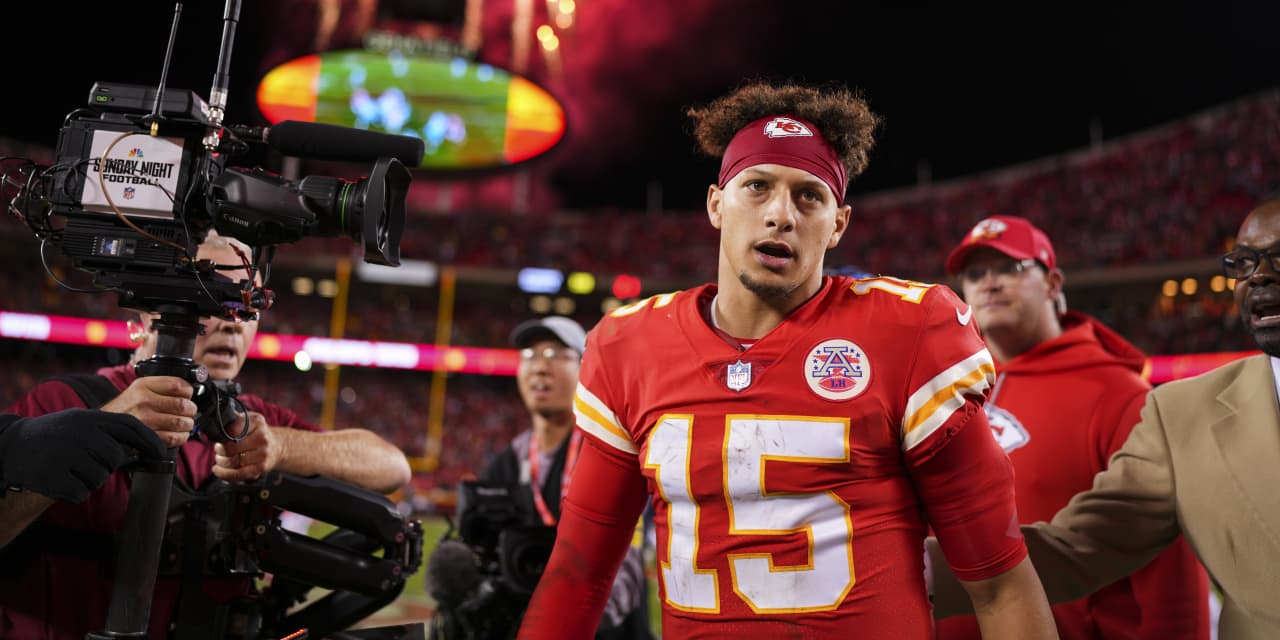
Trade Desk’s perceived independence has made it a key conduit for ad dollars headed to streaming. In its latest earnings report, Trade Desk highlighted a recent surge in customers using it to place ads in NBC’s Sunday Night Football livestreams, plus a deal that will allow partner Walmart to place targeted ads on Peacock sports, and track subsequent purchases online or in stores. Truist reckons that streaming now brings in a third of the company’s revenue, and is growing faster than the rest of its business.
There is also plenty of room for overseas growth, especially in streaming. Trade Desk gets a low- to midteens percentage of revenue from international markets today. For other ad platforms, the figure is 40% to 50%.
What’s not to like? The stock price is up there, even for a fast grower. It works out to 18 times projected 2023 revenue, versus less than three times revenue for the S&P 500, and six times for Alphabet. If long-term forecasts are reliable, Trade Desk could more than double its revenue over the next four years. Even so, despite all of those Wall Street buy recommendations, the average price target is $75, around where shares traded recently.
Then there are the streaming skeptics. Last quarter, when Trade Desk guided toward 22% fourth-quarter growth, not counting politics, a downshift from 30%-plus growth two years prior, the shares lost 17% in a day. Bulls called it management conservatism. But investment bank Benchmark, which has a Sell rating on shares, questioned whether it was “fundamentally driven.” Gains in streaming market share have helped Trade Desk outperform the ad industry for years, but growth “at some point must naturally revert to the mean,” Benchmark wrote. As that happens, the streaming momentum that led shares up “will do the same down.”
Benchmark’s 2024 revenue growth estimate of 14% for Trade Desk is six percentage points below the Street consensus. Its price target of $32 implies that shares could be cut by more than half. And this, the bank points out, doesn’t factor in cookie trouble. Cookies are small files that save online browsing information, and historically are a key way for advertisers to target pitches. Alphabet will phase them out of its Chrome browser next year. Trade Desk is banking on next-generation tracking technology called UID2, but its partners must go along. It cites improved advertising outcomes for the new standard. Benchmark says the handoff from cookies to UID2 next year might not be seamless.
If waiting on Trade Desk stock in 2024 sounds dissatisfying while all that political cash is sloshing around, here’s an alternative. I recently wrote about Amazon, and what might become a record swell of free cash flow in years ahead, making the stock cheaper than it appears. But I didn’t mention advertising as a rising third profit center behind retail and cloud. It, too, just announced that its Prime Video streaming service is getting ads, but there’s a twist.
Netflix and Disney+ gave existing customers the option of trading down to cheaper ad-supported plans. Amazon is giving ads to everyone, with the option of trading up to stay ad-free. Customer inertia will win out, predicts Macquarie, leaving Amazon, which ranks behind only YouTube and Netflix in viewing time, an ad giant in streaming from day one.
Write to Jack Hough at [email protected]
Read the full article here