

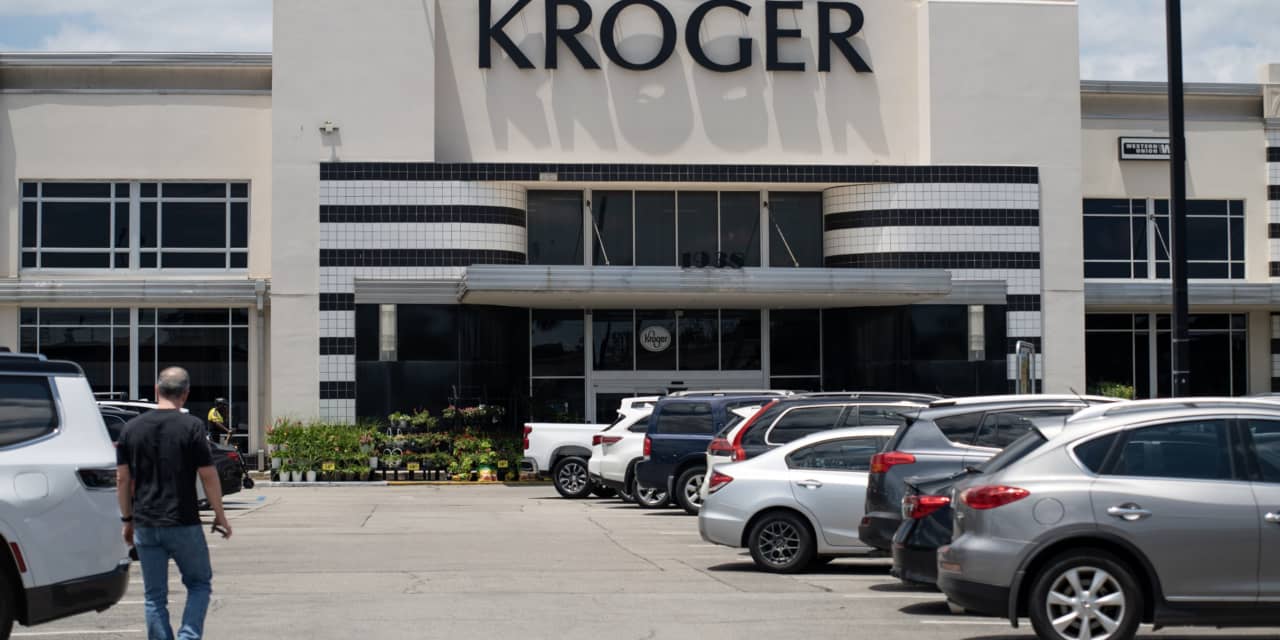
Two of America’s biggest grocery companies are seeking to merge in response to competition from
Amazon.com
and big-box retailers such as
Walmart.
But more than a year after the deal was unveiled, it still isn’t clear whether it will go ahead.
In October 2022,
Kroger,
parent of Ralphs and Food 4 Less, proposed to acquire
Albertsons,
which owns Safeway and Vons, for $24.6 billion. The deal has faced fierce opposition from various parties, who worry the combined company would have too much power to squeeze not only consumers, but also workers, suppliers, and competitors.
The Federal Trade Commission, the agency responsible for antitrust enforcement, is expected to decide whether to block the deal as early as this month. The deadline, already pushed off from mid-December to mid-January, might now shift to February, Axios reported last week, citing people familiar with the matter.
The FTC declined to comment. Kroger and Albertsons didn’t respond to requests for comment.
With more than 2,700 locations across the U.S., Kroger is the second-largest grocer, ranking behind Walmart, which has more than 5,200 domestic locations. According to
BMO
Capital Markets analyst Kelly Bania, Walmart makes up about 25% to 30% of the grocery market, while Kroger has a 10% to 11% share.
Costco
and Albertsons have single-digit percentages.
A Kroger-Albertsons merger would create a significantly larger company with nearly 5,000 stores and more than 700,000 workers, though it would still be smaller than Walmart. The two grocers say that coming together would allow them to compete more effectively, offer lower prices, and pay higher wages.
Skeptics think the opposite would happen.
The United Food & Commercial Workers Union, which represents thousands of workers at the two grocery chains, has opposed the deal. Although the grocers promised to honor existing bargaining terms, the union worries the merger might make it harder to negotiate future contracts with an even bigger employer.
There are also concerns that farmers and suppliers might be forced to give the merged company better prices and terms of trade because they can’t afford to lose such a big customer. That could create an uneven playing field for the smaller, independent grocers.
“We worry that the deal will give [Kroger and Albertsons] the same kind of bargaining leverage over suppliers that’s been exploited by Walmart over the years,” said Chris Jones, chief government relations officer at the National Grocers Association, which represents independent grocers.
If the grocer passes on those lower prices to consumers, it might not be a bad thing in the short term. But if smaller rivals are pushed out as a result, the dominant player would likely jack up prices due to a lack of competition, said Jones.
In Western states like Washington, California, and Arizona, especially, Kroger and Albertson already have a significant overlap. Some lawmakers are worried that shoppers in certain regions might be left with even fewer options after the merger.
The grocers have agreed to sell 413 stores to a third company to address the antitrust concerns. But it is questionable whether that would help maintain competition over the longer term.
When Albertsons merged with Safeway in 2015, it sold off 168 stores to get the deal through the FTC. Within months, one of the buyers filed for bankruptcy and Albertsons bought back a number of the stores at a discount.
Kroger and Albertsons argue that C&S Wholesale Grocers, who would buy the 413 stores to be divested this time, has a strong balance sheet and sound business plan. They say they would ensure that no stores are closed and that no front-line employees lose their jobs as a result of the merger.
There is no question that things are tough for grocers as they stand. Sales volume has been declining as consumers hold back in response to higher prices, while value retailers like Walmart and Costco have been gaining market share. BMO’s research suggests the gap between prices for groceries at Walmart and others has widened since the rate of inflation took off in 2021, says Bania.
Kroger’s revenue fell from a year earlier in the quarter ended in October, even though prices of most goods it sells have gone up. Albertsons’ operating profit shrank on a year-over-year basis for three straight quarters before rebounding in the three months ended in November.
Both Kroger and Albertson stocks have been trading sideways since the merger plan was announced. Where they go from here will depend on the FTC’s decision and whether the regulator asks for divestitures of more stores. An outright denial could send Albertsons stock lower, Bania says.
Write to Evie Liu at [email protected]
Read the full article here