

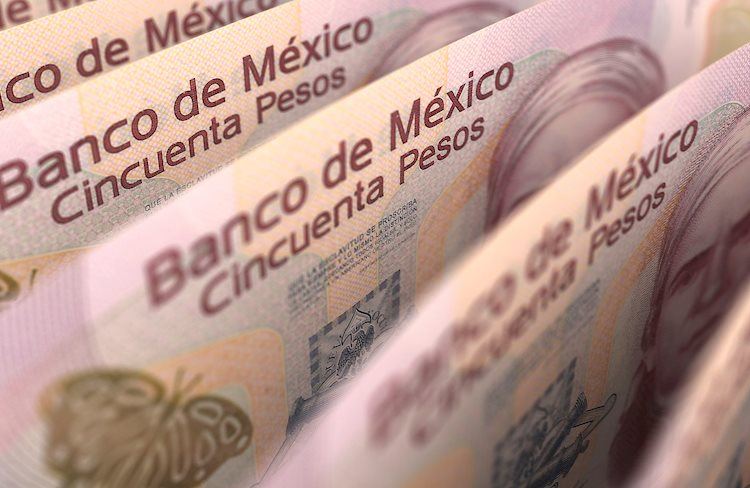
- Mexican Peso tumbles as US CPI data exceeds forecasts, boosting the US Dollar.
- Unexpectedly high US inflation in January shifts market outlook, questioning the Fed’s upcoming interest rate decisions.
- Mexico’s economic calendar is light on Tuesday with attention turning to next week’s Retail Sales, GDP and inflation reports.
- Banxico’s Rodriguez Ceja emphasizes ongoing disinflationary measures in Mexico, aiming to manage inflation effectively.
The Mexican Peso has weakened against the US Dollar following a US inflation report that exceeded expectations. This unexpected development led investors to adjust their forecasts regarding the timing of the US Federal Reserve’s (Fed) policy easing, shifting expectations from May to June. Consequently, the US Dollar has made a recovery, with the USD/MXN exchange rate climbing to 17.19, marking an increase of 0.77%.
The US Bureau of Labor Statistics revealed that January’s headline inflation was higher than expected but below December’s data. That sponsored a leg up in the USD/MXN pair, which could open the door for further upside. Across the border, releases on the Mexican economic calendar remain absent with the next tranche of data on schedule for next week. That series will be led by Retail Sales, Gross Domestic Product (GDP) and mid-month inflation data.
In the meantime, Bank of Mexico (Banxico) Governor Victoria Rodriguez Ceja commented in an interview with El Financiero that the disinflationary process will continue despite the recent uptick while adding that the Mexican central bank remains committed to tackling inflation.
Daily digest market movers: Mexican Peso on defensive after US CPI data
- The US Department of Labor revealed January’s inflation data. The Consumer Price Index (CPI) rose by 3.1% YoY, down from 3.4%, exceeding estimates of 2.9%.
- The Core CPI, which excludes volatile food and energy prices, remained steady at 3.9%, surpassing the expected decrease to 3.7%, on an annual basis.
- The USD/MXN soared as interest rate futures traders slashed bets that the Fed will cut rates in May, pushing the odds for a 25-basis-point cut below 50%. According to the CME FedWatch Tool, the first rate cut is seen in June, with odds standing at 52.1%.
- US 10-year Treasury note yields rose ten basis points to 4.289%, while the US Dollar Index (DXY) rallied to a three-month high of 104.87, shy of cracking the 105.00 figure.
- Mexico’s central bank revised their inflation expectations to the upside for the period from Q1 to Q3 of 2024, expecting inflation to converge toward 3.5% in Q4, based on the latest monetary policy statement.
- Last Thursday, INEGI revealed that in January, Mexico´s Consumer Price Index (CPI) rose by 4.88% YoY, while underlying inflation moderated to 4.76%.
- Atlanta Fed President Raphael Bostic said the Fed must be resolute and added that he’s “laser-focused” on inflation. At the same time, Dallas Fed President Lorie Logan noted that there’s no urgency on cutting rates.
Technical analysis: Mexican Peso trips down as USD/MXN edges back above 17.15
The USD/MXN shifted toward a neutral bias as buyers reclaimed the 50-day Simple Moving Average (SMA) at 17.11. A daily close above that level could open the way to challenge the 17.20 area, followed by the 200-day SMA at 17.29. Further upside is seen at the 100-day SMA at 17.40. The Relative Strength Index (RSI) trends steadily above 50 as the pair has seen a jump in momentum favoring buyers.
Conversely, if sellers drag the exchange rate below the 50-day SMA, the exotic pair could extend its losses toward the 17.00 figure. A breach of the latter will expose last year’s low of 16.62.
USD/MXN Price Action – Daily Chart
Inflation FAQs
Inflation measures the rise in the price of a representative basket of goods and services. Headline inflation is usually expressed as a percentage change on a month-on-month (MoM) and year-on-year (YoY) basis. Core inflation excludes more volatile elements such as food and fuel which can fluctuate because of geopolitical and seasonal factors. Core inflation is the figure economists focus on and is the level targeted by central banks, which are mandated to keep inflation at a manageable level, usually around 2%.
The Consumer Price Index (CPI) measures the change in prices of a basket of goods and services over a period of time. It is usually expressed as a percentage change on a month-on-month (MoM) and year-on-year (YoY) basis. Core CPI is the figure targeted by central banks as it excludes volatile food and fuel inputs. When Core CPI rises above 2% it usually results in higher interest rates and vice versa when it falls below 2%. Since higher interest rates are positive for a currency, higher inflation usually results in a stronger currency. The opposite is true when inflation falls.
Although it may seem counter-intuitive, high inflation in a country pushes up the value of its currency and vice versa for lower inflation. This is because the central bank will normally raise interest rates to combat the higher inflation, which attract more global capital inflows from investors looking for a lucrative place to park their money.
Formerly, Gold was the asset investors turned to in times of high inflation because it preserved its value, and whilst investors will often still buy Gold for its safe-haven properties in times of extreme market turmoil, this is not the case most of the time. This is because when inflation is high, central banks will put up interest rates to combat it.
Higher interest rates are negative for Gold because they increase the opportunity-cost of holding Gold vis-a-vis an interest-bearing asset or placing the money in a cash deposit account. On the flipside, lower inflation tends to be positive for Gold as it brings interest rates down, making the bright metal a more viable investment alternative.
Read the full article here