

Consumers tightened their belts more than expected in January, as cold weather and higher interest rates hampered demand.
Retail sales dropped 0.8% from December, a a steeper decline than economists’ forecast for a 0.1% dip. December’s sales were revised down to a 0.4% gain from 0.6%.
Still, spending was 0.6% higher than in January 2024.
“Today’s retail sales report suggests that consumers are being cautious about their spending despite a gradual uptick in consumer confidence,” said Tom McGee, CEO of the International Council of Shopping Centers.
Economists had been bracing themselves for a softer headline figure this January. The weather, increased costs to borrow, and lower gasoline prices were all expected to weigh on consumer spending.
But few expected Americans to pull back as much as they did. Even core retail sales, a metric that strips away sales of cars and fuel, which are often more volatile, fell 0.5%. Economists had expected a 0.3% uptick.
“From this report, we see that consumers are likely becoming more price conscious and perhaps, this is the first sign that the spending splurge is nearing the end,” wrote Jeffrey Roach, chief economist at LPL Financial.
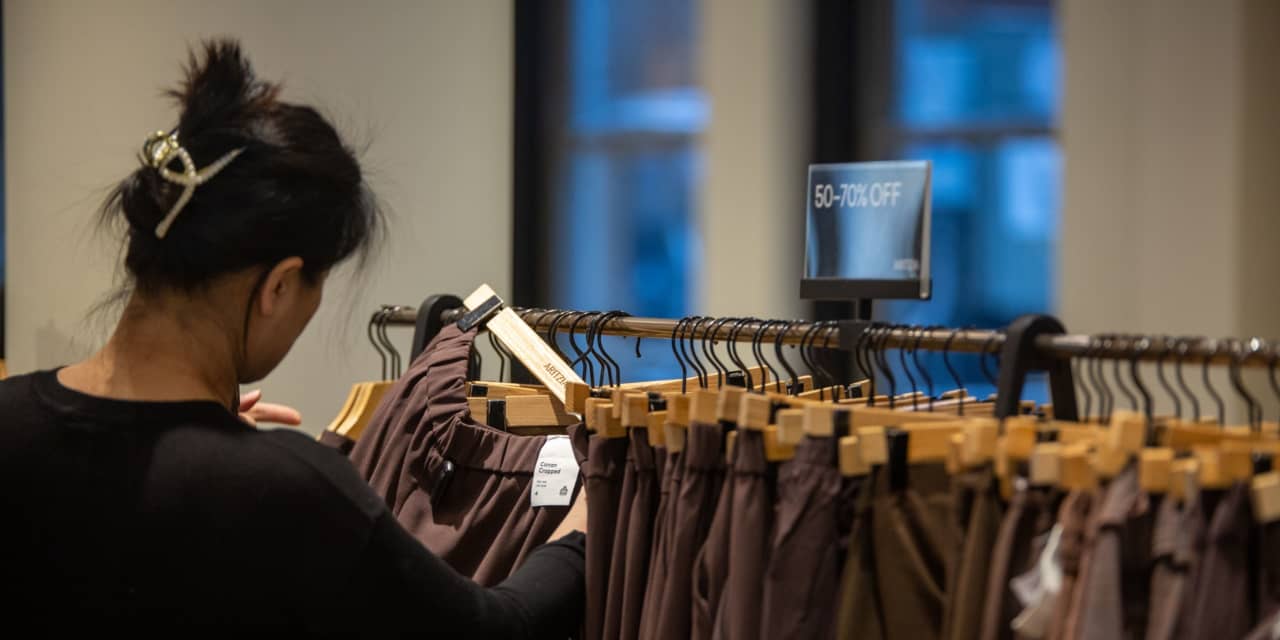
Spending was lower across various categories, but discretionary areas were especially weak. Car dealerships, home improvement retailers, sporting goods and hobby stores, clothing retailers, and electronics and appliances stores saw month-over-month declines in spending. Even non-store retailers, which include most e-commerce businesses, saw a 0.8% dip following months of steady outperformance.
Restaurants and bars, department stores, grocery stores, and home furnishing retailers were some of the only sectors that saw higher spending last month.
“Discretionary goods volumes will likely be down in 2024, the result of challenging multi-year comparisons since the onset of the pandemic and rising consumer headwinds including reduced savings, rising rates, and the compound impact of high inflation,” wrote David Silverman, a senior director at Fitch Ratings.
There were several other factors that weighed on spending, said Robert Frick, corporate economist with Navy Federal Credit Union. December’s levels were high because of holiday shopping. Cold weather and unfavorable seasonal adjustments didn’t help, he added.
The Census Bureau frequently tweaks the way it adjusts for seasonality, and the current methodology likely helped pad December’s report—at the cost of January’s figures, noted Michael Gapen, a U.S. economist at BofA Securities, ahead of the report.
Last year, the opposite was true. Seasonal adjustments helped deliver a stronger-than-expected report in January, with sales jumping 3% from December.
Higher interest rates have also discouraged consumers from splurging on new cars. Sales of cars and light trucks fell about 7% in January from December, according to data the Bureau of Economic Analysis released earlier this month.Thursday’s retail-spending statistics make the same point: Sales at motor-vehicle and parts dealers dipped 1.7% from December, leaving them 1.6% lower than they were a year ago.
Frick, the Navy Federal Credit Union economist, believes that while the report was weak, it doesn’t imply a fundamental shift in consumer spending.
“Consumer spending likely won’t be great this year, but with real wage gains and increasing employment it should be plenty to help keep the economy expanding,” he said.
Write to Sabrina Escobar at [email protected]
Read the full article here