

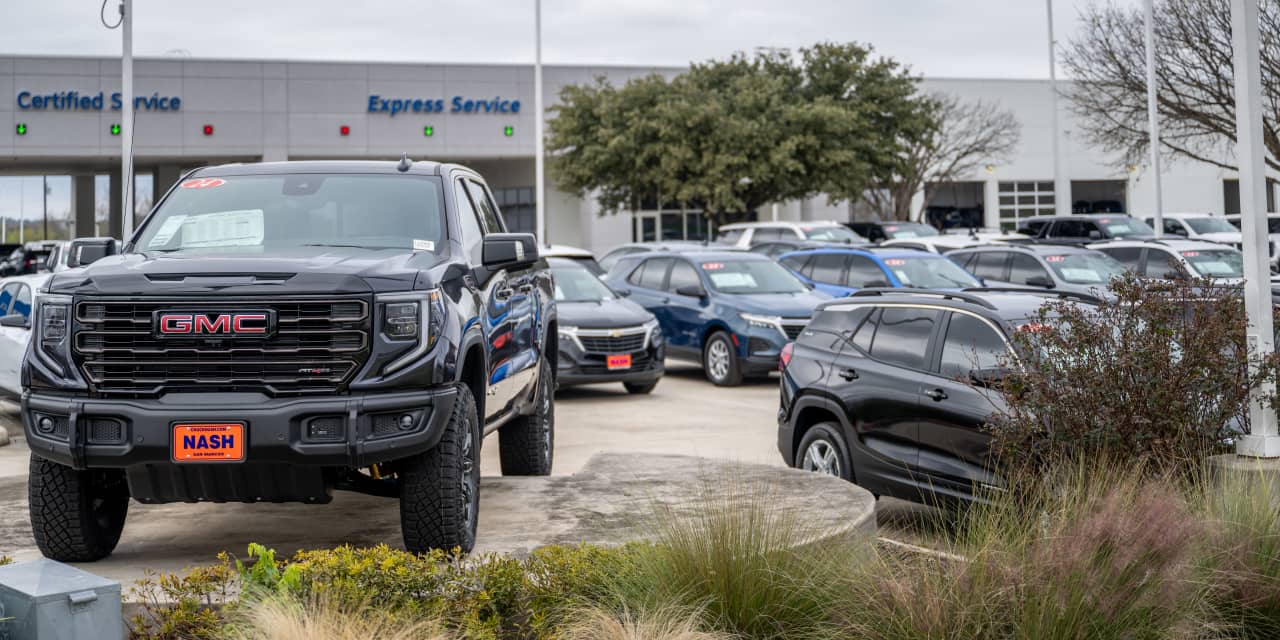
The high cost of new cars has been a thing with buyers—and automotive investors—for a few years, since Covid-19 disrupted the global economy.
Now, though, a shift is happening. New cars are becoming more affordable—and that’s good for car buyers.
It’s even good for automotive investors, who tend to worry too much about the absolute level of pricing.
The average cost of a new car in the U.S. is roughly $47,000, up about $10,000 from prepandemic levels.
That higher price, combined with higher interest rates, means a typical car payment has increased about 33% since before the pandemic.
But interest rates are just off peak levels and the average price of a new car has dropped almost $3,000 from highs reached in December 2022.
That’s improved affordability.
And wages have increased. Average wages in the U.S. have risen about 4% over the past year, while new-car prices are down about 5%. Since late 2019, before Covid, wages are up about 21%, while the price of a new car is up about 29%.
Barron’s looked at wages, interest rates, and new-car prices to calculate a new-vehicle affordability index. Our index averaged about 56 in the second half of 2019. It hit almost 66 in December 2022. Today, the index is at 61—right in the middle of that range.
Buyers can expect more improvement in coming months, said Rebecca Lindland, senior director of industry data, insights, and cars commerce at
Cars.com,
while offering some tidbits about new-car buyers.
“Almost half of all shoppers plan to spend under $30,000 for a new car,” she said, adding that only 13% of new cars are priced under $30,000. “There still is a significant shortage, but [low-price availability] is 63% better than it was last year at this time.”
As dealer inventory and new-car production continue to recover, Lindland sees the new-car market shifting from the seller’s market of the past few years to a “buyer’s market.”
That should comfort those looking for a new ride. It should even comfort investors. Another 3%, or $1,500, off the price of a new car—with a wage rise of 3% and a percentage-point drop in interest rates—would restore new-car affordability to average levels of 2019.
That would leave new-car prices at roughly $46,000, about $8,500 above prepandemic levels.
There is no reason to expect a new-car price crash and there is nothing to fear in another price decline of some 3%.
Most auto makers have guided pricing lower for this year, while projecting strong full-year profitability.
General Motors
assumes a 2% to 2.5% pricing headwind. It also expects to generate about $13 billion in full-year operating profit, up from $12.4 billion generated in 2023.
Fears of declining profits are one reason GM stock trades for 4.6 times estimated 2024 earnings, down from an average of closer to 6 times over the past few years.
Improving affordability is another sign the industry continues to recover from Covid-induced volatility. There are still things that aren’t normal, though.
Used-car inventory remains a problem. Fewer leased vehicles are coming off lease because there were fewer cars sold than a typical year in 2020, 2021, and 2022.
There are about 10 million “missing” cars, said Lindland, adding that time is the solution to that problem.
The lower used inventory is one reason used-car pricing might hold in better than investors expect. Used-car pricing is always linked to new-car pricing—buyers always have the choice to go new or used.
About 36 million used cars were sold in the U.S. in 2023, just lower than the amount sold in 2022, according to Cox Automotive. About 15.5 million new cars were sold in 2023, up from 13.9 million in 2022. Before Covid, Americans were buying roughly 17 million new cars a year.
Write to Al Root at [email protected]
Read the full article here