

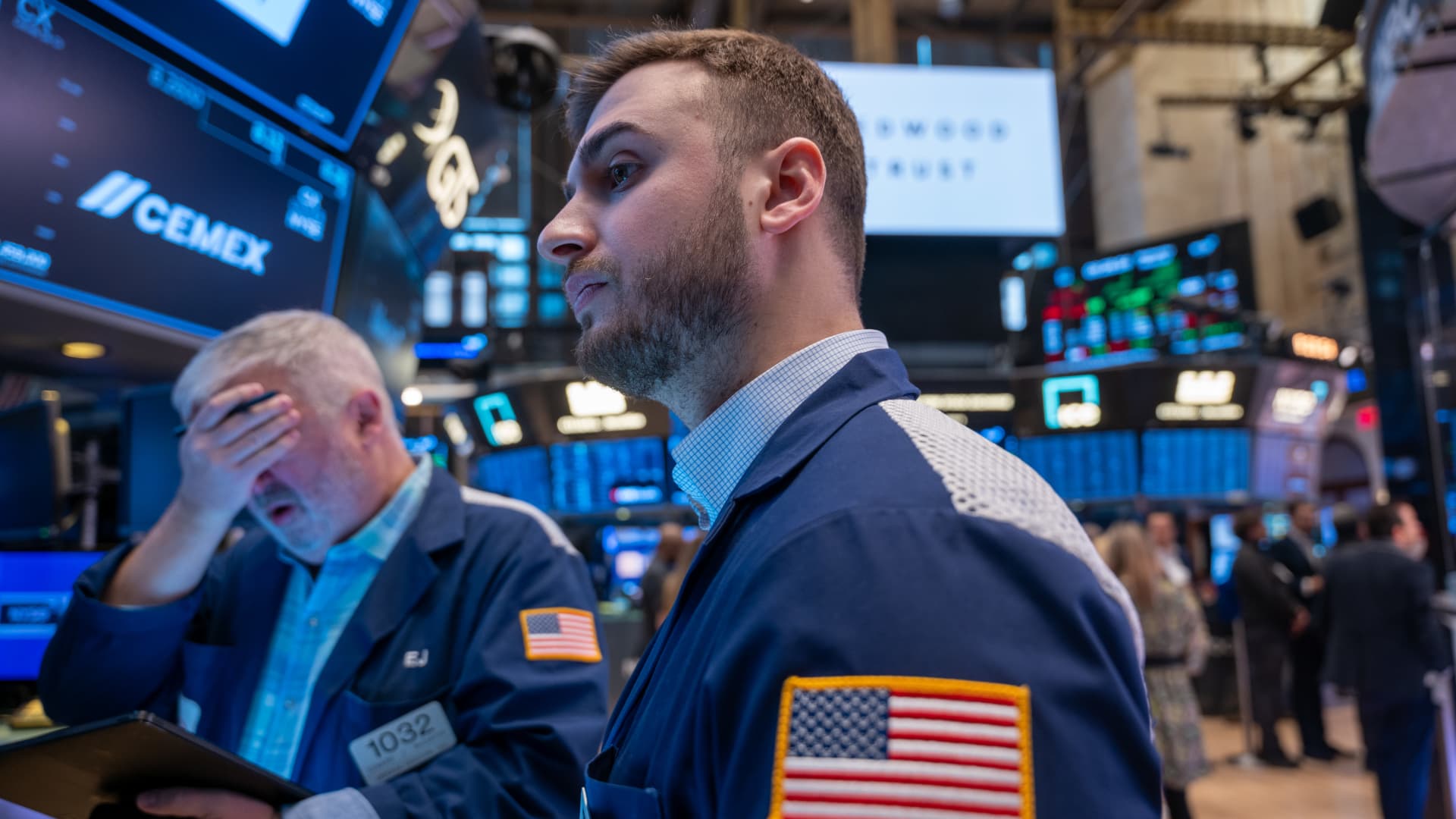
Traders work on the floor of the New York Stock Exchange on March 20, 2024.
Spencer Platt | Getty Images
The Dow Jones Industrial Average fell for a second day, continuing Wall Street’s lackluster start to the quarter, as bond yields increased and traders lowered expectations that the Federal Reserve would cut interest rates in June.
The 30-stock Dow dropped 385 points, or 1%. At its session low, the benchmark was down more than 500 points. The S&P 500 slid 0.8% and the Nasdaq Composite shed 1.1%.
The second quarter for stocks is off to a rough start as sticky inflation data to end last week and some strong economic data Monday sends yields higher and reduces odds the Fed will cut rates in June. Stocks came under pressure Tuesday as the rate on the 10-year Treasury yield jumped to its highest level since Nov. 28. Oil prices also surged to highs last seen five months ago.
“What we’re seeing is a one-two punch with the combination of continued hot inflation data with profit taking,” said Greg Bassuk, CEO of AXS Investments. With “very significant Q1 market gains … we’re due for a little correction. But we think that the investor narrative also continues to be higher for longer with respect to interest rates.”
Sarat Sethi, managing partner at Douglas C. Lane & Associates, remained unfazed by the sell-off and called it a “natural digestion” after equities have come up fast and quickly.
Tesla shares slid more than 5% on Tuesday after publishing disappointing first-quarter deliveries. Tech-related giants Nvidia, Alphabet and Microsoft, some of this year’s big winners, were down roughly 1%.
The S&P 500 is coming off a 10% gain for the first quarter, its best start to a year since 2019, as investors bet inflation would come down enough for the Fed to start cutting rates while the economy keeps growing. The Nasdaq gained 9% in the first quarter on the back of a run in artificial intelligence-related stocks such as Nvidia.
Tuesday’s market losses come after February’s core personal consumption expenditures price index released Friday showed a 2.8% annual increase, still a ways to go from the Fed’s 2% inflation target. On Monday, the Institute for Supply Management’s manufacturing gauge showed expansion for the first time since Sept. 2022.
Regional Fed presidents Mary Daly of San Francisco and Loretta Mester of Cleveland both said Tuesday they anticipate rate cuts this year but don’t expect to start easing anytime soon. Odds for a June rate cut based on fed futures trading are now down to about 58.8%, off from about 70% a week ago. The question now is if the momentum to start 2024 can continue if the Fed stands pat on rates.
Read the full article here