

Unlock the Editor’s Digest for free
Roula Khalaf, Editor of the FT, selects her favourite stories in this weekly newsletter.
Australia’s opposition party has pledged to crack down on “unsustainable” remote working arrangements in the civil service, vowing to force public sector workers back into the office full time if it is elected later this year.
The move drew condemnation and comparisons with Donald Trump, who has pushed government employees to return to offices or accept redundancy since he returned to the US presidency in January.
Jane Hume, a senator and shadow minister for finance for the opposition Liberal party, said that her party would force Australian public servants to be in the office five days a week — a reversal of the Labor government’s agreement with unions that protects remote working entitlements.
Speaking to the Menzies Research Centre think-tank on Monday evening, Hume claimed the government had handed public service workers a “blank cheque” to work from home, and that it was “common sense” to roll the policy back.
Australia’s federal public service employs 365,400 staff, including defence personnel, according to government data. The current agreement between the government and the public sector worker’s union does not limit the number of days that employees can work from home.
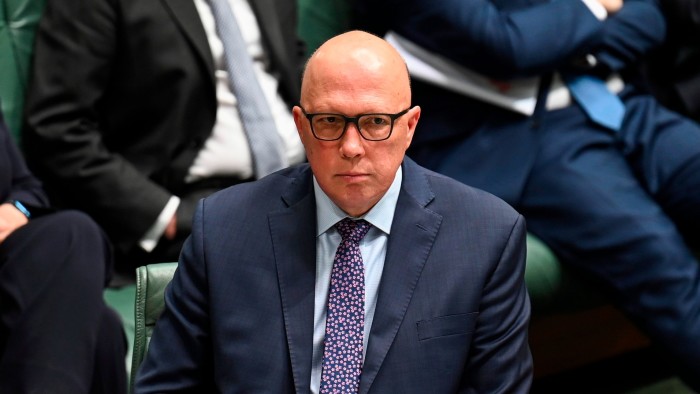
Liberal party leader Peter Dutton has called that arrangement “unacceptable”, claiming that government workers are refusing to turn up for work.
He has made public sector job cuts and more efficient government spending a critical part of his campaign for the upcoming election, which is due to take place by mid-May, though no date has been announced yet.
But changing Australia’s public sector homeworking policies could prove difficult, as the union agreements are in place until 2027.
Prime Minister Anthony Albanese accused the opposition of mimicking Trump and Elon Musk, who has launched a sweeping drive to downsize the US government. “We don’t have to adopt all of America’s policies,” he told reporters on Tuesday.
Many Australian companies, including the country’s banks, have also already moved to limit remote working. About 36 per cent of Australian workers regularly work from home, down from 41 per cent during the coronavirus pandemic, according to government surveys.
Hume claimed that the public service has not followed that trend, with 61 per cent of public servants working remotely, up from 55 per cent in 2022 during the pandemic and 22 per cent in 2019.
Michele O’Neil, president of the Australian Council of Trade Unions, said that “ending work-from-home arrangements in this Trump copycat plan is really an attack on flexible work arrangements and it will hurt working women the most”.
She added that Dutton’s party should back policies that support women’s participation in the workplace rather than “mindlessly” following Trump.
Dutton, speaking to reporters in Queensland on Tuesday, denied that ending public sector remote working would discriminate against women.
But Fiona MacDonald, policy director at the Centre for Future Work at the Australia Institute think-tank, pointed out that repealing remote working mandates could backfire by forcing talented workers to quit the public service.
She added that it would also undo productivity benefits by forcing more workers to pay for travel and childcare.
“There’s no good basis for this,” she said. “I’m not sure who it is appealing to. It’s a fairly cheap attempt to appear to be working for efficiencies that are not really there.”
Read the full article here