

Unlock the Editor’s Digest for free
Roula Khalaf, Editor of the FT, selects her favourite stories in this weekly newsletter.
Many of the 168,000 visitors to this year’s Chelsea Flower Show will have an idea of what to expect: florals and linens; champagne and strawberries; rampant border snobbery. While they might hope to glimpse BBC Gardeners’ World celebrities inspecting the 16 competition gardens, they may not expect to see Jamaica-born chef Levi Roots crying out, “Reggae Reggae Sauce!”
The charismatic Roots, creator of said sauce, will be cooking in the Gates Foundation’s “Garden of the Future”. But the garden transgresses flower-show norms not only in its choice of chef. The scheme has been created by sustainability-minded garden designers Joshua Parker and Matthew Butler, of Butler & Parker. Their aim is to “showcase climate-resilient ornamental and vegetables and versatile edibles, emphasising collaborations between growers, scientists and communities”.
Since 2003, the charitable initiative founded 25 years ago by Bill and Melinda French Gates has been working with global research partnership CGIAR and its network of African farmers and plant scientists to explore and expand climate-resilient agriculture. Their solutions for growing crops in the face of environmental change are the focus of the foundation’s inaugural appearance at this year’s show.
Nearly half of the garden’s 83 plant species will be edible, including millet, fava bean, chickpea and sweet potatoes — all vegetables that “can grow right here in the UK”, says Ana Maria Loboguerrero, the Gates Foundation’s director of adaptive and equitable food systems. It will also have a Cranfield University-designed toilet that creates usable water and biochar fertiliser out of waste, and a solar-powered Climate-Smart Hub, made from rammed earth that will be broken down and used as mulch after the show.
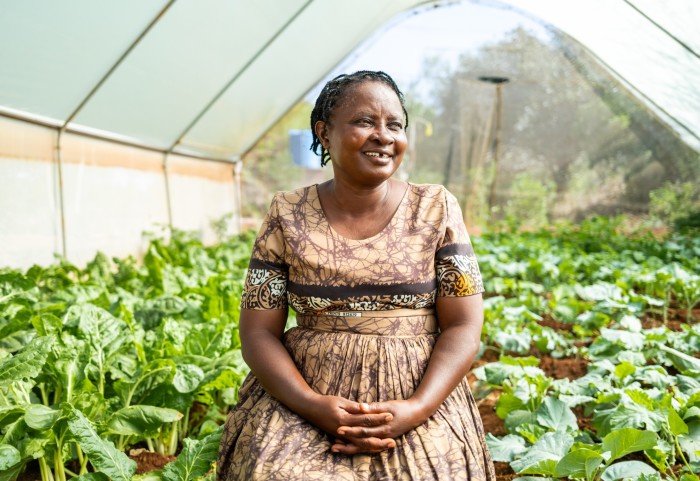
Scientists and farmers will be making an appearance at the Garden of the Future, answering questions about their climate-resilient initiatives — from Kenyan farmer Phoebe Mwangangi’s drought-tolerant crops such as sorghum, millet and cowpeas, to the new plant varieties being developed by Dr Clare Mukankusi, a breeder of common beans in Uganda. But how relevant is the charity’s work with African farmers to the befrocked of Chelsea?
The very British fixture is a barometer for garden vogues. In 2022, Urquhart & Hunt — the Somerset-based studio specialising in landscape design and ecological restoration headed by Lulu Urquhart and Adam Hunt — won Best Show Garden with its first-time Chelsea offering. “A Rewilding Britain Landscape” caused a stir with its showcase of plants that gardeners had previously called weeds. Now wilded gardens are increasingly commonplace.
The wilding movement is often greeted by the cry: “But what will we eat?” Edible gardens might provide part of the answer. A 2022 report by Lancaster University shows that, if used, urban green space could supply up to 40 per cent of the UK’s fruit and vegetable needs.
Growing food in an English garden was once commonplace. A 1940s wartime “Dig for Victory” effort meant rural households grew over 90 per cent of their fruit and vegetables. Even urban households harvested nearly 50 per cent of summer fruit and vegetables themselves. Now, despite 87 per cent of UK households having a garden, less than 30 per cent have a vegetable patch and only 1 per cent of urban green space is used for food production.
However, signs of a revival are growing — with both food and flowers in the same plots. Land Gardeners Bridget Elworthy and Henrietta Courtauld worked with Westminster City Council to plant borders of beans, buckwheat and tulips in central London as part of their recent SOIL exhibition at Somerset House. The skill-sharing platform Earthed just launched a food-based “grow along” with permaculture expert Poppy Okotcha, alongside a course on growing food in urban gardens by Alessandro Vitale, a low-waste-living advocate (as @spicymoustache on Instagram he has 5.2mn followers). Meanwhile, Sheila Das — a vocal proponent of growing your own — has been made the National Trust’s new head of gardens and parks.
This year, the UK experienced the driest March in 60 years; anyone trying to get seedlings to flourish knows climate resilience is critical for every continent. While Africa may have seen temperatures rise faster than the global average over the past 30 years — a change that has reduced average income by 14 per cent — the UK wheat harvest last year suffered a 20 per cent drop in yield, due, in part, to near-continual rain.
“These changes of climate are universal,” says Sarah Lewis, marketing manager of the Gates Foundation. “There are really interesting things happening all over the world when it comes to growing food fit for the future.”
In November last year, I experienced these initiatives first hand, touring small-scale farms in Africa with Devon-based Riverford Organics and the charity Ripple Effect, which upskills local farmers with agro-ecological methods such as composting, companion planting and cover cropping. Standing on the edge of 4-acre abundance, Riverford co-founder Guy Singh-Watson sighed: “If only Bill Gates could see this.” With these techniques now appearing in London’s social calendar, the chances of that fantasy coming true have just increased.
Time will tell if the 25mn visitors to the National Trust’s gardens will get to see onions and artichokes growing in the herbaceous borders. But the underlying lesson behind the Garden for the Future is that we are all more connected than we might think, both in climate risk, food security and natural system solutions.
The Gates Foundation hopes Chelsea visitors will “walk away and try to grow one of these crops in their garden”, says Lewis. Success can perhaps be measured when one of the show’s most loyal visitors starts to put homegrown sweet potatoes on the menu — at Buckingham Palace.
Find out about our latest stories first — follow @ft_houseandhome on Instagram
Read the full article here