
Walking with Dinosaurs TV review — landmark BBC natural history series is back from extinction

Unlock the Editor’s Digest for free
Roula Khalaf, Editor of the FT, selects her favourite stories in this weekly newsletter.
Like the bones of a Mesozoic behemoth, the BBC’s landmark natural history series, Walking with Dinosaurs has been dug up, dusted off and brought back to the small screen for the first time since 1999.
Returning with six new episodes of educational, engaging encounters with an array of majestic creatures, this resurrected documentary is informed by the three decades of paleontological research that has made the world of 100mn years ago more accessible than ever. But it’s also a show coloured by nostalgia for another distant era: that of linear, late-90s TV when a half-hour science programme could draw a weekly viewership of 19mn.
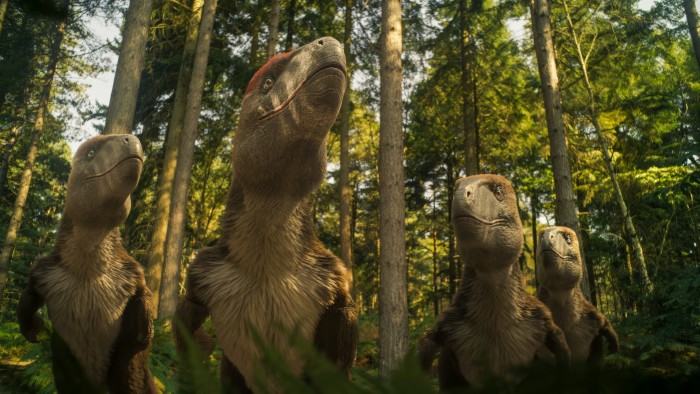
That this sequel has a throwback quality will charm some and underwhelm others — not least younger viewers who will perhaps be watching with less misty eyes than parents who grew up with the original. While 26 years is a veritable geological aeon when it comes to the computer technology first used to bring audiences face to face with dinosaurs — as if they were animals caught on camera — the difference between the two series is not as pronounced as you might expect. Where the animation in the first series was groundbreaking (not to mention bank-breaking), here it can seem rather clunky — especially when compared to something like Apple TV+’s visually striking Prehistoric Planet.
But Walking with Dinosaurs is as much about the storytelling as the CGI. As before, each episode builds a narrative that not only illustrates the biological facts revealed in a creature’s fossils but also gives a sense of how they lived and died, socialised and survived. With actor Bertie Carvel taking over narrating duties from Kenneth Branagh, the series opens with a poignant chapter about an orphaned Triceratops trying to find protectors in a rainforest full of predators. Later episodes meanwhile follow a male Spinosaurus’s efforts to rear his young (who knew dinosaurs were so progressive?) and a group of gentle-natured Gastonia who ward off ravenous raptors only to succumb to a devastating forest fire.
The show leaves it to us to draw parallels between this last scene and our current climate catastrophe. But there is something unexpectedly sobering, even humbling about the way it cuts between digital reimaginings of these formidable beasts and context-providing scenes from present-day fossil excavations. A shot of a palaeontologist extracting a T-Rex’s monstrous tooth from the desert might recall Shelley’s “Ozymandias”.
These on-site segments are a joy to watch. Thanks to advancements in technology, remarkable fragments and fossils are increasingly being identified across the globe, revealing everything from how a T-Rex ran to how a raptor strategised. That we’re able to witness the moment something is unearthed after millions of years ultimately proves more exhilarating than any simulated dinosaur showdown.
★★★☆☆
On BBC1 on May 25 at 6:25pm. New episodes weekly and streaming on iPlayer. On PBS in June in the USA
Read the full article here