
Cannes: The History of Sound review — Paul Mescal and Josh O’Connor star in minor-key gay romance

Unlock the Editor’s Digest for free
Roula Khalaf, Editor of the FT, selects her favourite stories in this weekly newsletter.
If folk music were a colour, what shade would it be? A good match might be the earthy tones of the wood-panelled bars, heavy woollen suits and New England forests that populate Oliver Hermanus’s gracefully minor-key The History of Sound. Anyone looking for a thrill ride has come to the wrong place — the 1910s and ’20s-set film is as muted as its palette, the unhurried script by Ben Shattuck adapted from his own short story. Like Hermanus’s Bill Nighy-starring Living it is unashamedly old fashioned.
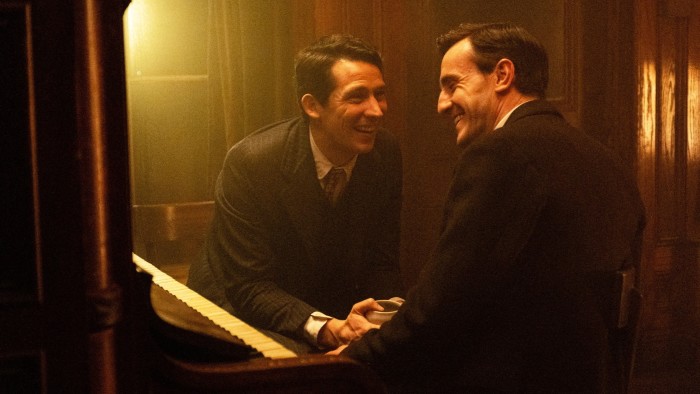
The big draw will be the cast. To hire one fast-rising movie hunk is a canny move — to cast two might be considered greedy. Paul Mescal, flashing his burly frame and bashful smile, brings the same introspective charm that gently lit Normal People and Aftersun to the role of Lionel, a golden-voiced singing student of humble rural origins who is gifted with synaesthesia.
Josh O’Connor’s ethnomusicologist David is more angular, urbane and theatrical, flamboyant of gesture with a slightly smug smirk. He also possesses a photographic — or rather phonographic — memory for folk songs. These he collects, Alan Lomax-style, on wax cylinders from impoverished country workers, inviting them to sing into a mysterious tube while their families look on in awed wonder.
When the two men embark on a field trip, their journey of musical discovery will lead to mutual discovery, the two actors’ performances harmonising beautifully together. Amid all the emphasis on sound is the silence of a love that in the America of the time still dare not be heard.
While the highly strung David alludes to an orphaned childhood and a plagued conscience, Lionel’s problems are more earthbound. When the lovers are separated, a return to his mother’s dreary Kentucky shack brings to mind Whistler’s painting. Here his singing seems to become more of a lament, done between milking cows and digging turf. Fleeting moments of joy prove too good to be true, happiness frequently and swiftly undercut by misfortune.
The melancholy ache recalls the Mescal-starring All of Us Strangers and, further back, Brokeback Mountain. The film loses focus somewhat during diversions to Rome and the English Lake District but, on the whole, it has similar virtues to the music it extols. With no tricksiness, no amplification and no unnecessary embellishment, it is allowed to resonate quietly and linger in the mind and ears, with no false notes.
★★★★☆
Festival ends May 24, festival-cannes.com
Read the full article here