

Unlock the Editor’s Digest for free
Roula Khalaf, Editor of the FT, selects her favourite stories in this weekly newsletter.
Sebastião Salgado, the Brazilian photographer who travelled to some of the world’s remotest places to document the struggles and humanity of migrants and workers in images which became world-renowned, has died at the age of 81.
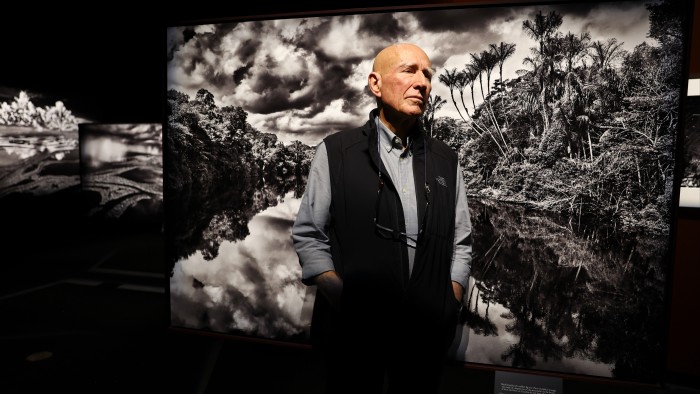
Salgado died in Paris from leukaemia, his family said, a complication of the malaria he contracted in Indonesia in 2010. At the time he was working on the eight-year Genesis project that captured wildlife, landscapes, seascapes and indigenous peoples in around 200 memorable black-and-white images.
“A great witness of the human condition and of the state of the planet, Sebastião Salgado conceived of photography as ‘a powerful language to try to establish better relations between humans and nature’,” said Laurent Petitgirard, secretary of France’s Académie des Beaux-Arts, of which Salgado was a member.
In Salgado’s native Brazil, President Luiz Inácio Lula da Silva requested a minute of silence at the presidential palace in the artist’s memory, describing him as “one of the greatest and best photographers the world has ever produced, if not the best”.
“His non-conformity with the fact that the world is so unequal and his stubborn talent in portraying the reality of the oppressed always served as a wake-up call for the conscience of all humanity,” Lula said. “Salgado not only used his eyes and his camera to portray people: he also used the fullness of his soul and his heart.”
Salgado was born in the mining state of Minas Gerais in 1944 and later studied economics. A leftwing activist, he fled Brazil’s military dictatorship in 1969 for France and began experimenting with photography the following year using a camera his wife had bought him.
As an economist at the International Coffee Organization he frequently travelled to Africa, and his desire to document what he saw sparked a passion for photography. Within a few years he was freelancing for the world’s leading photo agencies — Sygma, Gamma and then Magnum which he left in 1994 to form his own agency, Amazonas Images, in Paris.
He created three collections of photographs published as books — Workers, Migrations and Genesis — as well as countless other black and white images instantly recognisable for their dramatic lighting and powerful depictions of people and nature. Critics said he brought a rare empathy and understanding to his subjects, always seeking to highlight their dignity and humanity.
Perhaps his most memorable images came in a series shot in the 1980s of a wildcat gold mine at Serra Pelada, in the Amazon. It showed countless men swarming across a cliff face in what resembled a human ant heap, hunting desperately for a chance to make their fortune.
Salgado was immortalised in a 2014 film by Wim Wenders, The Salt of the Earth, and received numerous honours for his work from countries including the US, Japan, France, the UK and Spain, as well as Brazil. He leaves a widow, the author and film producer Lélia Wanick, and two children.
Read the full article here