

Unlock the Editor’s Digest for free
Roula Khalaf, Editor of the FT, selects her favourite stories in this weekly newsletter.
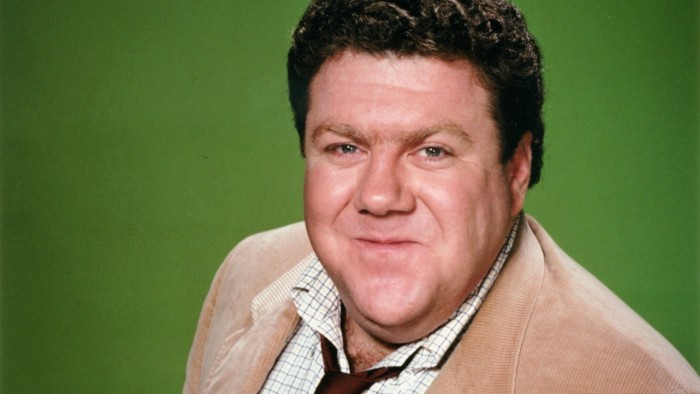
George Wendt’s big break as a comic actor in the early 1970s, and with it his subsequent career as one of the stars of the long-running American sitcom Cheers, almost never happened.
The night before he was due to have an audition with The Second City, an improvisational comedy troupe based in his native Chicago that launched such luminaries as John Belushi, Mike Myers and Tina Fey, he was beaten up in a bar. “I had a swollen face and a cut on my head that bled quite a bit,” he later recalled. “It wasn’t a good look for my audition.”
Despite these suboptimal preparations Wendt, who has died at the age of 76, was invited to join The Second City in 1974. He would go on to spend six years there “in various capacities”. It formed him as an actor.
“I did mostly slice-of-life things,” he told an interviewer in 1983. “You make it sound real . . . That’s the way I do Norm.”
“Norm” was Norm Peterson, the beer-swilling everyman and habitué of the eponymous Boston bar who Wendt played in all 273 episodes of Cheers, between 1982 and 1993. It was the part that made his name and for which he received six Emmy nominations.
Wendt soon became celebrated for the style in which he would make his entrance in each episode. As one critic put it, “there was no more artful ingress in the history of American television than any of the many made by Norm”.
He enters the bar to a collective cry of “Norm!” from the staff and other regulars, and then lugubriously parries all enquiries after his wellbeing. “Hey, what’s happening Norm?” “It’s a dog-eat-dog world . . . and I’m wearing milkbone underwear.” “What’s the story, Norm?” “Thirsty guy walks into a bar. You finish it.” “How’s life, Norm?” “Not for the squeamish, Coach.”
With characteristic modesty, Wendt always gave the credit for the quality of this repartee to the show’s writers. “We’re blessed, so blessed, because of the writing,” he said.
George Robert Wendt Jr was born in Chicago in October 1948. He was raised in a family of nine children that had Irish and German ancestry. His father was a real estate agent. His maternal grandfather, Tom Howard, was a photographer who earned notoriety in 1928 for using a hidden camera to shoot the execution of convicted murderer Ruth Snyder in Sing Sing prison in the state of New York. “It was the zenith or the nadir of tabloid journalism, depending on how you look at it,” Wendt observed.
Wendt was educated at a Jesuit boarding school before enrolling at Notre Dame university. He had, by his own admission, “a fairly chequered academic career”. He dropped out of Notre Dame with a grade-point average of zero (“I never went to class,” he conceded) and briefly ended up back at the family home on Chicago’s South Side.
“I was at home for a semester, getting seriously badgered,” he told an interviewer. “So I’m thinking, ‘I’ve got to get out of here’.”
He did eventually get out — to Rockhurst University in Kansas City, from where he graduated with a degree in economics. He then spent nearly three years “vagabonding” around Europe, before returning to the US and deciding where his vocation lay. “One thing I did learn at Rockhurst,” he said, “was Karl Marx’s theory of alienation, and I didn’t want to be alienated from myself and I was determined to do something with my life that I enjoyed.”
In 1981, after leaving The Second City, where he met his wife Bernadette Birkett, who would later be the voice of Norm’s eternally unseen spouse Vera, Wendt appeared in an episode of the sitcom Taxi. He played a pest exterminator opposite Danny DeVito and came to the attention of the team that would go on to create Cheers.
As Cheers was approaching the end of its long run, Wendt began appearing on Saturday Night Live in the guise of Bob Swerski, one of a group of “superfans” of the Chicago Bears American football team (“Da Bears”). After the show came to a close, he was given a shortlived solo TV vehicle, The George Wendt Show, which ran for a couple of months in the spring of 1995. He also continued to work steadily in Hollywood and on Broadway.
But it is for the imperturbable Norm that Wendt, who died on the 32nd anniversary of the finale of Cheers, will be remembered. “Norm was all of us,” a post on the X account of the NBC network said after his death. “A regular guy who finished his hardworking day wanting to be surrounded by friends and a frosty beverage.”
Read the full article here