
Imelda Staunton and her daughter bring subtle eloquence to Mrs Warren’s Profession — review

Unlock the Editor’s Digest for free
Roula Khalaf, Editor of the FT, selects her favourite stories in this weekly newsletter.
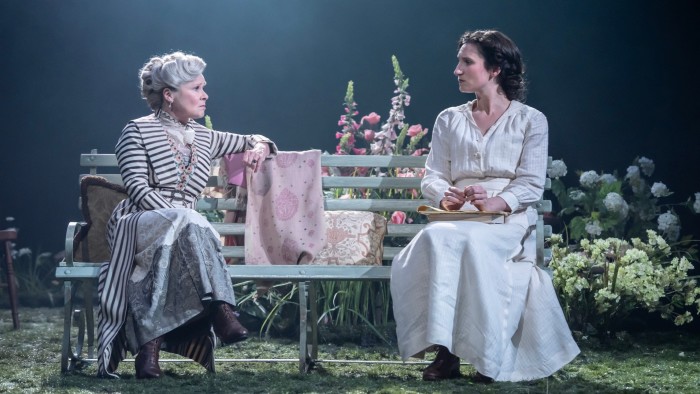
“We are mother and daughter!” cries Imelda Staunton at one of the agonising pinch points in Mrs Warren’s Profession. It’s a line that acquires even more sting than usual as the implacable young woman sitting opposite her in Dominic Cooke’s production is Bessie Carter, who is indeed Staunton’s daughter.
They’re not the first real-life mother and daughter to take on George Bernard Shaw’s caustic 1893 drama — Caroline and Rose Quentin did so in 2022. It certainly adds a charge to the flinty confrontations between parent and child. But more important is the skill of both actors to animate afresh the dilemmas of Shaw’s play. Staunton and Carter make a wonderful double act, bringing painful emotional truth to the twisting narrative, as Shaw attacks, with robust vigour and diagrammatic clarity, the hypocrisy and inequality of late Victorian society.
Even the play’s title is an ironic nod to that hypocrisy: the profession, which no one on stage cares to name, is prostitution. That tough reality feels far removed, at first, from the pretty cottage garden where Vivie, a bright, upright young woman, prepares for a meeting with the mother she rarely sees. Carter’s Vivie oozes the sparky confidence of someone certain of her intellectual superiority: she’s an independent woman, a Cambridge maths ace and a would-be lawyer.
But uncertainty lurks in the undergrowth: who was her father, exactly, and what sort of remunerative profession enabled Kitty Warren to fund her clever daughter’s education? Shaw switchbacks through the moral arguments as Vivie, at first appalled to learn the truth, is persuaded by her mother’s explanation of the terrible poverty and grim options facing working-class women. She’s been able to buy her daughter choices in life, she argues. It’s when Vivie realises that the business is still booming that the feathers really fly.
Cooke approaches the piece as if it were a Greek tragedy, stripping out much of the exposition, embracing the ethical workout at its core and foregrounding the way the past comes piling into the present. He introduces a chorus of working girls in Victorian underwear, silent witnesses and constant flesh-and-blood reminders of the human beings behind all this debate. They gradually strip the flowers from Chloe Lamford’s set, peeling away the pretence of floral charm.
It’s a tactic that does away with some of Shaw’s verbosity and focuses hard on moral dilemmas that persist to this day, particularly the cognitive dissonance that comes with living in an unequal and often exploitative world. There are casualties, however. Some of the action feels starchy and the male characters emerge as sketchier than usual. Robert Glenister exudes pomposity and sleaziness as Sir George Crofts, Kitty’s upper-crust business partner, and Kevin Doyle is good as the weaselly vicar. But Reuben Joseph and Sid Sagar have a harder job with the reverend’s fickle son and Kitty’s evasive artistic friend.
In the end, though, the drama resides with the women, who can’t walk away untouched, as the men all do. Staunton and Carter hold that centre beautifully. Both use stillness with remarkable, subtle eloquence. As they face off for the final time, Staunton clenched with rage, regret and misery, Carter tight and resolute, they both make searingly plain the personal cost of their chosen routes to survive in a society loaded against them.
★★★★☆
To August 16, mrswarrensprofession.com
Read the full article here