

Unlock the Editor’s Digest for free
Roula Khalaf, Editor of the FT, selects her favourite stories in this weekly newsletter.
It’s highly likely that when you think back to your schooldays, you can barely remember a scrap of the vital knowledge that once kept you up all night revising, but have no trouble recalling every word of a random pop single that was on the radio during the same period. Such is the power of music, its stickiness being what inspired advertising executive David McCall to commission LA-based jazz musician Bob Dorough to write a song that could teach the three-times table.
This was 1971, and Dorough’s pedigree was impeccable. He had provided smooth vocals on two Miles Davis songs, performed between Lenny Bruce’s comedy sets, and composed the arrangements for beat poet Allen Ginsberg’s musical version of William Blake’s Songs of Innocence and Experience. He also had a reputation as a man who could make a song out of anything. He had appeared in a Budweiser beer advert, singing the text on the label, and had written a song inspired by the tag on a mattress. McCall had noticed that his son couldn’t grasp multiplication but had memorised the lyrics to every Rolling Stones song, and started casting around for someone who could give the number sequences some musicality.
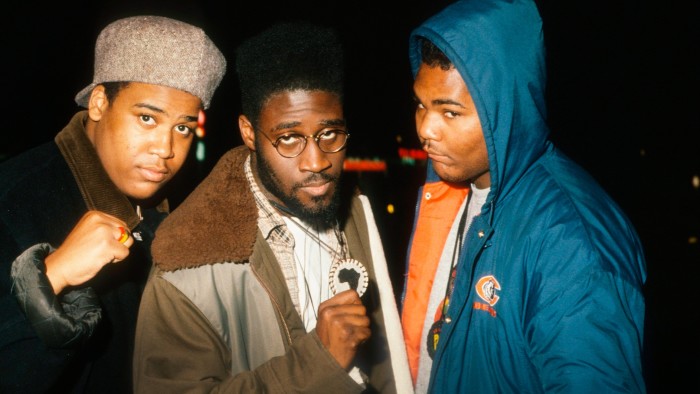
By the late 1980s, Dorough’s educational optimism was a perfect fit for a clever new hip-hop trio from Long Island, New York. Dave “Trugoy the Dove” Jolicoeur, Kelvin “Posdnuos” Mercer and Vincent “Maseo” Mason had met in the classroom at Amityville Memorial High School and become De La Soul. At the time, rap was prominently represented by the political fury of Public Enemy, the ladykilling swagger of LL Cool J and the gangsta nihilism of NWA. De La Soul’s debut album, 3 Feet High and Rising, had a cover featuring cartoon lettering and a sunny yellow background. The lyrics within mentioned alphabet soup, “doo doo in your pocket” and a crocodile with daisies in his hat. It was a new kind of flower power, hip-hop that was funny, geeky and suburban next to the big city braggadocio of their peers. Trugoy’s stage name was not a tough guy street alias, but the word “yogurt” backwards.
At a time when many are questioning whether AI can really create something new and worthwhile out of the creative work of others, De La Soul’s ingenious use of sampling is inspiring, but at least they had to pay for it. Unfortunately, due to the original contracts they signed, they ended up paying far more dearly than most. The agreements mentioned physical formats but hadn’t anticipated digital music, meaning that permissions to use all those samples had to be sought anew for downloads and streaming, and the band couldn’t agree terms with their former record label, Tommy Boy, to get it done.
Let us know your memories of ‘The Magic Number’ in the comments section below
The paperback edition of ‘The Life of a Song: The stories behind 100 of the world’s best-loved songs’, edited by David Cheal and Jan Dalley, is published by Chambers
Music credits: Capitol; Chrysalis; EMI; Universal; Virgin; Capitol; Arbors
Read the full article here