

Unlock the Editor’s Digest for free
Roula Khalaf, Editor of the FT, selects her favourite stories in this weekly newsletter.
The music most people associate with György Ligeti is his orchestral piece Atmosphères, used in Stanley Kubrick’s sci-fi film 2001: A Space Odyssey. Its floating clouds of unearthly sounds really do seem to come from somewhere deep in the universe.
That, however, is by no means the only kind of Ligeti there is. A chameleon of a composer, he can also be the zany humourist, the creator of performance art, the innovator, the explorer of microtonality and the reinventor of traditional forms.
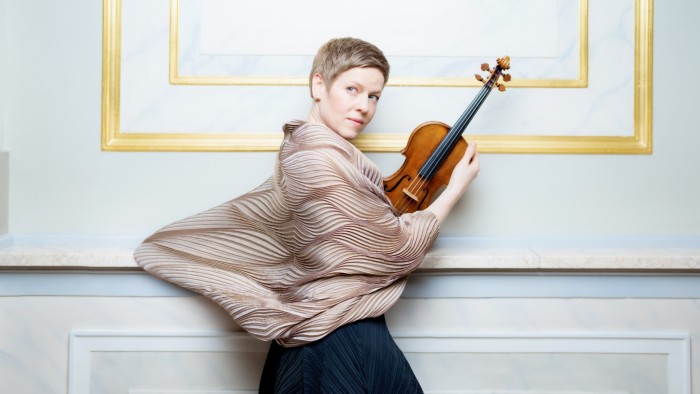
Those last two are on display in his concertos for violin and piano, composed in the 1980s and 1990s. The Violin Concerto lifts its ideas from the Middle Ages to the Romantic and even dips into world music, but Ligeti transforms all his influences into a coruscating contemporary concerto. Isabelle Faust gives a well-paced performance that is always subtle, always alive.
The Piano Concerto opens in a frantic, almost minimalist style, but Ligeti rarely stays in the same place long. There is a slow movement (“Lento e deserto”) that offers distant, isolated notes from the pianist in a blasted landscape and a finale that increasingly works itself up until it disappears into the aether. Jean-Frédéric Neuburger is the virtuoso pianist.
Alongside this pair of concertos are two pieces for string quartet, Aus der ferne III and V, and the youthful Concert Românesc, a popular Ligeti calling-card dating from 1951. Its folk dances brim with vitality in this performance by François-Xavier Roth and Les Siècles.
★★★★☆
‘Ligeti: Violin and Piano Concertos’ is released by Harmonia Mundi
Read the full article here