

Stay informed with free updates
Simply sign up to the Film myFT Digest — delivered directly to your inbox.
The history of London’s HM Prison Holloway could support a whole film. Long the largest women’s jail in western Europe, inmates have included suffragette Emmeline Pankhurst, pro-Nazi aristocrat Diana Mitford and Ruth Ellis, the last woman executed in the UK. But documentary Holloway leaves those ghosts where they are. The focus is the recent past and the here and now. The effect is hugely powerful. The film is hard to shake.
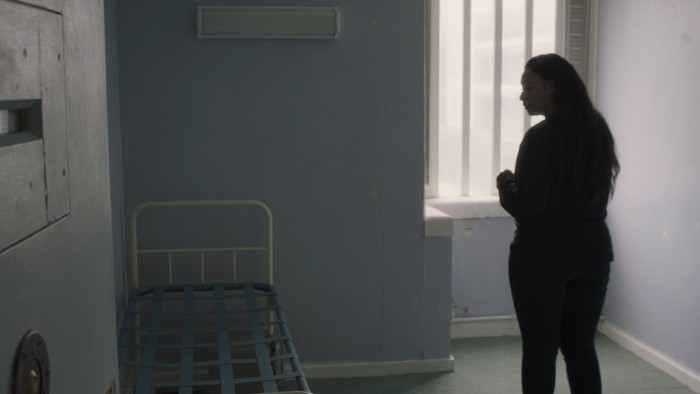
The set-up is as simple as the lives involved are complex. The prison closed in 2016. Now, for one week, six former inmates return to peeling corridors and disused cells flooded with light. Every day, they sit in a circle of chairs in the bare former chapel to discuss their experience of prison. Some of the women have become charity CEOs. Others are activists. There are those who are blasé, but more are still snared in their memories.
Each woman soon becomes sharply defined. They speak of fractured lives lived before and during Holloway with pinpoint self-awareness. The stark use of space can give the film the feel of theatre, but directors Sophie Compton and Daisy-May Hudson are scrupulous in never hyping the natural drama. So too the women themselves. Midway, they stop the shoot to debate what the cameras can and cannot see. Their oversight is reassuring. Moments here are so raw, you wonder if you should even be watching.
Early on, we see busy north London streets from a moving vehicle, as inmates did from prison vans. Now, in the same wave of transformation that has seen nearby King’s Cross expensively redeveloped, a last sliver of barbed wire sits atop a wall before Holloway is knocked down. What the film shows us is a parallel process in people: the landmarks that stay in place in a life, and what absolutely changes.
★★★★★
In UK cinemas from June 20
Read the full article here