

Unlock the Editor’s Digest for free
Roula Khalaf, Editor of the FT, selects her favourite stories in this weekly newsletter.
The 21st century has not been kind to the UK classical music festivals founded in the heady days of optimism after the second world war. Aside from the flourishing country house opera sector, many have either reduced in scale or watered down their early idealism.
This year marks the 50th anniversary of my first visit to the Aldeburgh Festival and it has been heartening to follow it through the ups and downs of the past half century, to the point where it is now at a high-water mark in the quantity and range of its activity.
The festival was co-founded by Benjamin Britten in 1948 and did well to survive the difficult years following the composer’s death in 1976. In the mid-1980s the income from hosting the government inquiry into the Sizewell B nuclear power station up the Suffolk coast came in at a crucial moment.
Britten’s dream was to create a festival that was at once local and international. New music was the focus, both his own and the music of others, and that has laudably remained its core mission to this day.
The 2025 festival boasts 26 world premieres, many of them Britten Pears Arts commissions. The four featured musicians — tenor Allan Clayton, violinist Leila Josefowicz and composers Helen Grime and Daniel Kidane — are fully involved throughout the festival and there is a hot-off-the-press feel to the programming.
For an example of the festival at its varied best, the weekend concert with the BBC Symphony Orchestra and chief conductor Sakari Oramo had all the expected ingredients. It opened with Grime’s Night Songs (2012), a five-minute miniature, which creates a nocturnal vision of flickering, agitated lights that enjoy a brief existence before fading into the gloom.
Clayton was the soloist in Britten’s Our Hunting Fathers. Dating from 1936, this song cycle captures Britten as an angry young voice, raging with bitter sarcasm against the rise of the Nazis and the persecution of man by man. His inventiveness in this period, as yet unencumbered by the responsibility of becoming a national icon, remains extraordinary. Clayton’s singing, so clear with the words, captured much of the work’s power, though the orchestra needed more pace and bite to match the white-hot intensity that could be heard when Britten conducted the work himself.
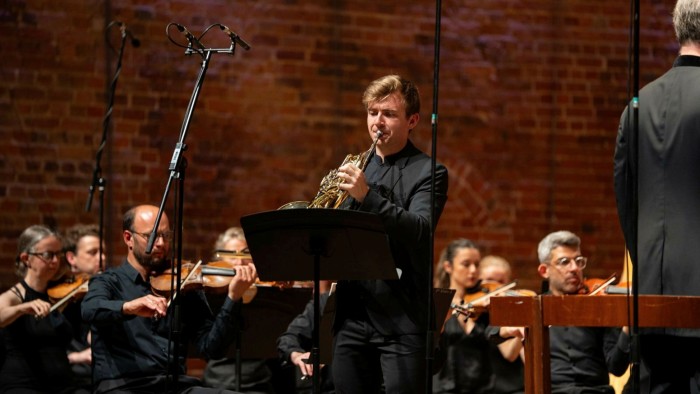
The premiere was Brian Elias’s Horn Concerto, written for, and played here by Ben Goldscheider. One of the challenges in writing a concerto for horn is getting away from the instrument’s traditional role in across-the-valley, romantic calls and Elias certainly does that, lifting off with fast, light, shimmering sounds. Only a player of Goldscheider’s skill could pull this off, and Elias homes in on his nimbleness by casting the concerto as “time stretching and contracting repeatedly” in alternating fast and slow music. Tautly written, it lasts about 20 minutes.
That left time for Oramo to conduct Sibelius’s Symphony No 5, always compelling in his hands and here, in the generously resonant acoustic of Snape Maltings, almost overwhelming in its thunderous power.
★★★★☆
Festival to June 29, brittenpearsarts.org
Read the full article here