

In 2006’s ill-advised film Superman Returns, Lois Lane, Superman’s journalist girlfriend, finally wins the Pulitzer she has coveted. Her subject? Why the world doesn’t need Superman.
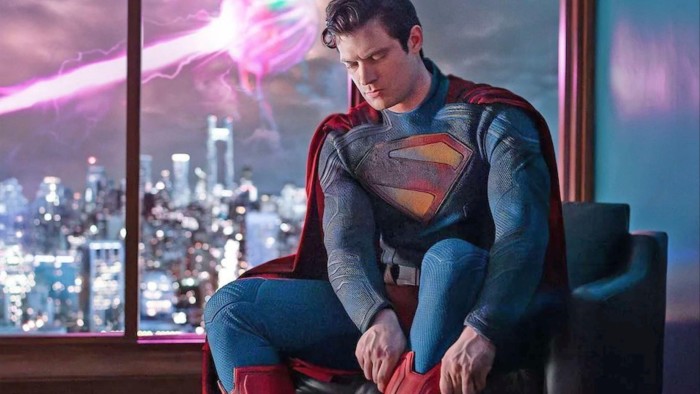
Next week, Superman will again return to cinemas: James Gunn (of Guardians of the Galaxy fame) is in the director’s chair, David Corenswet will play the titular Kryptonian. Just as in Superman Returns, when Brandon Routh’s hero faced a different and hostile world after spending five years away from Earth, Corenswet’s Superman lands in unfamiliar territory.
He arrives at a time when comic-book-based films, which for two decades were the closest thing Hollywood had to a guaranteed hit, are no longer dazzling at the box office. Led by DC Studios’s co-chair Gunn, this is Warner Bros’ second attempt to emulate Disney by creating an interlinked universe of successful superhero films. (The first, which kicked off with Zack Snyder’s 2013 Man of Steel, achieved neither critical acclaim nor consistent commercial success.)
But this is a fraught time for Superman for other reasons too. Lois Lane was wrong in 2006 — and wrong now. The world badly needs a saviour — the problem is it seems unlikely to come from someone touting “truth, justice and the American way”. The comics have refreshed that old slogan, replacing it with “truth, justice and a better tomorrow” in 2021. But Superman’s attachment to a happier, brighter America is not just rhetorical: the character needs a successful America for his story to work.
There has long been a tension between Superman’s sunny optimism, all-American values and vast powers. Marvel’s Captain America embodies similar values, but he, when you get down to it, is really just good at punching stuff. He can be at odds with the authorities, and it works dramatically, because he doesn’t have the power to reshape the world.
In Richard Donner’s 1978 movie Superman, which stands alone with its Donner-directed sequel as the only Superman film to achieve commercial success, critical acclaim and long-term renown, Margot Kidder’s Lois Lane, upon hearing that Superman stands for “truth, justice and the American way”, quips that he’s “gonna end up fighting every elected official in this country”. The problem is that Superman could — if he chose to.
For that reason, contemporary storytellers have often seemed more comfortable exploring dystopian takes on Superman. Watchmen’s Doctor Manhattan (announced with the pithy line: “God exists, and he’s an American”) alters the trajectory of the cold war and American history just by existing. The Boys’ Homelander is a Superman type whose great powers and selfish amorality make him a terrifying antagonist. (These themes were explored less successfully in the 2019 horror film Brightburn, which essentially asks “what if Damien from The Omen were Superman?”)
Superman Returns and Man of Steel also both struggled, in different ways, to evoke the cheeriness that makes Superman tick. In Returns, Daily Planet editor Perry White asks if Superman still believes in “truth, justice, all that stuff” — reflecting, perhaps, Hollywood’s uneasy relationship with American patriotism towards the end of the second George W Bush presidency.
In Man of Steel, White (played this time by Laurence Fishburne) tells Amy Adams’s Lois Lane that people would never accept and live alongside Superman. Man of Steel seemed in particular to doubt that a Superman film in the traditional sense could work: that the only way to have Superman on the big screen in the 21st century was to make his world as dark and as dangerous as the one in Christopher Nolan’s The Dark Knight trilogy of Batman films.
More than any other superhero, Superman needs to exist in a world that is troubled by problems unlike our own. It seems not wholly coincidental that the 1990s TV show Lois & Clark, in which the couple navigate a somewhat goofy, post-cold-war world, works better than the grim and gritty Superman & Lois (2021-24), in which they endure a landscape of post-industrial discontent and family strife. A more “grounded” Superman invites uncomfortable questions like “why on earth isn’t Superman doing something about South Sudan?”
Will Gunn’s Superman work? That the trailers are full of primary colours and optimism, and that Superman’s dog, a scruffy canine with superpowers of his own, is in the cast, suggest that the director understands that Superman must, at its core, be life-affirming.
But that one part of the movie’s plot involves Superman intervening in global affairs may mean that the movie is cursed by the same excessive seriousness that has marred other recent versions.
More than any other superhero, Superman needs a brighter, less fraught world to fly in. No one looking at the world in 2025 would conclude that we don’t need our own real Superman — the question is whether that glaring absence makes it easier, or harder, for the cinematic one to soar, both critically and commercially.
‘Superman’ is released in the UK and US on July 11
Find out about our latest stories first — follow FT Weekend on Instagram, Bluesky and X, and sign up to receive the FT Weekend newsletter every Saturday morning
Read the full article here