

Unlock the Editor’s Digest for free
Roula Khalaf, Editor of the FT, selects her favourite stories in this weekly newsletter.
When Emily Campbell received an email from a stylist on a big Netflix drama requesting a selection of her voluminous cotton nighties three years ago, she felt mildly optimistic. “I’ve had nighties called in for productions before, and I’ve been so excited, but it hasn’t led to anything,” the schoolteacher turned nightwear designer says. But then she was asked to sign an NDA and “it started to get real”.
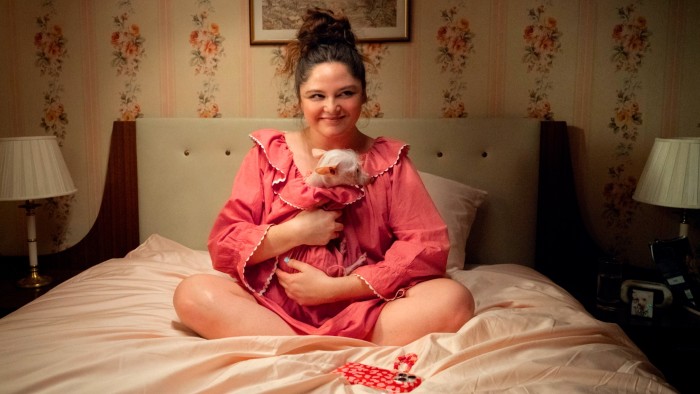
Campbell’s nighties had their big on-screen moment in the debut episode of Lena Dunham’s new Netflix drama Too Much, which aired this week. During the course of the series lead actress Megan Stalter will wear at least three of the brand’s signature styles, including the India, a short pink gingham with an oversized collar and sleeves edge in ric-rac (£130, ifonlyif.co.uk). Even Mia, a rather unfortunate-looking Chinese crested dog, has a bespoke India design. Impressed by the garments, Dunham went on to buy several styles for herself and her husband.
“I’m so pleased that nighties are having their moment,” Campbell says. “I feel like they’ve been the unfashionable big sister to pyjamas for so long, like it was only Jane Austen characters who would ever wear a long, white, cotton nightie.”
Campbell herself grew up wearing wafty nighties. The eldest daughter of an army officer, Campbell moved home (and often country) every three years. She credits her mother, Issy Falkner, with an extraordinary talent for “making every new house feel like home, which she’d do by making sure our bedrooms felt the same”. That meant the same pale pink vintage eiderdown (now on Campbell’s daughter’s bed), Cicely Mary Barker’s Flower Fairy prints on the walls and a little cotton nightie tucked under the pillow. “It gave me an extraordinary feeling of security and sense that home was where you made it.”
The label was started by Falkner after her three children left home in 2011. Although she had no fashion or business experience, Falkner thought there was a gap in the market for the kinds of nighties she and her friends wanted to wear. “At the time, there were some nighties for little girls, but the only ones for women her age were either made from synthetic material or extortionately priced French labels,” Campbell says.
Falkner’s first design was the Julia, a full-length gown with wide cuffs and appliqué around the V-neck. Friends in the homewares business recommended a factory in India that uses Global Organic Textile Standard certified organic cotton and silk, pays its workers above minimum wage, and has factory hours of eight hours per day. Falkner convinced the factory (which Campbell still works with) to produce a 30-piece run — far below the minimum order — and started selling to friends and attending trade fairs.
Her business was as successful as she wanted to make it, according to Campbell. “She was profitable but operating below the VAT threshold because she wanted to keep it small enough that she could do it all herself. Her big sense of achievement was that she took the whole family on a really lovely holiday each year, paid for by the earnings from her business.”
But in 2020 she was ready to hand over the reins. She told Campbell, on maternity leave from her teaching job with her second child, it was “the perfect business to do on the side of raising a family”, passing on a business with £3,000 in the bank and a full stockroom.
Campbell knew she could draw a younger crowd. The pandemic presented a unique opportunity as shoppers were stuck at home and investing in comfort — pyjamas sales more than doubled between 2019 and 2020, according to research by the Harvard Business School. That boosted the sales of several independent nightwear brands including Yolke, Desmond & Dempsey, and Honna London, and encouraged brands such as London-based label Faune to pivot from solely children’s sleepwear into adult ranges, too.
Campbell took out a £3,000 loan to develop the website and designed nighties aimed at her age group, who wanted them in less sheer fabrics (“so they could answer the door in them”), and more ruffles (“my generation love a ruffle”). She also extended the sizing to 24, now the fastest-growing part of the business and the reason Netflix’s stylist used the brand for Stalter.
There are about 16 women’s styles in the core collection, ranging from the entry-level Clover (£85, ifonlyif.co.uk) up to the silk Emily (£220, ifonlyif.co.uk), along with smaller editions; and a collaboration with the New York-based writer Harling Ross Anton. She has helped boost brand awareness in the US, where sales now make up 36 per cent of the total, from almost nothing 12 months ago. The success of a recent pop-up store has inspired her to start scoping for a permanent brick-and-mortar location in west London.
There have been teething problems. The Christmas 2023 gingham collection sold out in the first week of November, “which was a disaster”, Campbell says, “because we couldn’t make any more in time”. But she is adamant that she doesn’t want to be a brand that over orders and discounts heavily. “I am committed to very slow, thoughtful production runs. I don’t want wasted stock.”
“When you’re a small brand, there’s so much scope for trying different things, and just having fun with it,” she says.
Follow us on Instagram and sign up for Fashion Matters, your weekly newsletter about the fashion industry
Read the full article here