
Oil prices surge 3% after deadly Gaza hospital blast, Iran reportedly calls for Israel oil embargo

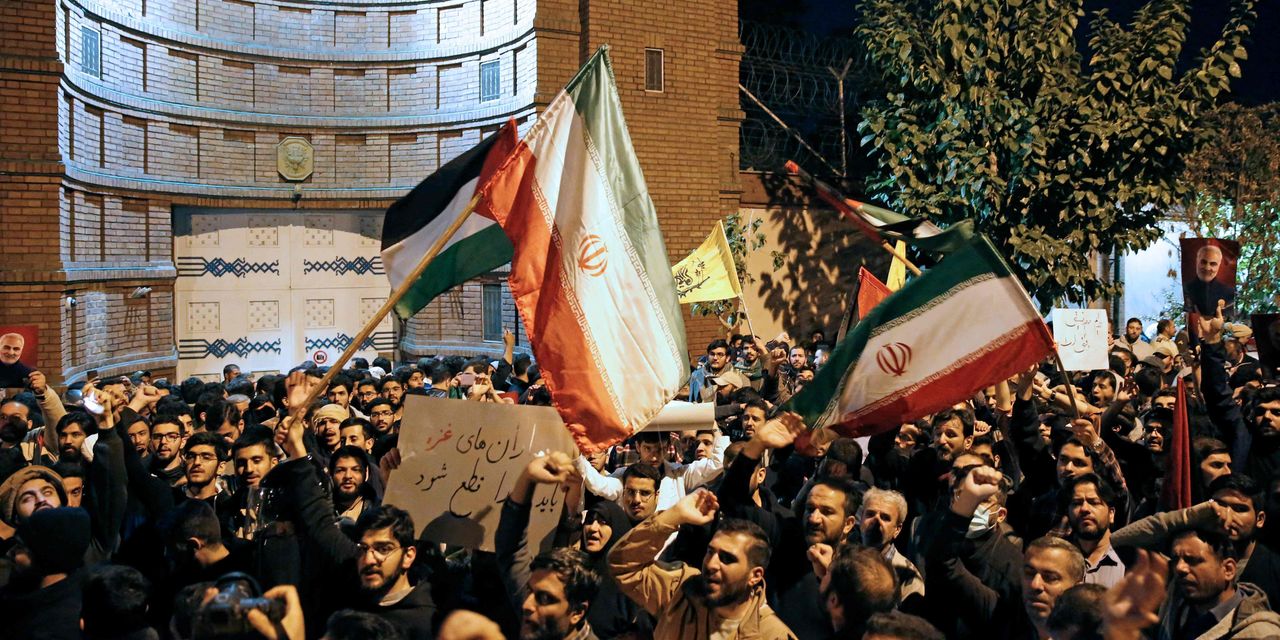
Oil prices surged on Wednesday, following a deadly blast at a hospital in Gaza City that left hundreds dead, and ratcheted up regional tensions, with Iran reportedly calling for an embargo on selling oil to Israel.
Signs of tightening U.S. crude supplies also helped lift prices.
Price action
-
West Texas Intermediate crude
CL00,
+1.79%
for November delivery
CL.1,
+1.75% CLX23,
+1.75%
rose $2.74, or 3.1%, to $89.40 a barrel. The contract settled flat at $86.66 a barrel on the New York Mercantile Exchange after losing 1.2% on Monday. -
December Brent crude
BRN00,
+1.67% BRNZ23,
+1.67%
the global benchmark, gained $2.86, or 3.1%, to $92.78 a barrel. On Tuesday, the contract gained 25 cents, or 0.3%, to $89.90 a barrel on ICE Futures Europe.
Market drivers
On Tuesday, an explosion tore through a Gaza City hospital filled with wounded and other Palestinians seeking shelter from ongoing war, with the death toll at 500 and rising, the Hamas-run Health Ministry said. Hamas has blamed the blast on the Israeli military, which in turn said the cause was a misfired rocket from a Gaza-based militant group.
Benjamin Picton, senior macro strategist at RaboResearch told clients in a note on Wednesday that following the tragedy, there’s a rising risk of “further escalation from Iran and Hezbollah, the former vowing a ‘harsh response,’ even including against the U.S., and the latter announcing a day of ‘unprecedented anger’ today.”
As anger spread through Arab region, Jordan canceled a planned Arab summit with President Biden, who touched down in Israel on Wednesday. Jordan’s foreign minister Ayman Safadi told state-run television that the nearly two-week old war was “pushing the region to the brink.”
Read: Biden tells Netanyahu it appears ‘the other team’ caused Gaza hospital blast
Crude prices have risen since the Oct. 7 attack by Hamas on southern Israel on fears that if Iran enters the conflict, the U.S. could increase enforcement of sanctions that would curb exports and further tighten global supplies. Iranian production has crept up to more than 3 million barrels a day, while analysts have pegged exports at around 2 million barrels a day.
Both Brent and WTI remain below the 2023 highs set in late September.
Iran’s foreign minister, Hossein Amirabdollahian on Wednesday called for members of the Organization of Islamic Cooperation (OIC) to stop selling oil to Israel oil and expel its ambassadors, Reuters reported. The OIC was holding an emergency meeting in Jeddah on Wednesday.
The hospital explosion set off protests against U.S. and Israeli embassies and consulates late Tuesday and into early Wednesday across the region, in Jordan, Turkey, Tunisia, Lebanon, with protesters also gathering outside British and French embassies inside Iran, according to media reports.
Picton said attention would turn to whether Iran and Hezbollah “make good on threats to open up a new front in the north.” And if Iran does get involved, that puts in play Rabo’s forecast of $100 a barrel oil before the year-end, which would ratchet up “further inflationary pressures from the supply side of the economy (and higher rates).”
Read:70% chance Israel-Hamas war spreads beyond Gaza, threatening oil, strategist warns
Oil also found support after industry data showed a fall in U.S. crude supplies.
The American Petroleum Institute late Tuesday reported that U.S. crude stocks fell 4.4 million barrels last week, according to a source citing the data.
The Energy Information Administration will report official inventory figures Wednesday morning. Analysts surveyed by S&P Global Commodity Insight, on average, expect crude inventories to show a fall of 30,000 barrels, with gasoline stocks down 800,000 barrels and distillates dropping 900,000 barrels.
Myra P. Saefong contributed to this report
Read the full article here