

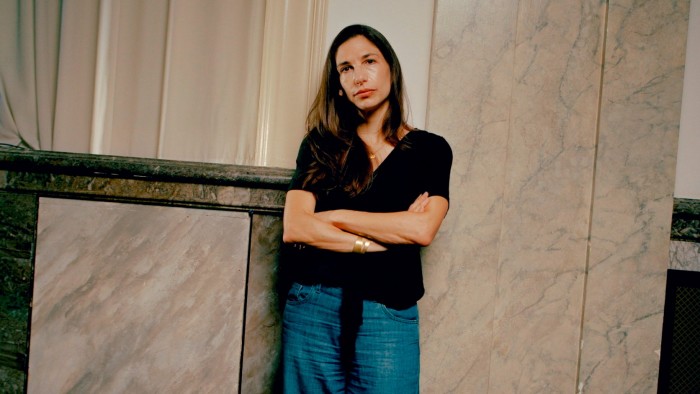
People often ask me, given my experience writing about fashion and sustainability, how and where I shop for clothes. It’s a tricky conversation to have because I don’t shop very much and, when I do, I head to second-hand stores first — typically Rags Consignments in Denver, Colorado, and Beacon’s Closet in New York.
Among those enmeshed in the world of sustainable fashion, I’m not alone. “Outside of underwear, everything else I feel better buying if it’s preloved,” says Ayesha Barenblat, founder of San Francisco-based advocacy group Remake.
But sometimes new is hard to avoid — or harder, let’s be honest, to resist. And there’s a strong argument for supporting ethical businesses.
In general, I prioritise natural fibres and brands that know where those fibres come from. Because even if it’s organic cotton, it can be a red flag if the brand doesn’t talk about where that cotton is sourced. Or better yet, if the brand is using organic cotton, what is it doing to expand the organic or regenerative cotton supply chain further?
Transforming existing supply chains is where the change needs to happen most, in terms of reducing fashion’s impacts; it’s also the hardest work to do, so any brand that’s trying gets extra points in my book.
A few other rules of thumb: I don’t buy polyester, and I stick to recycled nylon in cases, such as outerwear, where nylon really is the best choice. I look for details about the chemicals a brand uses or avoids. A lack of specificity there generally means a lack of attention — and a brand that’s not paying attention is almost definitely allowing some pretty toxic substances into its supply chain.
I also look for details about factory conditions and workers’ wages — on the hang tag if I’m physically in a store, or on the product page if I’m shopping online. Even more than materials or chemicals used in a garment, if details about the social side of manufacturing are missing, they are most likely missing from the brand’s priority list entirely — and in apparel manufacturing, the default is substandard working conditions and insufficient wages, or worse.
In general, it’s easier for small and independent brands to stay on top of these criteria than large ones. “Size matters — the bigger you get, the darker the supply chain gets,” says Barenblat.
She examines how much brands share about their practices. “What are you telling me about your supply chain? I’d say in 10 minutes you can see — how big is this brand, how transparent, are they talking about people and planet side by side? That’s my rule of thumb,” she says.
When I start searching for a new item, I might comb through brands that Barenblat’s Remake has given its vote of confidence to, or that are listed on the sustainable shopping app Commons or ratings system Good on You. I find these to be great sources of inspiration — but I treat them as starting points, not a green light.
Ratings systems are often incomplete, and they’re often riddled with affiliate links, which can result in potential conflicts of interest. Plus, brands evolve over time and their sustainability credentials shift. Then, while I browse styles, I dig into what a brand tells me about how it makes its products. If there’s one perfect-sounding material but I can’t find anything else about their manufacturing, I’m going to pass.
Because if a brand has a supply chain to be proud of, it’s going to make details about it easy to find.
It can feel like a time suck to put in the effort for one purchase. (That’s part of fast fashion’s appeal — it’s easy.) For me, finding something I feel good in that also aligns with my values is worth it.
While I feel confident shopping for myself, I continue to struggle with kids’ clothes. My children are aged eight and 12, and I can shop second-hand for a lot of their basics. But things such as underwear, which is expensive to buy ethically in the quantities we need, can feel like a trap. Other parents feel the same.
“For [my] underwear, I don’t compromise. I find the most ethical and responsibly made, at the most accessible price point that I can, for me. For my kid, if he wants the Teenage Mutant Ninja Turtles underwear, I’m going to get it,” says Whitney McGuire, a lecturer at Parsons School of Design and co-founder of consultancy and educational organisation Sustainable Brooklyn. She plans to invest in better options for him when he gets older.
Sometimes a need arises, and it can be hard to prioritise sustainability when you’re scrambling for a solution. We’re all going to have moments when we have to make compromises, but I like to think I’m doing a good job if the compromise moments are the exception, not the rule.
“I can count on one hand when I have bought them something new [outside of underwear]. Otherwise everything is second-hand — shoes, clothes, school uniform, outerwear, swimwear, you name it,” says Rachel Arthur, a UK-based consultant on fashion and sustainability. Her main question right now is how much buying she wants to engage in at all, even if it’s second-hand. “How do I encourage them [to think] that we don’t need new items just because we want them?”
This reflects something I think frequently about for myself — my choices will have impacts beyond whatever the specific item I settle on will. What products I buy, which stores I frequent, what reasons or occasions I choose to buy new things for — all of these decisions are teachable moments. Chances to role model the kind of conscientious consumer I want to be, the kind I hope my kids will become, the kind who is not complacent in a problematic system.
It’s the shopping version of what we all know is true: kids will always learn from what you do, not what you say. “If you show them that you want a dress for a party that is in two days, and you shop on Amazon with one-hour delivery, and that you care only about the price — they will replicate that,” says Sébastien Kopp, co-founder of footwear label Veja. (The French sneaker maker is the rare exception to the rule about brands losing supply chain integrity as they grow.)
Dana Davis, consultant and former vice-president of sustainability, product and business strategy at now-closed Mara Hoffman, told me a story recently about her daughter, who wanted a specific type of ruffled skirt. Our daughters are close in age, the middle-school age bracket where peer influence is strong and the targeted marketing even stronger, so the story — and how Davis handled it — resonated with me.
Davis’s first step was to have her daughter prove that the skirt would fit into her own wardrobe. “I get it, the tiered ruffle skirt, the girls are wearing it, you want it. Now, really show to me that it isn’t going to be something you get just because of that,” she says.
They eventually found the winning skirt. It took visiting a few different (locally owned) stores, and having some detailed conversations along the way — not just about materials and fit, but also what she’d wear it with. That was part of the point — to make it mindful.
“The important part for me was that it wasn’t about going shopping for the emotional part of it. That’s why she looked at her closet, and became more connected to the item we were getting. We’d spent some time thinking about it.”
Follow us on Instagram and sign up for Fashion Matters, your weekly newsletter about the fashion industry
Read the full article here