

Unlock the Editor’s Digest for free
Roula Khalaf, Editor of the FT, selects her favourite stories in this weekly newsletter.
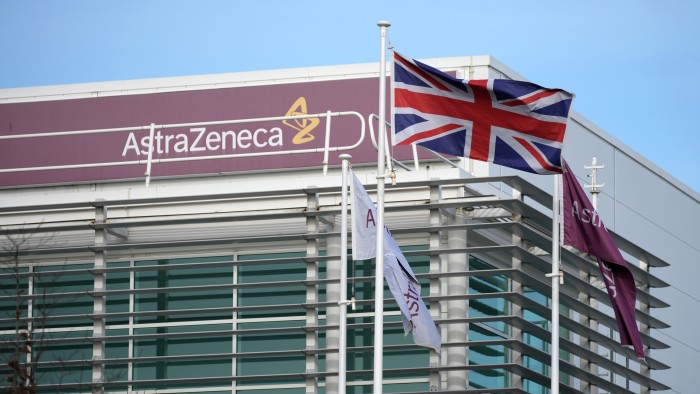
There may be a good bit of posturing in AstraZeneca chief Sir Pascal Soriot’s reported flirtation with shifting the listing of Britain’s largest quoted company to New York. Donald Trump is pressing drug companies to produce more — and reduce elevated prices — in the US, by threatening punitive tariffs on imported medicines. In Britain, pharma groups are wrangling with ministers over an NHS price cap scheme that they say is internationally uncompetitive.
Britain’s cash-strapped Labour government cannot fold to every corporate lobbying campaign. But it ought to heed Soriot and his peers. If not, it risks squandering the UK’s advantages in a sector it has vaunted as a central pillar of its industrial strategy.
Life sciences are a natural place to look for growth. Britain has world-class drug companies in AstraZeneca and GSK plus a vibrant biotech sector and outstanding science. With little over 3 per cent of the global pharmaceutical market, though, it has to strive to woo the likes of Pfizer, Merck or Roche, which tend to locate operations in places with big sales.
Trump’s focus on pharma has turned up the competitive heat and complicated the calculus for drug groups. Eli Lilly has raised the UK list price of its Mounjaro weight loss drug by up to 170 per cent — though not for the NHS — reflecting White House pressure to rebalance international pricing. AstraZeneca announced last month it would invest $50bn by 2030 in the US — where it makes 44 per cent of its revenues — in stark contrast to its cancellation in January of a $450mn expansion of a vaccine plant near Liverpool after disagreements over levels of UK government support.
The industry’s main frustrations with the UK are two-fold: tight restrictions on what the NHS pays for prescription medicines, and value-for-money rules that drugmakers say unduly restrict access for new treatments to the market. An agreement capping growth in NHS England’s branded medicines bill has led to pharma companies having to pay back a record 23.5 per cent of sales of newer medicines this year, four times the level under a similar scheme in France. The National Institute for Health and Care Excellence is still assessing whether to approve new treatments for the NHS against cost-effectiveness thresholds set in 1999. (AstraZeneca is irked that its Enhertu breast cancer drug was rejected for NHS use in England when it is available in Scotland and many European countries.)
Medicines now account for only 9 per cent of total UK healthcare spending, says the Association of the British Pharmaceutical Industry, against 15 per cent in France and 17 per cent in Germany and Italy. That has knock-on effects. Britain’s share of global investment in health R&D has declined. It is slipping down corporate launch schedules for new drugs. After falling from fourth to 10th in global rankings for final-stage drugs trials, the UK has recovered to eighth — and the government has plans to speed up set-up times. But drugmakers warn that Britain’s attractiveness for trials will be hampered unless standards of care are top-notch.
There is a strong case that NHS medicines spending has got too far out of kilter with European rivals. Narrowing the gap is not easy; with public finances super-tight, it means squeezing yet more productivity gains out of NHS operations. Handing more money to drug companies is politically tricky. Yet if patients have less access to cutting-edge treatments, that too hampers outcomes and efficiency.
Britain has other attractions for drug companies. The vast trove of NHS data could be invaluable to help design advanced treatments. The government is rightly committed to investing in boosting the science-rich Oxford-Cambridge Arc. But it needs to ensure satisfactory financial returns if it wants the UK not only to nurture new life sciences businesses, but to hold on to what it has.
Read the full article here