

Stay informed with free updates
Simply sign up to the Fashion myFT Digest — delivered directly to your inbox.
In the 1980s and 1990s, the “gangster” image in east Asia was as distinct as it was loud. In Hong Kong, headlines of actual violence vied for attention with glamourised, triad-funded blockbuster movies. By the 1990s, the stylised representation of gangsters in popular culture began to overshadow the criminal reality, casting the figure of the gangster as a cultural icon in its own right.
For organisations that relied on an ability to operate in the shadows, the gangster image was ironically hyper-identifiable to the general public. Consider Michio Soejima’s 1988 photobook Portraits of Japanese Gangs, featuring one leader in a leopard-print jacket and sunglasses. Or Bruce Gilden’s picture of a yakuza member smoking with slicked hair and a patterned tie, with a named nod to 1950s American mafia style. Some factions would even publish magazines of poetry and news.
“The yakuza had their own unique look that was considered stylish. What would generally be considered bad [taste] such as permed hair and brightly patterned shirts and sweaters was seen as cool by some young people at the time,” says Morohashi Yoshitomo, a former yakuza gangster turned criminal defence lawyer. “When I was a student, delinquent culture was something that people looked up to. Due to the influence of yakuza movies, being a delinquent made you more popular.”
Bōsōzoku, biker gangs at their peak in 1980s Japan, wore tokkofuku, or “attack clothes”. Inspired by right-wing military uniforms, tokkofuku was defined both by a dress code and its customisation. Members wore baggy, tapering trousers, accessories such as armbands and ribbons, and embroidered jackets personalised with quotes and messages.
In Hong Kong, Macau and China, triad members were often portrayed in popular culture in western suits accessorised with jewellery and sunglasses or boldly printed shirts and fabrics — mirroring the flamboyant fashion favoured by many real-life gangsters. Wan Kuok-koi, also known as “Broken Tooth”, was photographed handcuffed in a printed Hawaiian shirt. “Shanghai Boy” Kwok Wing-hung was known for posing in tinted aviator sunglasses, bowl haircut and a cream suit.
Throughout the late 1980s and 1990s, stories centred on triads gained traction in the Hong Kong film industry — many movies bankrolled by the gangsters themselves. These films helped cement the visual identity of the criminal underworld while drawing in younger audiences. Chow Yun-fat’s portrayal of Mark Lee in A Better Tomorrow (1986) with his trenchcoat and calm menace became a defining image of the genre. As did the long, floppy haircuts over leather jackets (and notorious gold Rolex) seen in Young and Dangerous (1996). Alongside these box office hits were less commercially successful projects such as Broken Tooth’s self-funded biopic — the premier of which he missed, having been arrested one week earlier.
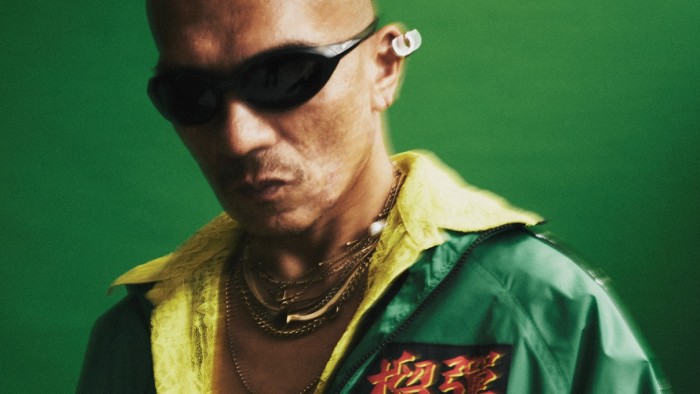
Gangster style was less a uniform and more a series of silhouettes: recognisable, dramatised and depicted with great artistic liberty. “What appeals to me about the Asian gangster is not his criminality, it’s his attitude,” says Hung La, creative director of London-based brand Lu’u Daan, which he founded in 2021. Lu’u Daan is inspired by gangsters both in fashion and attitude. The label’s roots can be traced to the name itself: the colloquial Vietnamese word for “dangerous man”. “You see it in the buckle they wear, in the attitude with which they wear their jeans.”
The quintessential image of Asian gangsterism, says La, occurs in a scene in Boiling Point (1990), in which Takeshi Kitano is pictured holding a bunch of flowers that contain a hidden machine gun. “This epitomises what I want to talk about. It’s the Yin and the Yang.”
The gangster has become a symbol of plurality. In movies, they are villains, heroes and anti-heroes. In fashion, their style offers an opportunity for nuance. Channelling the style of the gangster is more than just a creative reference, it is a way to show individuality. On how he distils that essence into his designs, La explains, “It’ll be the little touches that create depth, that say, ‘you cannot stereotype me into one thing’.”
While the ’80s and ’90s are behind us, the desire to tap into the freedom and complexity of those decades remains. It is seen in the work of designers who continue to experiment with the gangsters’ stylistic traditions and explore new ways to break the rules.
Japanese streetwear brand Neighborhood cites Bōsōzoku Japanese biker gangs as inspiration for its origins. Individual designers’ collections have borrowed from the style too — from Yohji Yamamoto’s Y-3 SS20, which featured embroidered details in a nod to the Bōsōzoku tradition, to Casablanca’s AW25 runway, which reinterpreted the classic silhouette with personalised leather jackets and jumpsuits.
Anthony Ramirez’s 2024 Bōryokudan collection is inspired by 1990s Japanese yakuza culture. Sharply tailored silhouettes, contrasting textures and fusion are fundamental to his interpretation of yakuza style. “Each model embodies a different character,” Ramirez says. “It’s a visual narrative and a tribute to a generation where anime, crime lore and personal style became forms of resistance, identity and art.”
“What appeals to me about the Asian gangster is strength, it’s virility — it’s a version of Asian masculinity that’s unapologetic and powerful,” says La. “I was apprehensive when we launched a brand around Asian gangsters. I didn’t want to put a story out there that was detrimental . . . but I realised that we should be proud of this version of ourselves. What’s interesting today is when things are a little unpolished, when it’s a little bit raw. Gangsters offer that.”
Read the full article here