

Stay informed with free updates
Simply sign up to the Middle Eastern politics & society myFT Digest — delivered directly to your inbox.
Tourists from Gulf states are flocking to Russia as the country deepens its ties with the region after years of western sanctions, enticing visitors with easy visas, cultural riches and even “action packed” military tours.
Cut off from many western travellers and in need of foreign revenue streams to fund its war in Ukraine, Moscow has simplified its online visa process for many countries and Russia has sponsored trips for Arabic-language TikTok and Instagram influencers.
The moves have paid off, with Gulf citizens a growing target market for its tourist destinations as the region plays an ever greater role in the global economy.
Total visits from the Gulf more than quadrupled between 2019 and 2024, according to the Russian tour operators association. The number of Saudi visitors to Russia grew six-fold between 2023 and 2024, Russian foreign minister Sergey Lavrov said in July.
Tourism has become an important strand of Russian-Saudi efforts to deepen diplomatic ties, and the two were close to agreeing a visa waiver programme, the countries’ foreign ministers said.
Saudi budget airline Flynas began operating three direct flights per week from Riyadh to Moscow in August and state-owned Saudia is planning flights to Russia’s capital this autumn. The United Arab Emirates-based budget airline Air Arabia has also announced it would launch seasonal flights between Abu Dhabi and Yekaterinburg in October.
The two countries’ foreign ministers “spoke highly about the growth of our tourist exchanges” at a July meeting in Moscow, Lavrov said.
The Middle East, Egypt and Turkey are still the top destinations for Gulf tourists, followed by western Europe when escaping the region’s searing summer temperatures. But more and more are now going to Russia for the lower cost and novelty of visiting somewhere new, encouraged by a flood of social media posts from the influencers visiting the country.
“The prices and marketing made me decide to go,” said Aqeel al-Dejani, a 27-year-old Saudi. There was “a lot of promotion for Russian tourism on social media platforms like TikTok and Instagram”.
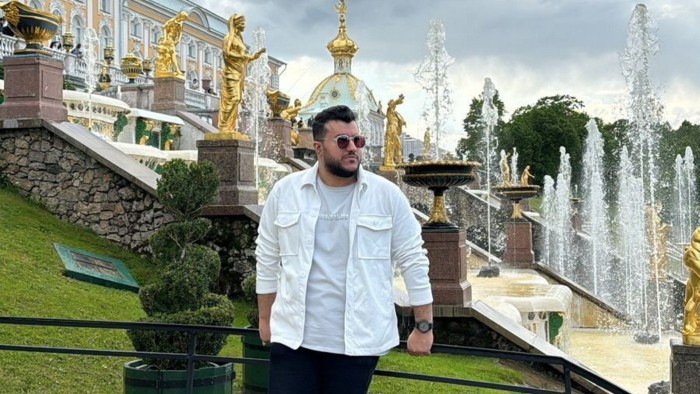
He spent 10 days in Moscow and Saint Petersburg in June and was particularly impressed by the architecture and history. “The Peterhof Palace with its huge gardens was magnificent,” he said.
Ostrovok, a Russian hotel booking website, said demand from Middle Eastern tourists grew by about a third in the first half of 2025 compared with the same period last year. Those tourists on average spent 30 per cent more per night than European counterparts, with nearly 80 per cent booking 4-star or 5-star hotels, said Daria Kochetkova, Ostrovok’s managing director.
Some are even braving the Russian winter for the thrill of something new.
“We were shocked by the weather,” said Hasan al-Qattan, a Saudi doctor who visited in February and said bundling up in temperatures of -10 Celsius was “part of the experience”.
“We knew it would be cold but we did not expect it to be that cold,” said the 28-year-old. “We come from a desert environment so we are not used to this kind of freezing cold weather.”
Inspired by videos of influencers marching in Russian army gear, Qattan booked a “military tour” that he said was the highlight of the trip. “The one we did is the ‘war experience’, where they give you a ride in a tank, do some light military drills, shoot a Kalashnikov and RPG. It was exciting and action packed.”
Gulf states have taken a neutral stance on Russia’s war with Ukraine. Despite pressure from western allies, the region has continued co-ordinating with Russia on oil production, helping President Vladimir Putin bankroll his war economy while also playing the role of mediators to exchange prisoners and hosting peace talks.
While Gulf visitors said they felt safe due to visible police presence in tourism hotspots, war-related sanctions have required some changes to travel practices. Credit cards such as Visa and Mastercard no longer work in Russia, forcing tourists to carry large amounts of cash and spend carefully for fear of running out of money.
And as Moscow jams GPS signals to prevent drone attacks, apps such as Google Maps and Uber have become unusable in the centre of the capital. “You are dependent on taxis even if the distance is not that far,” said a Saudi tourist.
But the sanctions-enforced absence of global brands did not bother Qattan and his friends, who mainly wanted to buy traditional souvenirs and praised the wide availability of halal food and variety of chocolate.
“We tried the ‘Alyonka’ chocolate with the legendary little girl on the cover, it was delicious,” he said. “We also picked up some Russian matryoshka dolls.”
Read the full article here