

Stay informed with free updates
Simply sign up to the Climate change myFT Digest — delivered directly to your inbox.
The EU has failed to agree a binding climate plan to cut greenhouse gases over the next decade in time for the UN general assembly next week, as divided member states signed up to a “statement of intent” instead.
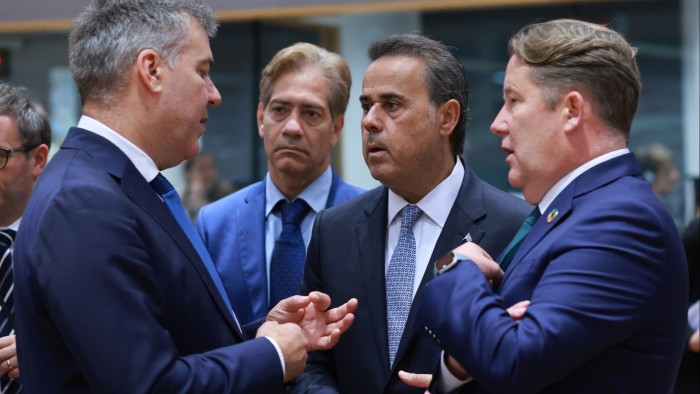
Environment ministers from the bloc’s 27 countries on Thursday said they would try to reduce emissions by between 66.3 per cent and 72.5 per cent by 2035, dealing a blow to hopes of EU leadership at the UN climate summit in Brazil in November.
They will need to agree on a legally binding plan, known as a nationally determined contribution (NDC) before the COP30 in less than eight weeks.
They are also negotiating on a 2040 goal, towards an agreed pledge of “net zero” emissions by 2050.
The UK leads the way with an 81 per cent goal from its 1990 peak emission levels, while Australia committed to a cut of up to 70 per cent from 2005 levels on Thursday.
Denmark, which holds the rotating presidency of the EU, defended the compromise. Lars Aagaard, its climate minister said: “We continue to stand united and will speak with one, clear voice at the United Nations. It shows a will of the EU and its member states to find solutions in and promote global climate action.”
However, climate campaigners attacked the outcome. Mary Robinson, former president of Ireland and UN High Commissioner for Human Rights, said it showed “weakness and indecision”.
Last year was the hottest on record globally and Europe is the fastest-warming continent.
The costs of climate inaction were hitting home, with €43bn of economic losses attributed to extreme weather this summer alone, Robinson said.
Shirley Matheson, of environment charity WWF, said: “This statement of intent is Olympic-level diplomatic gymnastics, a performance designed to avoid the embarrassment of arriving at COP empty-handed.”
“When it comes to climate ambition, the EU shouldn’t just be competing, it should be setting the bar high,” Matheson said. “With so many countries looking to Europe to decide on their own NDCs, this was a missed opportunity for the EU to raise the bar and inspire others to follow.”
European climate commissioner Wopke Hoekstra brushed aside the criticism.
He said the bloc could “confidently walk into New York next week with a range that by any international standard truly is ambitious . . . I think we can safely say that we’re still very much on the ambitious trajectory globally.”
He was supported by the UN climate chief Simon Stiell, who added the EU should aim “for the top of the range” in reaching agreement.
“If these targets are met with speed and at scale, the EU has so much to gain,” he said. “It won’t just be a global leader on climate change and clean energy, the more action it takes, the more the continent stands to benefit, with stronger economic growth and thriving new industries powered by cheaper and cleaner energy.”
But the bloc’s leaders are under pressure from the rising power of the far right, which has become the main political opposition in many countries and wants to halt the green energy transition, arguing it is costly for companies and citizens.
France, Germany, Poland and others forced a debate on the EU’s 2040 climate target after the European Commission proposed a 90 per cent cut. EU leaders will discuss it at a summit on October 23-24.
Several want more flexibility in meeting the target and net zero goal by 2050. That would include more use of offsets such as tree planting and exempting sectors such as defence.
Read the full article here