

By Emma Bird
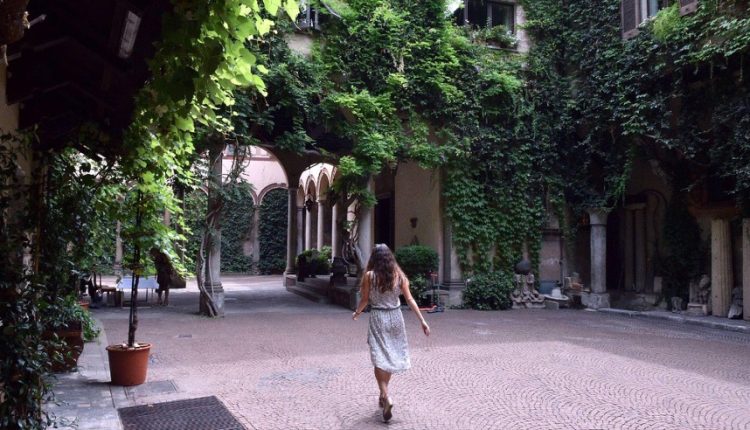
In a city known for its austere facades, a softer beauty lies behind Milan’s closed wooden doors. If you’re fortunate enough to be standing nearby when one swings open, you might glimpse a porticoed courtyard or leafy garden that seems to belong to another age. Hidden from the street, such spaces remain among the most coveted features of Milanese homes, imbuing them with both prestige and tranquillity.
From the Renaissance onwards, courtyards were conceived as the focal points of Milanese palazzi, historical town houses designed to confer importance and elegance. Porticoes, columns and marble paving lent gravitas, while their orderly proportions reflected the discipline of Lombard architecture.
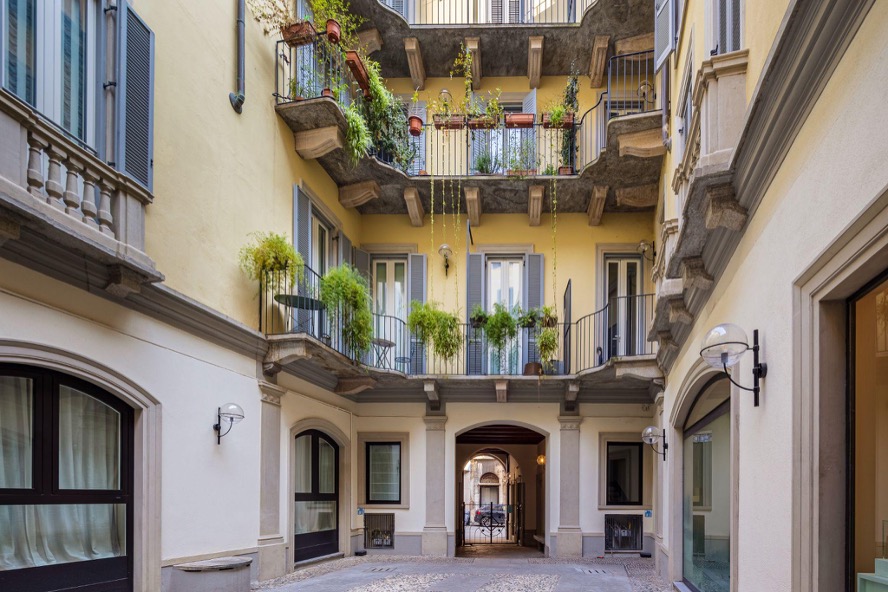
“If you have a courtyard, you have a more elegant building,” says Diletta Giorgolo, head of residential property at Italy Sotheby’s International Realty. “It gives what Italians would call a signore aspect, a sense of importance.”
Courtyards — or cortili — are a cultural emblem, too. During the city’s Design Week each April, many historic palazzi open their courtyards to the public, drawing crowds eager to glimpse spaces normally reserved for residents. In May, the annual Cortili Aperti initiative offers another rare chance to explore otherwise inaccessible courtyards, when private palazzi open their gates for a weekend.
Highlights of the city include the gothic Palazzo Borromeo, with its 15th-century frescoes and a porticoed courtyard where the family motto “Humilitas” still appears in sculpted reliefs, and Casa degli Atellani (main picture, top), the Renaissance residence that once housed Leonardo da Vinci while he worked on the mural The Last Supper nearby.
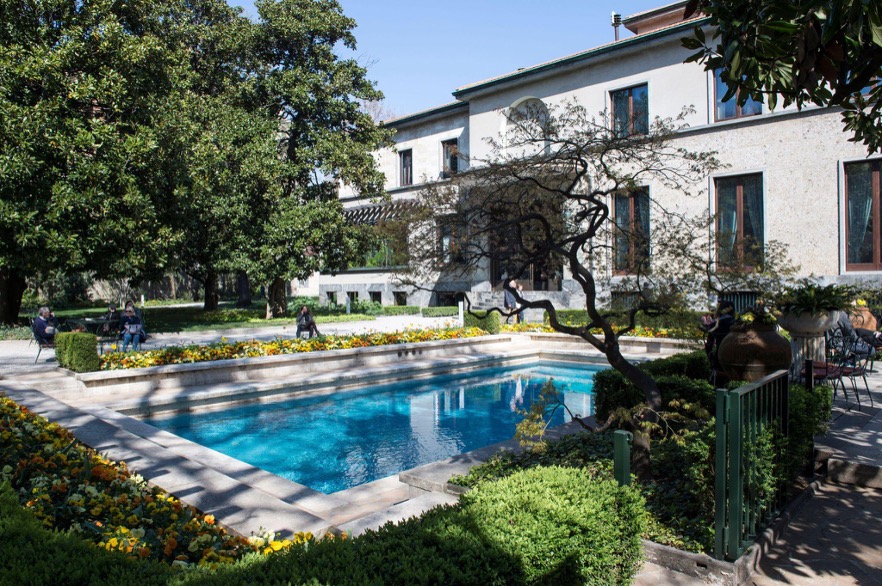
Villa Necchi Campiglio, the 1930s villa made famous in Luca Guadagnino’s 2009 film I Am Love, is another of the city’s showpieces, with a garden and pool, hidden just a few minutes’ walk from the Duomo.
However, even the most modest communal courtyard can confer an aura of dignity on an otherwise ordinary address. In Brera, the bohemian district at the heart of the city, a penthouse spreads across the fifth and sixth floors of a renovated palazzo. With ceilings rising over 6 metres high and a terrace overlooking the shared courtyard, it offers complete privacy — an elusive quality in central Milan. Currently configured as a well-maintained open-plan space with windows facing both east and west, it is on the market for €9mn.
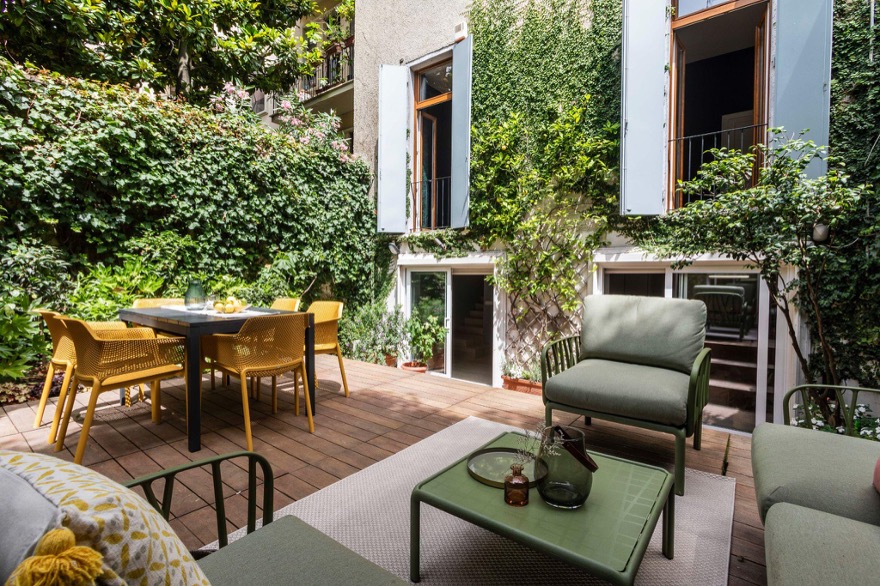
A more intimate example is a period two-bedroom villa on sale for €993,000, which is within walking distance of Dateo station on the new M4 metro line, which connects Linate airport to the city centre. Recently renovated, the home is spread over two levels, the first of which opens directly onto a decked area surrounded by greenery. There’s a large open-plan living and dining area with a contemporary kitchen, while upstairs is a spacious bedroom that looks out over the garden.
Such homes are in increasingly short supply. “To have private outdoor space in the centre is something truly exceptional,” says Raffaella Mastropasqua of Christie’s International Real Estate. “The Milanese are very conservative. If they have a courtyard or garden, they don’t put them up for sale. Families keep them for generations. It is very difficult to find these properties on the market and when they do appear they are snapped up immediately.”
One such rarity was the historic mansion once owned by writer and poet Luigi Santucci, near the Conservatorio di Milano, which sold earlier this year. With frescoes, wood panelling and a large private garden ideal for summer parties, it was emblematic of a tradition that has made these properties Milan’s hidden jewels.
“Courtyards are Milan’s terraces,” says Sotheby’s Giorgolo. “In Rome, everyone asks for a roof terrace. In Milan, it’s the courtyard. But there aren’t many, so they carry extraordinary value. They appeal to buyers looking for something with history and a soul.”
Photography: Alamy; Christie’s International Real Estate; Engel & Völkers
Read the full article here