

Stay informed with free updates
Simply sign up to the Oil & Gas industry myFT Digest — delivered directly to your inbox.
UK ministers have privately accused ExxonMobil of failing to engage constructively during months of negotiations aimed at preventing the closure of the US oil major’s Fife Ethylene Plant in Scotland.
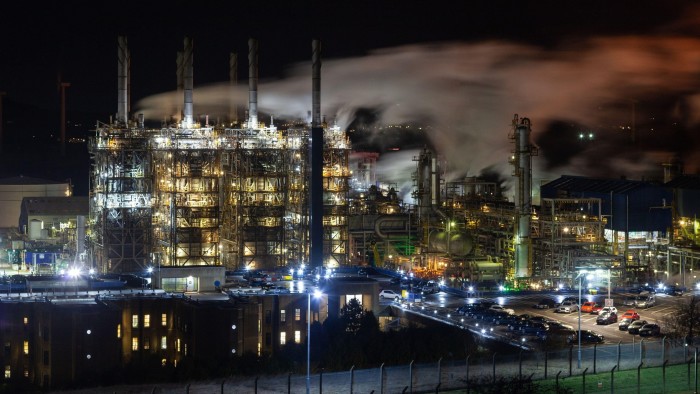
Exxon on Tuesday said it planned to close its ethylene unit at the Mossmorran complex and lay off 200 workers, citing the UK’s economic and policy environment, difficult market conditions and high supply costs.
During the negotiations, the government turned down Exxon’s request for financial support to help upgrade the plant, according to one person with knowledge of the talks.
Douglas Alexander, secretary of state for Scotland, said on Tuesday the decision to close the unit was “a commercial one for Exxon, a company which is facing significant global challenges”.
But correspondence with Melanie Ward, the local Labour MP, reveals frustration among ministers, including Alexander, over Exxon’s lack of engagement as they explored options for saving the Fife site. This included cancelling meetings set up by the Department for Business and Trade and the Scotland Office and failing to provide information requested by officials, he said in a letter reviewed by the Financial Times.
Exxon requested additional free allowance allocations from the Emissions Trading Scheme and an ethane contracts-for-difference scheme in June, according to the correspondence with Ward. Alexander said the company had been told that such requests were “unfeasible”.
Free ETS allocations allow companies to avoid having to buy allowances that offset carbon dioxide emissions. In renewable energy, CFD schemes allow governments to support low-carbon generation by guaranteeing a fixed price for electricity and paying developers the difference when the wholesale price falls below their cost-based price.
A similar scheme for ethane, the feedstock used at Mossmorran, would have helped cushion any production losses but at a high cost to the UK government.
Exxon asked Westminster to provide a capital investment of $1bn over three to five years to upgrade the ageing facility, but the company offered “no guarantee” that such an outlay would prevent closure, one person briefed on the discussions said.
Chris McDonald, industry minister, said Exxon had told him that the planned closure of the lossmaking site was not due to “a lack of action or will” on behalf of the government.
He told MPs that Exxon had estimated that it would have cost $1bn to make the plant profitable but, given broader challenges in the North Sea petrochemicals industry, the investment was “unlikely to outweigh the return”.
Another person with knowledge of the talks said earlier on Tuesday that Exxon had approached the UK government to explore whether it could obtain support to help the Fife plant. Discussions over financial assistance were constructive but unsuccessful, the person added.
The company first told the previous industry minister, Sarah Jones, that the plant was facing financial difficulties in April, according to the correspondence. In May, Exxon eventually revealed the full extent of its commercial concerns to Ian Murray, former Scotland secretary.
In June, the DBT and Scotland Office set up weekly calls with Exxon to keep abreast of developments and explore possible solutions.
“ExxonMobil representatives often cancelled these meetings at the last minute or did not attend,” Alexander wrote in the correspondence seen by the FT. “When they did attend, they would commit to providing information to officials that would not be forthcoming.”
In September, Exxon agreed to present a plan that was more feasible than its previous requests, but it did not engage with additional options for government intervention, according to the correspondence.
In early November, Alexander met Exxon — a month after he had requested a meeting — but said the company reiterated its ETS and CFD proposals.
“I was clear with the company that I was disappointed with the way they have engaged with us at both a ministerial and official level,” he wrote.
Exxon rejected criticism of its actions. “Our discussions with the government over many months were held in good faith,” it said in a statement late on Tuesday.
“We considered various options to profitably continue production, including engaging with the government on supportive policy. We also tested the market for a potential buyer but none of these routes were successful.”
Read the full article here