

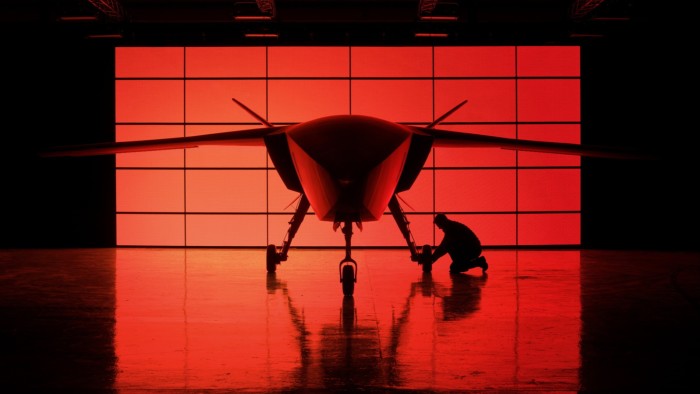
German start-ups are looking to fill the British army’s “drone gap”, and are investing in UK factories as the government pushes to remedy the growing shortage of unmanned weapons.
UK defence officials warn that slow procurement and outdated drones in their armoury mean Britain urgently needs to shore up its inventory of capable drones.
Germany’s fast-growing defence tech start-ups have moved to fill that vacuum, with Helsing opening a factory this month in Plymouth to make submarine-detecting underwater “gliders”. Its rival Stark, backed by US tech billionaire Peter Thiel, opened a plant in Swindon a day later.
Drone technology has been driven by the war in Ukraine, where cheap commercial drones have inflicted 70 to 80 per cent of casualties and changed the battlefield. The war has also exposed how far Nato states lag behind Russia and China in drone technology.
“There is a significant drone capability gap in the UK Armed Forces which needs to be closed fast if we want to have a credible force,” said David Roberts, UK chief executive for Arx Robotics, a German drone company that has said it will invest £45mn in a factory near London.
For the German groups, the UK is an attractive market both because it is Europe’s largest defence spender with an annual budget of £62bn this year, and has a more permissive licensing system for arms exports than many other European countries.
“When you bring [equipment] into service with the British military, the institution is very good at backing you in foreign export markets,” said Mike Armstrong, managing director for Stark UK.
The investments by Stark, Helsing and Arx come as Germany and the UK align their defence strategies through a defence co-operation pact the two countries signed last year, in which both sides pledged to work jointly on certain defence capabilities such as deep strike weapons.
In the UK, drone technology was highlighted by the government’s Strategic Defence Review, a defence doctrine released in June, which called for a 10-fold “increase in lethality” from investments in technology.
Helsing announced a £350mn investment in the UK to manufacture autonomous underwater submarine-detecting drones, although its leading strike drone is still manufactured in Germany.
Stark has not set an investment number but the plant in Swindon will produce a range of other weapons including sea drones and a long-range strike drone.
The continuing rapid evolution of drone technology meant that Britain faced a dilemma in its procurement as stockpiling drones made little sense given their short shelf life, said senior defence officials.
“The technology is moving so fast in Ukraine with upgrades and innovative adaptation of drones. If you were to buy a huge order of drones now, you’ll find them outdated,” said Al Carns, minister for the armed forces, at the opening in Swindon.
The UK Ministry of Defence’s drive to buy locally to boost domestic industry is among the key reasons the German start-ups have opened plants in Britain.
“I will not be funding something abroad which is bought off the shelf, full stop,” James Gavin, head of technology transition at the UK’s National Armaments Directorate, which oversees the development and delivery of weapons and equipment for the MoD, said last week.
Both Helsing and Stark have participated in trials of their strike drones with the UK military. Although Stark’s drones missed their targets, the German start-up described the experience as a learning exercise.
Defence executives, however, are concerned by the lack of new contracts being agreed by the MoD despite the government’s pledges to raise defence spending.
Core defence spending is expected to rise to 2.6 per cent of GDP by 2027 and to 3.5 per cent by 2035 — the largest sustained increase since the end of the cold war. However, planned spending through to 2027 remains very tight, with industry executives warning they are still waiting for long-term contracts to be awarded.
The MoD said: “Our Strategic Defence Review sets how we will make Britain safer from new threats in a more dangerous world, including ramping up development of autonomous systems. With £4bn committed to developing world-leading capabilities, alongside a new drone centre, we are accelerating the use of autonomous systems across the Armed Forces.”
Although the MoD said last month that it had sent 85,000 of a target 100,000 drones worth £600mn to Ukraine so far this year, procurement for its own forces has been far smaller, according to publicly available figures. The British Army has so far bought just 450 drones, with an additional 3,000 scheduled for delivery in August 2025. The navy and air force, meanwhile, have each acquired a small number of drones for testing and evaluation purposes.
Despite the presence of senior defence ministers, there were no high-profile contract announcements. Helsing and Stark, however, say they expect eventually to have supply agreements with the British military.
Even if the funding does materialise, the arrival of German drone makers has some British manufacturers warning that they risk being shut out of the MoD’s drone modernisation push.
One UK company called the focus on German and US companies short-sighted. “This is an opportunity being squandered due to a short-term desire to appear to be solving the problem,” said a British drone start-up founder. “Surely this is an opportunity to back UK companies already using proven UK production units across the country.”
Investments could come from larger defence contractors. BAE Systems has been working with small companies and other technology partners to develop its drone prototypes. The UK’s largest defence group acquired drone start-up Malloy Aeronautics in 2024. The company’s heavy-lift drones have been supplied to Ukraine via the UK government to deliver critical supplies.
Andrew Kennedy, a director in BAE’s air business, said retaining sovereign capability was “critical for the UK”. He added that it was crucial not just to develop drones, “but to integrate them into existing military operations and ensure they can be upgraded rapidly as technology and threats evolve”.
Additional reporting by Sylvia Pfeifer in London
Read the full article here