

Unlock the Editor’s Digest for free
Roula Khalaf, Editor of the FT, selects her favourite stories in this weekly newsletter.
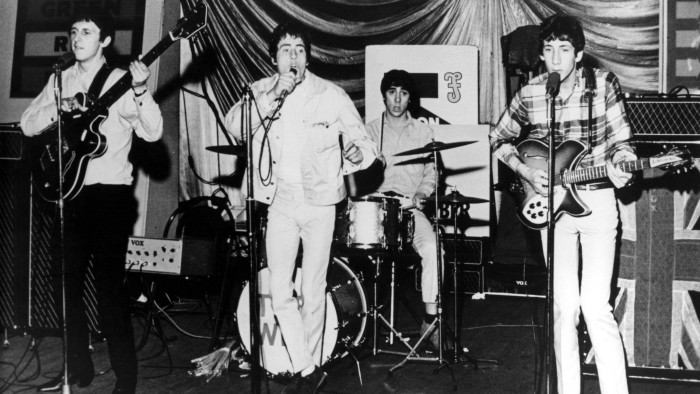
It is a truism that angst yields greater art than does benign contentment. Back in 1965, a youthful Pete Townshend turned his seething rage at the world around him into one of the greatest youth-rebellion anthems in musical history. It was punk rock more than a decade before punk actually happened.
Townshend had much to be angry about. Living in a flat in Belgravia owned by The Who’s well-heeled co-manager, Kit Lambert, the awkward teenager resented being looked down on in the street by his moneyed neighbours. “I was very, very lost,” he said years later. “I was trying to find a place in society.”
A strange incident brought his anger to a head. Having bought a 1935 Packard hearse for £30, aiming to turn it into a hot rod, Townshend was shocked when it was towed away by the police at the order of the Queen Mother, who drove past it daily on the way from her home at Clarence House to a friend’s house, and felt it to be an eyesore.
A big talking point was the song’s standout line: “I hope I die before I get old.” Daltrey told interviewers he’d take his own life before he got to 30, a stance he abandoned as he neared that ripe old age. The more politic Townshend claimed it referred to a fear of adopting “old attitudes” if he became rich and successful.
A blast of inchoate ire from the era of peace and love, “My Generation” remains The Who’s defining rallying call. Pete Townshend has never doubted its significance. “It is,” he has said, “the only really successful social comment I’ve ever made.”
Let us know your memories of ‘My Generation’ in the comments section below
The paperback edition of ‘The Life of a Song: The stories behind 100 of the world’s best-loved songs’, edited by David Cheal and Jan Dalley, is published by Chambers
Music credits: Polydor; Fantasy; Sony; BMG; Iron Maiden; Green Daze Music; Big Brother; Chrysalis
Read the full article here