

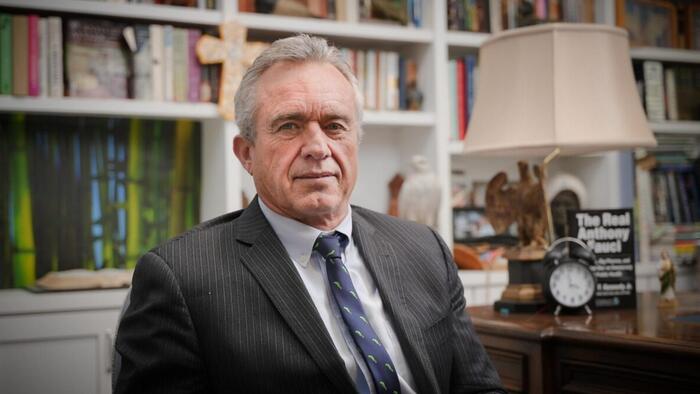
For much of the past year, America’s largest food manufacturers haven’t been able to rebut Robert F. Kennedy Jr.’s repeated claims that ultraprocessed foods are making Americans sick – something most Americans believe.
So instead of even trying to pretend their products are even the slightest bit healthy, the industry appears to have settled on a narrower counterargument; Yes, the food may be bad for you, but it’s CHEAP! And in an era when grocery bills have become a political liability (and who cares about the long-term drag on the healthcare system), that may be defense enough.
Food companies are making the case as they seek to blunt a growing wave of state-level efforts to regulate ingredients commonly found in ultraprocessed products. Those efforts, encouraged by Kennedy’s “Make America Healthy Again” (MAHA) movement, range from restrictions on synthetic dyes to warning labels for chemical additives. Industry executives and lobbyists argue that such measures, taken state by state, will drive up costs for consumers already struggling with inflation.
“The dynamic here is affordability,” Sam Geduldig, a managing partner at the Republican lobbying firm CGCN, which represents Kraft Heinz, told Politico. “You have a MAHA movement that would like to accomplish one goal, and then you have an inflation, economic affordability issue on the other side that runs counter.”
The argument has been sharpened for political effect. In late October, major food companies and trade groups – including Kraft Heinz, Nestlé and PepsiCo – launched a coalition called Americans for Ingredient Transparency. The group has begun a six-figure advertising campaign warning that a patchwork of state regulations would raise grocery prices and urging Congress to establish a single federal standard that would override state rules.
Businesses have long preferred federal preemption when faced with divergent state requirements, and the food industry is no exception. What is new is the framing. The coalition’s message is calibrated to appeal to Republican lawmakers uneasy about rising costs and skeptical of regulations that might be blamed for them.
“President Trump is cutting costs and delivering real relief for working families,” Andy Koenig, a senior adviser to the coalition and a former Trump administration official, said in a statement, “but these well-intentioned state bills are creating a patchwork of labeling regulations that could undermine his goal to lower costs for Americans.”
The industry’s push comes amid record lobbying spending in Washington. Trade groups and major manufacturers have poured millions into K Street as the Trump administration – more insular and more openly skeptical of corporate influence than in its first term – has proved harder to access. Polling commissioned by the industry underscores why affordability has become its chosen refrain: A recent POLITICO survey found that nearly half of Americans now consider grocery prices the “most challenging” household expense, outranking housing and health care.
Yet the industry’s economic argument runs alongside another political reality. Polls also show broad agreement with Mr. Kennedy’s view that ultraprocessed foods are damaging public health, particularly for children. In October, a survey by KFF and The Washington Post found that large majorities of Americans see highly processed foods as a major health threat.
Kennedy has leaned into that sentiment, often naming familiar brands. At his confirmation hearing, he contrasted the ingredient lists of American products with their counterparts abroad. “If you buy McDonald’s french fries in our country, there’s 11 ingredients,” he said. “If you buy Froot Loops in our country, they’re loaded with food dyes—yellow dye, red dye, blue dye.”
At the federal level, Kennedy is pursuing a rule change that would require additional scrutiny when food companies alter recipes or introduce new ingredients. At the same time, he has encouraged states, including Texas, Louisiana and Oklahoma, to move ahead on their own. Legislatures across the country have responded. More than a hundred bills targeting sugar, synthetic dyes and chemical additives have been introduced this year, nearly five times as many as last year, according to a POLITICO analysis.
Some measures have already passed. California enacted the nation’s first ban on ultraprocessed foods in public schools. Texas approved a law requiring warning labels on products containing any of 44 additives—a statute the food industry is now challenging in court.
“These state laws are ultimately going to lead to increased cost,” said Charles Leftwich, vice president for food safety and quality assurance at Sysco, the country’s largest food distributor. “Those costs are ultimately going to get passed down to consumers.” (or not?)
Consumer advocates and MAHA supporters dispute that framing. They argue that federal preemption would weaken standards rather than harmonize them, particularly given the industry’s influence in Washington.
“A federal standard favors large multinational companies with a lot of money to lobby for less restrictive standards,” said Jennifer Galardi, a senior policy analyst at the Heritage Foundation who focuses on MAHA-aligned issues. “We see a state-by-state approach as emulating the checks and balances that our federalist system was designed to produce.”
The tension is already visible inside the administration. The final version of a Kennedy-backed report on childhood chronic disease released in September softened language from an earlier draft that had described ultraprocessed foods as “detrimental” to children’s health. The revised document instead called for a federal definition of ultraprocessed foods—a shift some advocates attribute to industry pressure.
Earlier this year, companies including Kraft Heinz and Nestlé pledged to voluntarily phase out artificial dyes. But those gestures have not slowed a lobbying counteroffensive aimed at stopping state laws before they spread.
“It is one of the top things we are planning around,” said one lobbyist for a beverage company, speaking on condition of anonymity.
The strategy mirrors tactics used by other industries navigating the Trump administration. In November, a coalition backed by artificial intelligence companies launched a $10 million advertising campaign urging federal standards for AI regulation. The president signed an executive order weeks later. Health insurers and hospital groups have deployed similar campaigns to preserve Obamacare subsidies.
For MAHA advocates, the pattern is familiar – and troubling. States, they note, have often led the federal government on public health, from trans fat bans to chemical warning labels.
“This isn’t about affordability,” said Melanie Benesh of the Environmental Working Group. “This is about maintaining the status quo.”
Whether Congress embraces a federal food standard will test an open question in Republican politics: whether the party remains reflexively aligned with business interests, or whether Mr. Kennedy’s populist critique of corporate power has lasting influence.
For now, the industry’s most persuasive response to being accused of poisoning Americans is not a denial. It is a reminder that the poison, at least, is cheap.
Loading recommendations…
Read the full article here