

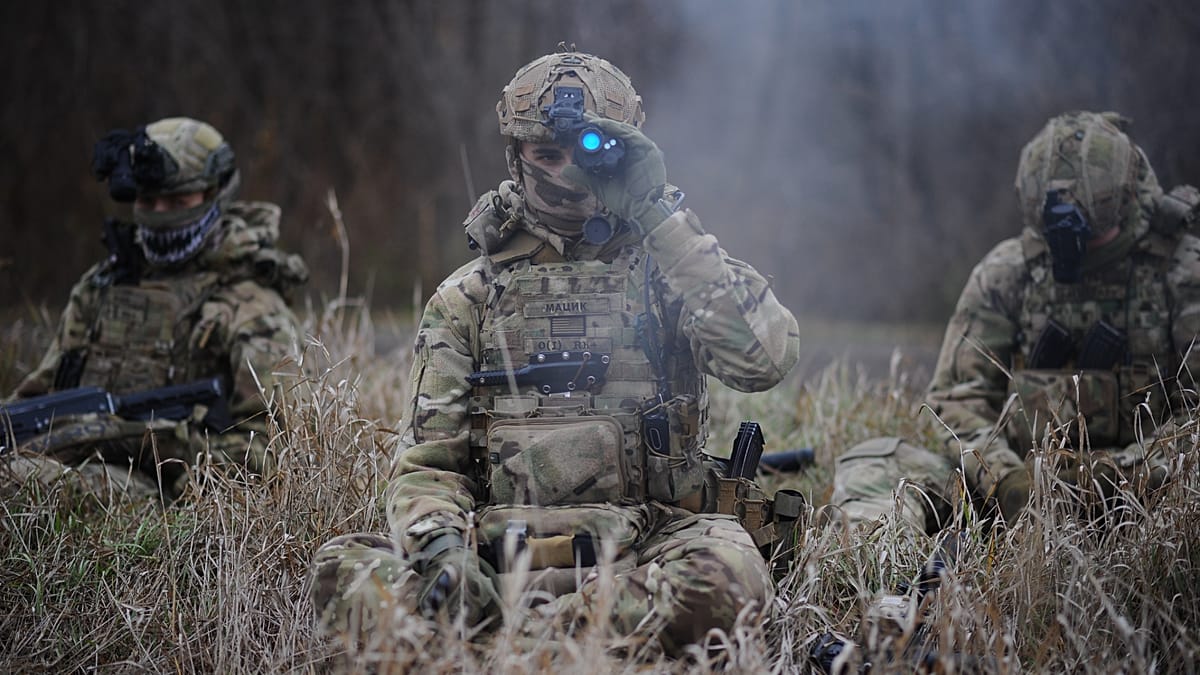
Europe is facing the possibility of a war arriving sooner than anyone expected.
On 11 December, NATO Secretary General Mark Rutte warned in a speech in Germany that Russia is escalating its war campaign against Europe, not just Ukraine.
“We must be prepared for the scale of war our grandparents or great-grandparents endured,” he said.
At the 2025 NATO Summit in The Hague last June, allies agreed to spend 5% of their GDP on defence each year by 2035. This aims to strengthen NATO’s military and get ready for possible conflicts, whether with Russia or other threats.
Meanwhile, the European Union has already implemented mechanisms to strengthen defence and preparedness, such as the “Military Schengen” (EU’s plan to let troops and military equipment move quickly across member states by cutting red tape), and the SAFE program (EU’s scheme to boost joint defence production and procurement by using EU-backed loans).
On 11 December, the EU made the bold move of indefinitely immobilising frozen Russian assets worth €210 billion; €185 billion held at Belgium’s Euroclear, and €25 billion held in banks across other member states.
European Commission President Ursula von der Leyen hailed the move that day, sending a strong signal to Russia that “as long as this brutal war of aggression continues, Russia’s costs will continue to rise.”
This move is the EU’s attempt to show the bloc still holds power at the negotiating table.
“This is a powerful message to Ukraine: We want to make sure that our brave neighbour becomes even stronger on the battlefield and at the negotiating table,” von der Leyen added.
The €210 billion in assets can only be released by a qualified majority of EU member states; no individual country can unilaterally return them. And the release of assets is conditional on Russia stopping the war in Ukraine and agreeing to pay reparations; demands the Kremlin has so far refused.
But how the EU and NATO are preparing is only one side of the story. The other is how you, the people living across Europe, feel about it.
Are you ready to go to war?
Your perspective is needed: Share your voice, join the conversation! Tell us what you think about the war in Europe, the strategic importance of defending EU borders, and European citizens’ readiness for a possible conflict.
Our poll is anonymous and takes just a few seconds to complete. The results will feature across EU.XL coverage; in videos, articles, and newsletters, and will help shape our reporting as we explore how Europe can defend itself against Russia and other threats by 2030.
Read the full article here