

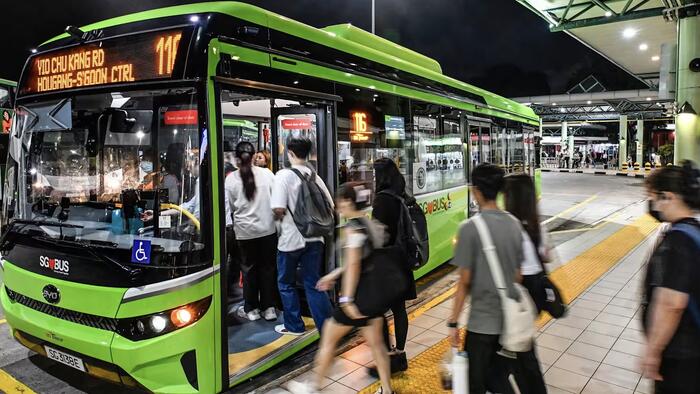
Chinese-made electric buses are rapidly gaining ground across Southeast Asia as governments push to decarbonize public transport and Chinese manufacturers seek growth beyond a slowing home market, according to Nikkei Asia.
In Jakarta, that shift is already visible. Transjakarta, the capital’s main bus operator, introduced electric buses from China’s BYD in 2022. It now runs 420 electric buses — nearly 10% of its fleet — including models from Skywell and Zhongtong, and plans to fully electrify its 10,000-bus fleet by 2030.
For veteran driver Muhammad Iqbal, the change has been dramatic. A decade ago, Chinese buses in Indonesia were known for breakdowns and even fires, forcing operators to rely on Japanese and European brands. Now, Iqbal says the new electric models are easier and more comfortable to drive. “It’s more comfortable to drive this electric bus,” he said. “It uses an automatic transmission, and drivers don’t have to queue at the gas station each [night] before returning [the buses].”
Nikkei writes that Chinese firms dominate the global electric bus export market, led by Yutong and King Long. In the first half of 2025 alone, China exported about 9,000 electric buses worldwide — a 124% increase from a year earlier. Southeast Asia still represents a small share of that total, but demand is accelerating.
In Indonesia, BYD has partnered with local manufacturer VKTR Teknologi Mobilitas, which opened an assembly plant in Central Java in May. The facility, capable of producing 3,000 vehicles a year, currently builds about 200 and aims to deliver 80 buses to Transjakarta by early 2026. Forty percent of the buses’ components are locally sourced, qualifying the company for government incentives.
Growth is also spreading regionally. Malaysia operates more than 140 electric buses and plans to deploy thousands over the next five years. Singapore has already ordered hundreds of electric buses from Chinese suppliers and aims to electrify half its fleet by 2030. The Philippines and Indonesia have set similar targets, driven by national EV policies.
Vietnam and Thailand are exceptions. Vietnam’s local manufacturer VinFast dominates its electric bus market, while Thailand is prioritizing rail investment over bus electrification.
The rapid expansion has also raised cybersecurity concerns. In November, Norway’s public transport operator warned that Chinese-made buses could be vulnerable to remote manipulation, prompting investigations in Europe. Chinese manufacturer Yutong rejected the claim. Indonesian cybersecurity expert Pratama Persadha cautioned that vehicle data could be exploited and urged governments to require cyberaudits for imported EV systems. As analyst Mark Manantan put it, “Whoever the company is, there will always be a cybersecurity risk.”
Loading recommendations…
Read the full article here