

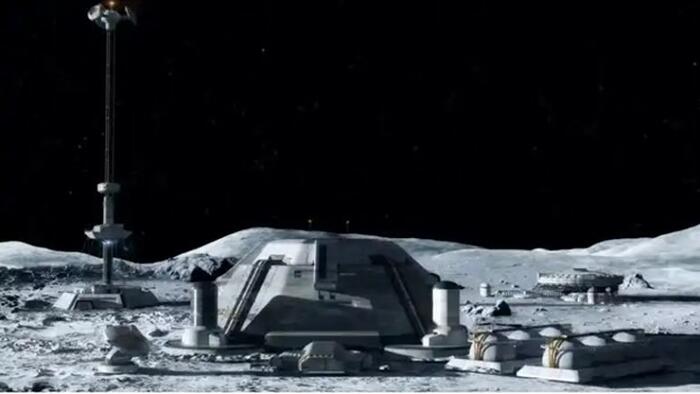
First it was data centers in space. Now it’s nuclear reactors on the moon.
The global space race is heating up again, but it’s more than about just reaching the moon. International partners are teaming up to develop and establish remote posts on the moon utilizing nuclear reactors as the primary energy supply. The Russians are teaming up with the Chinese, the French are teaming up with the Italians, and the Americans are teaming up with… well, more Americans.
The US announced an intention to develop lunar nuclear reactors last summer along with a similar announcement from China and Russia. This was eventually followed up with an executive order titled Ensuring American Space Superiority which explicitly directed the initial establishment of a permanent lunar outpost, including the launch of a lunar reactor, by 2030.
The latest development involves the DOE and NASA signing an MOU to collaborate on deploying reactors on the moon. Instead of pairing up with an international ally in the same way other countries have, the US intends to accomplish this new mission on its own.
“History shows that when American science and innovation come together, from the Manhattan Project to the Apollo Mission, our nation leads the world to reach new frontiers once thought impossible,” said U.S. Secretary of Energy Chris Wright. “This agreement continues that legacy.”
It’s important to note that this is not the first time moon reactors have been discussed. Years ago, NASA launched a fission surface power project with the target of deploying a 40 kW reactor on the moon. The concept introduces unique challenges: due to the low gravity, the fluids used for coolants won’t behave exactly as they do on earth, and surface temperature swings on the moon introduce additional problems on top of that.
Premium subs are already well informed on the potential participants in the new space race, but this latest venture for deploying reactor technology on the lunar surface introduces new potential beneficiaries.
The earlier moon reactor program incorporated six major participants organized into three teams: Lockheed Martin paired with BWXT, Westinghouse joined Aerojet Rocketdyne, and X-energy teamed up with Intuitive Machines.
Given the environment on the moon, the reactor is most likely to be a high-temperature, gas-cooled design, limiting the field of possible reactor developers. There are other novel concepts being developed by companies like Antares Industries, but here are some potential public market participants to consider: BWXT, Westinghouse (Cameco), Lockheed Martin, Northrop Grumman, Boeing, Nano Nuclear, and Terra Innovatum.
Loading recommendations…
Read the full article here