

Netflix co-chief executive Greg Peters said it is on track to win the backing of Warner Bros Discovery shareholders for its $82.7bn offer for the company’s film and television studios, adding that Paramount’s rival bid “doesn’t pass the sniff test”.
In an interview with the FT, Peters said only a “very small” number of WBD shares had been tendered in support of Paramount’s hostile $108bn offer for the entire company.
Netflix sought to win over any wavering WBD shareholders this week by shifting to an all-cash offer that it said would allow a shareholder vote as soon as April. The proposed deal entails Netflix taking ownership of HBO’s catalogue of hits and the century-old Warner Bros film studio.
Peters said the revised offer provided “greater deal certainty” than Paramount’s bid, which is part funded with $55bn of debt, and demonstrated the strength of Netflix’s balance sheet.
Oracle co-founder Larry Ellison, father of Paramount CEO David Ellison, has agreed to personally backstop the $40bn equity financing of the Paramount offer, which also encompasses WBD’s cable TV assets.
“Without Larry Ellison independently financing this thing, there’s no chance in hell Paramount would ever be able to pull this off,” Peters said.
“Paramount already is saddled with quite a lot of debt,” he added, describing the additional leverage needed to finance its $30-per-share offer as “pretty crazy”.
After WBD’s board rejected its latest bid, Paramount put its offer directly to shareholders. It could yet table a higher offer.
“If they were to move [higher], what kind of leverage would they have to have?” Peters said. “It’s hard to imagine how that works out well.”
He added: “It doesn’t pass the sniff test in my mind. And that’s what the Warner Brothers board determined. And I think that’s where the Warner shareholders are at too.”
Paramount had secured about 7 per cent of WBD shares in its tender, well short of the 50 per cent needed for control of the company, according to a proxy filing on Thursday.
Warner’s board was “rushing to solicit shareholder approval” for the Netflix deal at a special meeting, likely this spring, Paramount said. The company added that it would push for WBD shareholders to block the deal, arguing its offer was superior on both value and certainty.
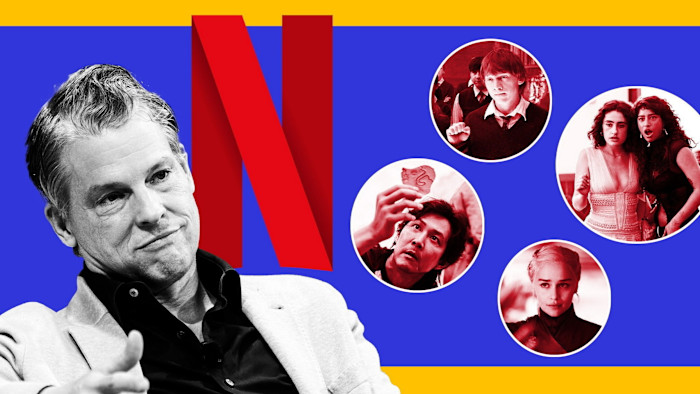
A deal uniting the Warner Bros studio with Netflix, a streaming pioneer with 325mn subscribers worldwide, would reshape Hollywood. The combined company’s catalogue would boast Warner’s Game of Thrones and Harry Potter and Netflix hits such as Stranger Things and Squid Game.
Hollywood is unnerved at the prospect of the company that upended the movie business becoming even more powerful.
Netflix’s planned takeover has sparked concern from filmmakers such as James Cameron, as well as unions and other groups representing producers and cinema owners.
They worry that Netflix will undermine cinemas by shortening exclusive windows for screening or by simply adding movies on to its streaming platform immediately upon release.
Ted Sarandos, co-chief executive with Peters, has said for years that the company was not interested in broad cinematic releases. Netflix has released films in the past, but usually in limited numbers of cinemas and for the minimum time required to qualify for major awards.
But Sarandos and Peters have vowed to commit to the same theatrical release windows as Warner Bros — typically at least 45 days in the cinema in the US. The executives have been trumpeting their new pro-film argument to a sceptical Hollywood.
“The rationale and the logic of why we wouldn’t want to go blow up something that’s working is pretty clear,” Peters said. Netflix last week announced a $7bn agreement to secure exclusive streaming rights to Sony Pictures’ theatrical releases after they have aired in the cinema.
The company wanted to increase the amount of content it produced, Peters said, and planned to increase spending this year by 10 per cent to about $20bn, regardless of whether it bought WBD. The deal, he added, would further this ambition.
Both the Netflix and Paramount bids are expected to be closely scrutinised by regulators in the US and Europe.
US President Donald Trump has said Netflix’s “very big market share” in streaming could pose a problem. The combination of Warner’s HBO Max service and Netflix would likely exceed 30 per cent market share in the US streaming market — the threshold at which the Federal Trade Commission and US Department of Justice deem competition is substantially lessened.
Based on their individual subscriber bases today, Netflix and WBD would have more than 420mn streaming customers combined. But Peters claimed that the “vast majority” of HBO subscribers are already Netflix subscribers, meaning the customer base of a unified company would not be as large as it first appears.
He also argued Netflix competed with many operators that sit outside the conventional definition of a streaming platform. The company cites Nielsen data showing that it is in sixth place in market share of US TV viewing, behind YouTube, Disney and others.
However, Nielsen ranks Netflix as the second-largest streamer in the US by monthly viewing time, behind only YouTube.
“We’re below 10 per cent of TV hours in every market that we serve . . . big tech is spending a lot of money as competitors in the space, whether it’s Amazon with MGM and Prime Video [or] Apple.”
The long-standing relationship between Trump and Larry Ellison is seen by some analysts as an advantage for Paramount in securing regulatory approval. But Peters believes the Netflix-WBD deal is “highly aligned with what [Trump’s] goals and expectations are for how American companies should be successful”.
By spending big on a major film distributor, Netflix would apparently contradict two of its long-held preferences. Firstly that it builds rather than buys businesses and secondly that it does not want to be in the conventional “wide release” movie business.
Peters said that despite the public rhetoric — Sarandos called the traditional cinema business “outdated” only last spring — being in the more traditional movie business has always been on the table.
“We have often . . . debated building that theatrical business,” he said, adding that “it’s something we have debated probably 20 times” since he joined Netflix in 2008. The timing was not right before, he said, but “you pivot based on opportunities”.
“When you have the ability to access mature, built businesses that are running and are doing positive things, you don’t throw [this] away.”
Netflix shareholders are already taking a hit from its pursuit of WBD.
This week, the company announced it would pause share buybacks to help fund the deal and said operating margins in 2025 shrank by 3.7 points to 29.5 per cent because of $275mn of deal-related expenses.
The disclosures sent its shares down about 5 per cent after market close. Netflix has suffered a decline of about $70bn in its market capitalisation since it emerged last month that it had entered exclusive talks with WBD.
But Peters is confident that — beneath the hullabaloo surrounding the WBD deal — the Netflix machine is humming along nicely. The company reported this week that net profit rose 29 per cent in the fourth quarter to $2.4bn, compared with last year.
Peters admitted that the deal had created uncertainty for investors but said that he was focused on making sure Netflix continued to perform.
“I just sort of try and tune out some of the noise and just focus on what we can control,” he said. “Let’s keep moving things forward.”
Read the full article here