

Authored by Frank Fang via The Epoch Times (emphasis ours),
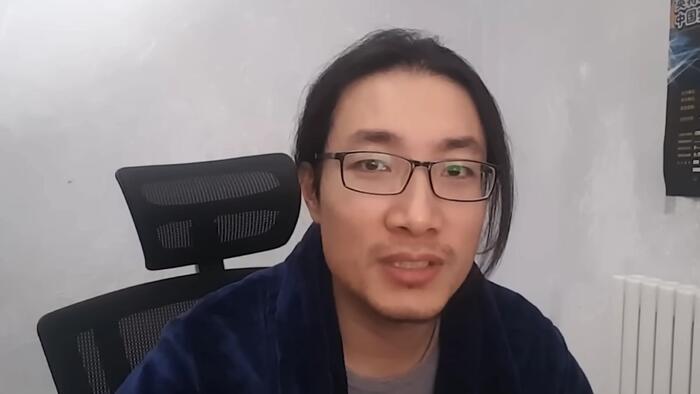
A pro-democracy activist who fled China after documenting what he described as concentration camps in the Xinjiang region was granted asylum on Jan. 28 by a New York state immigration judge, amid widespread concern about the risks he would face if deported.
Guan Heng, 38, applied for asylum after arriving in the United States illegally in 2021. He was living in New York state before he was detained by Immigration and Customs Enforcement in August 2025.
The case attracted international scrutiny in December 2025, with lawmakers in two dozen countries, including the United States, urging the Department of Homeland Security (DHS) to abandon its plan to deport him to Uganda. The agency subsequently canceled the plan.
During the Jan. 28 hearing in Napanoch, New York, Judge Charles Ouslander said that because Guan had filmed a video of the Xinjiang region, Guan had a “well-founded fear” of being persecuted if he were sent back to China.
Guan was asked whether he filmed the detention camps and released the video shortly before arriving in the United States to support his asylum case. He said that was not his intent.
“I sympathized with the Uyghurs who were persecuted,” Guan, speaking by video link from the Broome County Correctional Facility in Binghamton, New York, told the court through a translator.
Human Rights in China (HRIC), a New York City-based advocacy group that has advocated for Guan’s release, has detailed Guan’s journey from China to the United States. In 2020, he read a BuzzFeed News report on detention centers in the Xinjiang region and decided to verify it, HRIC said.
In October 2020, Guan traveled to the Xinjiang region alone. He released most of his video footage on YouTube in October 2021, the same month he arrived in Florida by boat after sailing from the Bahamas, to which he had traveled from Ecuador after fleeing China, according to the advocacy group.
HRIC characterized Guan’s video footage as an “extremely rare, first-person, on-the-ground video from a Chinese citizen.”
A month after Guan released his video, Chinese authorities, led by state security officials, began systematically targeting Guan’s relatives in China in what HRIC called “collective punishment.”
Guan told the judge that Chinese police had questioned his father three times since he released the video.
Guan’s attorney, Chen Chuangchuang, argued in his closing statement that his client’s case represents a “textbook example of why asylum should exist” and said that the United States has both a “moral and legal responsibility” to grant Guan asylum.
In December, before the DHS shelved its plan to deport Guan to Uganda, Chen spoke to NTD, a sister outlet of The Epoch Times, about how the Ugandan government “has a troubling record of cooperating with the Chinese Communist Party in making arrests in Uganda.”
“Sending a well-known dissident like Mr. Guan to Uganda would be unsafe,” Chen told NTD, according to a translation of his remarks in Chinese.
The judge said in his ruling that Guan had proven his legal eligibility for asylum, describing him as a credible witness. He said Guan faced a real risk of retaliation if returned to China, noting that Chinese authorities had questioned his family members and asked about his whereabouts and previous activities.
Guan was not released immediately, as a DHS lawyer said the agency reserves the right to appeal within 30 days. The judge urged the department to make a swift decision, noting that Guan has been detained for about five months.
Rights groups and activists have welcomed the judge’s decision.
Clayton Weimers, executive director of Reporters Without Borders North America, applauded the court for recognizing “Guan Heng’s courageous work and the risks he would have faced if deported,” according to his statement.
“His footage of Uyghur concentration camps was invaluable to journalism that helped expose the horrors in Xinjiang, a region where the Chinese Communist Party (CCP) has committed crimes against humanity and genocide, according to the US State Department,“ Weimers said in the statement. ”Guan’s asylum is a rare win for press freedom under the current administration.”
Both the Trump and Biden administrations have formally declared the Chinese regime’s treatment of Uyghurs as “genocide” and “crimes against humanity.”
Rayhan Asat, a human rights lawyer of Uyghur heritage at the Atlantic Council, said “the American people stood up to defend Guan Heng’s rights and American values,” according to a post on X.
“The rule of law prevailed,“ Asat wrote. ”America will be better today because Guan Heng will be part of the American dream.”
The Associated Press contributed to this report.
Loading recommendations…
Read the full article here