

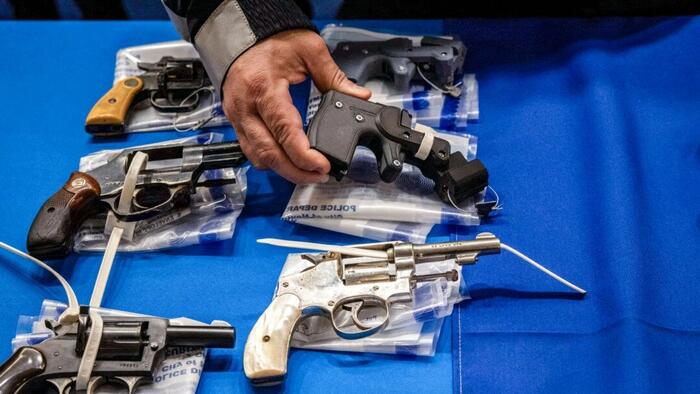
California Attorney General Rob Bonta has filed a lawsuit against two out-of-state companies and more than 100 individuals, accusing them of distributing computer code that lets people 3D-print their own firearms – a case critics say pits the right to bear arms and free speech against Sacramento’s latest gun-control crusade.
In a San Francisco Superior Court filing on Feb. 6, Bonta and San Francisco City Attorney David Chiu allege Florida-based Gatalog Foundation Inc. and CTRLPew LLC unlawfully distributed digital blueprints and computer code used to manufacture hundreds of “ghost guns” and banned accessories like Glock switches and illegal high-capacity magazines.
The complaint claims defendants made available over 150 designs for weapons and components that can be 3D printed at home – including frames, receivers, and suppressors – without serial numbers or background checks. California law already bars unlicensed firearm manufacture, background check-skipping schemes, and, more recently, distributing the code that makes it all possible.
According to the complaint, California laws “specifically prohibit 3D printing firearms and prohibited firearm accessories without a license to manufacture firearms, and since 2023, has also prohibited the distribution of computer code for printing them to those without a license.”
“Dangerous Untraceables,” Says Bonta
Bonta claims that people making their own guns constitutes a “public safety crisis,” as law enforcement seizures of ghost guns in the state skyrocketed from 26 in 2015 to an average of 11,000 per year since 2021. Prosecutors argue ghost guns bypass serials, background checks and traditional gun-safety measures, making them a magnet for people prohibited from possessing guns.
“These defendants’ conduct enables unlicensed people who are too young or too dangerous to pass firearm background checks to illegally print deadly weapons without a background check and without a trace,” Bonta said in the press release.
But gun-rights advocates argue there’s more to the story.
“The Second Amendment protects the right of the people to keep and bear arms – and that right does not disappear because California dislikes how a firearm is made,” Gun Owners of America Senior VP Erich Pratt told ZeroHedge. “For generations, Americans have lawfully built firearms for personal use. This lawsuit doesn’t target criminals; it targets constitutionally protected conduct and even speech itself. You don’t defend public safety by gutting the Second Amendment and criminalizing law-abiding citizens. Criminals will continue to ignore the law, as they always have.”:
Hobbyists or Criminal Enablers?
Among the named defendants is gun-rights attorney Matthew Larosiere – long a voice for hobbyists who argue it’s been legal for Americans to build firearms for personal use so long as they obey federal law. Critics of the lawsuit, including analysts in the gun-rights community, say this latest action blurs the line between hobby and crime and could chill lawful expression and innovation.
Indeed, the complaint’s own exhibits show some files are labeled with names like FGC-9 – shorthand for “F** Gun Control”* – and include detailed step-by-step instructions with shopping lists and recommended printer settings that make it easy even for beginners to produce frames compatible with common commercial parts.
To opponents, the lawsuit isn’t just about public safety – it’s about free speech and the right to arms. The digital codes at issue are arguably analogous to protected technical speech, and their suppression raises alarms in a state already notorious for some of the strictest gun laws in the nation.
A Patchwork of Law Meets Cutting-Edge Tech
California has been tightening its grip on ghost guns for years, adding prohibitions on 3D-printed firearms and the distribution of associated digital files only in the past few election cycles. At the federal level, the U.S. Supreme Court upheld regulations on ghost guns in 2025, underscoring the legal complexity around homemade weapons.
Elsewhere, courts have diverged. In Minnesota, for example, a state Supreme Court ruled that older firearms lacking serial numbers aren’t automatically criminal — a nod to common-sense recoil against overbroad interpretation of serialization laws.
What’s Next?
California is seeking an injunction to halt distribution of the files and other relief. Gatalog and CTRLPew didn’t immediately respond to requests for comment, but gun-rights groups are already lining up to challenge this on constitutional grounds.
Whether you see DIY firearm blueprints as a dangerous loophole or a legitimate exercise of liberty, one thing is clear: this lawsuit marks a high-stakes test of how far states can go in regulating code, guns, and the rights of citizens in the digital age.
Loading recommendations…
Read the full article here