

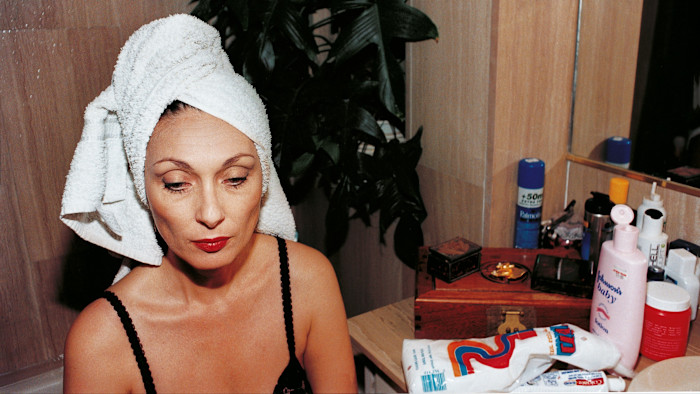
As someone who has written extensively about anti-ageing, I consider myself fairly sanguine about how I look (no Botox, no fillers, just a lot of good face cream). A few months ago, however, I was photographed by a Visia machine, a facial-imaging system that analyses everything from your pores to your pigmentation and tells you how old you look. I had it done once before, 20 years or so ago and, at the time, was annoyed to be told that I looked an underwhelming one year younger than my real age. This time, though, things had got much worse. According to the machine, I now look an unprecedented seven years older than my biological age of 50.
I was surprised at how badly this affected me. I texted friends. I wailed to my husband. I couldn’t get the image of me at 80 (yes, they show you that too) out of my head. I wondered, for the first time, whether I should finally get Botox. What I hated most was the sudden, intrusive thought that the belief I’ve always had – that wrinkles aren’t something anyone needs to worry about and that signs of ageing should be celebrated, not concealed – was something that only applied to other people’s faces, not mine.
Ageing is complicated. As a population, we have never been older and yet, as a society, we seem more obsessed than ever with looking younger, feeling younger, staying younger. Who didn’t find themselves googling “deep plane facelift” after Kris Jenner debuted her noticeably “refreshed” appearance at her 70th-birthday party last year? And the pursuit of youth is starting ever younger. The most recent survey from the American Academy of Facial Plastic & Reconstructive Surgery notes that roughly a third of facelifts are now performed on those aged between 33 and 55. So-called “Sephora tweens” use skincare that skews far older than their age bracket, and TikTok abounds with outlandish exercises and gadgets designed to halt the march of time.
A new exhibition, The Coming of Age, at London’s Wellcome Collection explores our evolving attitudes to ageing. Its curator, Shamita Sharmacharja, has brought together artists and organisations who challenge the idea that our chronological age should define us. Works by artists Paula Rego and Sam Taylor-Johnson sit alongside projects such as It’s on the Cards, where young people interrogate the inherent ageism in birthday cards and reimagine them as “age positive”. “I think it would be a positive thing if we can get to a point where age doesn’t feel so linear,” says Sharmacharja, “where it’s not so much about numbers and more about life stages, or even just a collection of moments in which defining things have happened to you. When you look at the exhibition, there’s a feeling that chronological age doesn’t mean that much.”
The exhibition features examples of the way in which youth and vitality have always been powerful sales tools, such as the 1930s adverts for Kellogg’s All-Bran that show two women: one with “the bloom of youth” and the other “wrinkled, grey, careworn, far older than her years” (no prizes for guessing which one eats All-Bran). There’s also a powerful selection of self-portraits by the American artist William Utermohlen that encompasses works completed following his Alzheimer’s diagnosis, creating a moving documentation of the psychological and physical effects of the disease, and an image of the photographer Elinor Carucci’s single grey hair sticking up straight out of her head, taken from her 2019 book Midlife, which documents in detail the changes she was witnessing in her body.
Within the beauty world there have long been attempts to move towards a more age-positive attitude. Dove launched its industry-changing Real Beauty campaign in 2004, aiming to break down beauty stereotypes by featuring real, unretouched women instead of models. Botox had become mainstream, and over-zealous early enthusiasts faced a backlash from those appalled by their freakishly frozen faces. In skincare, the emphasis shifted from wrinkle-fighting to something more ageless: the pursuit of radiance and glow.
But things are different now. It’s the age of Ozempic, and the attendant loss in facial volume that can result from significant weight loss – and also of AI, where tasks that used to take hours to complete are ready at the touch of a button, changing our relationship with concepts such as wisdom and experience. Bottom line: no one wants to look – or seem – old. This shift away from ageing naturally is something the actor Kate Winslet recently identified as happening more than ever in Hollywood, saying no one’s listening to the discourse around real beauty “because they’re obsessed with chasing an idea of perfection to get more likes on Instagram”. For Sharmacharja, the renewed obsession with youth is also partly about staying in the conversation. “I think a lot of the extreme focus on anti-ageing that is happening now, like people getting preventative Botox at 20, is about not wanting to become someone who’s irrelevant,” she says. “It’s about trying to project yourself forward, in a way.”
Many of the high-profile women who embrace a more natural approach to ageing also describe the challenges of staying “age positive”. Jamie Lee Curtis has called for the term anti-ageing “to be struck” – although admits she finds it easier to live in “pro-age” acceptance if she doesn’t look in the mirror too often. And the model Paulina Porizkova uses Instagram to talk about her own conflicted attitude. An Estée Lauder “spokesmodel” between 1988 and 1995, she has spoken about her anxiety over “helping to sell a vision of beauty inextricably linked to youth”. Now, Porizkova has returned as global brand ambassador and “a mature, three-dimensional woman with opinions” – but says “this physical ageing stuff demands an inner courage I’m still working on”.
A few weeks ago, the make-up artist and brand founder Ruby Hammer found herself compelled to post a video on Facebook to deny that she had had “tweakments” such as Botox and fillers. “It was ridiculous,” she says. A profile featuring her had run online talking about how she looked so good at 64, but she noticed that in the comments, people were saying there was no way her appearance was “natural” and that she’d clearly had work done. “Which I hadn’t!” she says. “I’m not anti-tweakments at all – I’ve tried lasers and I like Profhilo, because it’s just hyaluronic acid that occurs naturally in your body anyway. But I don’t have Botox – I’ve done it twice in my whole life, both times in my jawline – and I’ve never had fillers. No one should really have to justify the choices they make about their appearance, but I felt I had to defend myself.”
There’s no denying, though, that her skin does look amazing. Hammer puts it down to having had a really good, consistent skincare routine, every single day, “for nearly 50 years”. Here’s what she does: double-cleanses at night (“to remove make-up and SPF, you really have to”), then sometimes uses retinol but always a good moisturiser. (She’s currently enjoying a return to the original Crème de La Mer.) In the daytime she does a light cleanse (she likes CeraVe’s Hydrating Cleanser, which she used to bring back from work trips to the States before it became available in the UK), a treatment serum (“pick your biggest concern, whether it’s wrinkles or age spots or redness, and find a targeted one for that”) followed by “the best eye cream you can afford” – she likes Sisley, Clé de Peau and Perricone MD – and a day cream (currently Tatcha The Dewy Skin Cream) then an SPF. She also loves facials “with lots of massage. And it’s a cliché but my biggest beauty tip would be sleep. When you’ve slept and your face is rested, you really do look better.”
These sorts of age-old anti-ageing tips – from beauty sleep to moisturising and massage – may be time-honoured for a reason. Nobel laureate Venki Ramakrishnan, a contributor to the anthology accompanying the Wellcome Collection’s exhibition, explores the molecular biology of ageing in his 2024 book Why We Die (Hodder & Stoughton) and concludes that, given what we know now, diet, exercise and sleep are the best interventions for longevity. It’s a similar story with skincare. But there will always be new breakthroughs. Currently the beauty world is gripped by spicules – which act like micro-needles inside a skincare product to help with ingredient penetration and can be found in Sarah Chapman’s Spicule Collagen Infusion Mask – and exosomes, another form of advanced delivery system, found in 111Skin’s Exosome Face Lift serum and overnight-mask duo, and Dermalogica Phyto Nature E2 lotion (£148 for 100ml).
The trick is to balance the hype with the proven, gold-standard molecules that are trusted by dermatologists. When it comes to these, the non-negotiables are: vitamin A – which has decades’ worth of research for both prescription forms such as Tretinoin and the milder over-the-counter formulas including retinol and retinaldehyde – and vitamin C, which has multiple studies supporting its ability to brighten the skin, soften pigmentation and provide antioxidant protection when used at around 10 to 20 per cent concentration.
Other ingredients that dermatologists welcome: ceramides, to reinforce the skin barrier and maintain hydration – try Elizabeth Arden Advanced Ceramide Daily Youth Capsules, £51; alpha hydroxy acids (The Ordinary’s 10 per cent Lactic Acid, £8.80, is the beauty insider’s go-to) or BHAs such as salicylic acid (try Dr Sam Bunting’s Flawless Brightly 10 per cent Azelaic Acid Serum, £50) to exfoliate, improve texture and even out skin tone. They also recommend niacinamide, aka vitamin B3 (try Beauty Pie’s Superdrops Brightening Niacinamide, £25), which is excellent for soothing and clarifying oily skin.
But the big one, of course, is sunscreen. Most skincare users know that daily SPF is important, but it is far more crucial to anti-ageing than most of us realise. Conservative estimates suggest that 80 per cent of perceived skin ageing is caused by skin damage from UV rays, with the other 20 per cent or so coming from genetics and lifestyle choices. By far the biggest favour you can do yourself if you want to protect your skin is use a high factor (SPF30 or above), broad-spectrum (meaning it protects against UVA and UVB rays) sunscreen every day.
I’ll continue to use my SPF50 daily. And now I’ve got over my Visia shock, I’m sticking with my skincare routine, and not yet succumbing to injections. I still think wrinkles are beautiful. It just might take me a few more years to come to terms with mine.
The Coming of Age is at the Wellcome Collection, London NW1, from 26 March to 29 November
Read the full article here