

Authored by Kevin Stocklin via The Epoch Times (emphasis ours),
Europeans who face criminal charges for what they said or wrote warned that Europe’s speech laws can silence Americans as well, regardless of the U.S. Constitution’s First Amendment protections.
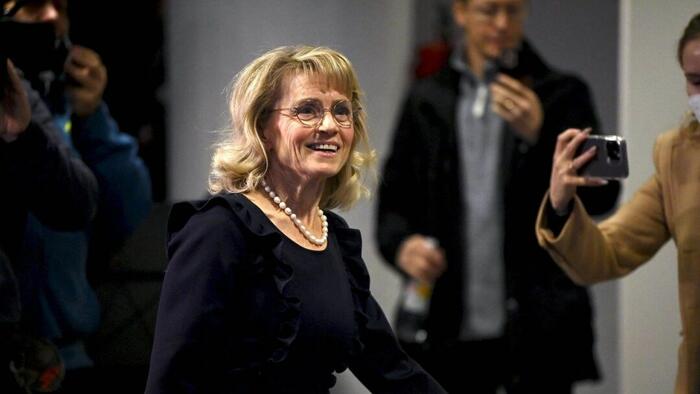
While testifying before the House Judiciary Committee last week, Paivi Rasanen, a member of parliament in Finland, recounted how she has been prosecuted since 2021 for quoting Bible verses to church members and on social media that questioned her church’s participation in a Gay Pride march. Although she was acquitted, first by a local district court and then by an appellate court, prosecutors appealed the decision to Finland’s supreme court, where the case currently sits.
“My prosecution shows how quickly democratic societies can abandon free expression when the state decides which beliefs are acceptable,” Rasanen told The Epoch Times.
“I never imagined that quoting the Bible in a Twitter post would lead to years of criminal charges, yet this is now the reality in Europe,” she said. “Americans should be concerned because once censorship is normalized, it never stays confined to one country.”
The trend among Western countries to restrict religious speech has spread beyond Europe, with the Canadian government currently advancing a bill that would remove a religious exemption from “hate speech” laws in the country’s Criminal Code. Similarly, newly proposed legislation in Queensland, Australia, would criminalize certain symbols and phrases, with penalties of up to two years in prison.
While speaking before Congress, Rasanen was joined by Graham Linehan, an Irish writer and comedian who was arrested upon traveling through Heathrow Airport in 2025 for statements he had made in America on transgender issues.
“For a decade, the British police have harassed me for expressing views that the majority of the public share,” Linehan stated. “We have simply been punished for objecting to fashionable yet incoherent orthodoxies.”
‘Foreign Censorship Threat’
Their testimony was underscored by the release of a Feb. 3 House report titled “The Foreign Censorship Threat,” which charged that “The European Commission, in a comprehensive decade-long effort, has successfully pressured social media platforms to change their global content moderation rules, thereby directly infringing on Americans’ online speech in the United States.”
More specifically, the report states that “though ostensibly meant to combat ‘misinformation’ and ‘hate speech,’ nonpublic documents produced to the Committee show that for the last 10 years, the European Commission has directly pressured platforms to censor lawful, political speech in the European Union and abroad.”
This included regular meetings between U.S. tech companies and European Union regulators to put “content moderation” policies and algorithms in place to conform to European laws regarding “hate speech” and “misinformation,” the report states. The EU claims these initiatives were voluntary, but subpoenaed emails from tech executives stated that “we don’t really have a choice.”
Judicial Committee Chair Jim Jordan (R-Ohio) told hearing attendees that, based on subpoenas issued to U.S. tech companies regarding their correspondence with EU officials, a pattern of compelled censorship emerged that included U.S. citizens.
“The European Commission successfully pressured social media companies to change their global content moderation rules, directly harming the speech of Americans in the United States,” Jordan stated. He also referenced an incident in which European commissioner Thierry Breton warned X owner Elon Musk that his company may face penalties for posting an interview with Donald Trump during the 2024 presidential campaign.
“The European Commission is trying to censor speech and meddle in elections worldwide,” Jordan said. “When the European Commission makes censorship demands, platforms have to listen.”
Safety or Control?
According to the European Commission’s website, the Digital Services Act (DSA) “empowers citizens by strengthening the protection of their fundamental rights online and giving them greater control and more choices when they navigate online platforms and search engines.” The DSA also requires platforms to “minimise the risks of exposing citizens, including children and young people, to illegal and harmful content.”
Critics of EU speech laws say they have become a tool to punish U.S. tech companies for allowing any content that a European country has deemed to be illegal. In countries such as Germany, that could include insulting government officials.
French member of the European Parliament Virginie Joron called the DSA a “Trojan horse for surveillance and control.” Joron accused government officials of having “seized upon the DSA as a political tool to control speech, particularly targeting platforms like X, Facebook, and Telegram.”
And legal analysts say that the reach of the DSA extends beyond Europe.
The DSA “creates a pathway for foreign governments to influence public debate inside the United States without ever passing a single American law,” Lorcan Price, an Irish barrister who defended Rasanen and testified at the House hearing, told The Epoch Times.
“The EU’s Digital Services Act gives European regulators unprecedented leverage over American tech companies, which means European speech rules can end up shaping what Americans are allowed to say online,” Price said. “Once U.S. platforms are forced to comply with European censorship demands to avoid massive fines, those restrictions don’t stop at Europe’s borders.”
Enormous Fines and ‘Days of Action’
According to Price, U.S. companies have already been fined €3.8 billion for violating EU speech codes, and Spain has announced that it will impose criminal charges against company owners for violations.
“The enormous fines levied on X corporation by the European Commission since the last hearing, has proved beyond all doubt that the European Union means to strangle free speech by a systemic assault on U.S. companies,” Price told hearing attendees. “The EU has a multi-pronged strategy to open multiple investigations, to add more and more regulations and to impose crippling fines, and ultimately, I fear, to attempt to break up or ban companies such as X who are pro-free speech.”
Europe has become increasingly aggressive in prosecuting speech crimes, with Germany leading the effort. In June 2025, German police conducted early morning raids on 140 residents who were accused of violating speech laws, as part of Germany’s 12th annual “day of action against hate-posts.”
Germany prosecuted 10,732 of its citizens for “hate speech” or “harmful speech” in 2024, according to Germany’s Federal Criminal Police Office. Similar actions have taken place in at least a dozen other European countries, according to Europol, the EU’s law enforcement agency.
These prosecutions have had a chilling effect on public expression. In a 2025 Cato report, author David Inserra stated that Germans now feel increasingly “unable to express their opinions, with multiple polls finding around 44 percent of Germans expressing such concerns, up from 16 percent in 1990.”
The Risks of an Unregulated Internet
The issue of online censorship has recently been complicated by the spread of child sexual abuse images and nonconsensual sexualized images of public figures, many of which were created by artificial intelligence.
On Feb. 3, French police raided the offices of X, the social media company owned by Elon Musk, charging the company with permitting child pornography and pornographic deepfake images on its site. They also summoned Musk for questioning.
British regulators are also investigating instances in which Grok, X’s AI chatbot, created numerous sexualized nonconsensual deepfake images at the request of X’s users. In 2025, the United States passed the “Take It Down Act,” which requires internet service providers, social media sites, and search engines to take down nonconsensual sexual material within 48 hours of being notified, and subjects individuals who post such material to up to two years imprisonment.
In addition, children’s access to online pornography has prompted many lawmakers, in Europe and America, to advocate for higher age limits to be imposed on internet access.
In the United States, the age limit for children to access the internet is currently 13. Compliance with such laws, however, generally requires that tech companies verify the identity of whoever uses their apps and websites.
Loading recommendations…
Read the full article here