

It’s one of the hardest threats to escape.
ADVERTISEMENT

ADVERTISEMENT
You meet in the street. It seeps through the air. Sometimes it slips into your home.
Excessive noise is putting Europe under strain. Around 112 million people are at risk —roughly 20% of the continent’s population.
“Excessive” refers to annual average sound levels above 55 decibels across the day-evening-night period, and above 50 decibels at night.
The consequences can be severe. According to the European Environment Agency(EEA)prolonged exposure to transport noise is linked to an estimated 66,000 premature deaths each year in Europe, as well as 50,000 new cases of cardiovascular diseases and 22,000 cases of type 2 diabetes.
The toll on children is no less alarming. In 2021 alone, transport noise exposure contributed to more than 560,000 cases of impaired reading comprehension, 63,000 behavioural problems and 272,000 cases of childhood obesity.
Cars, trains, planes: Where noise hits hardest
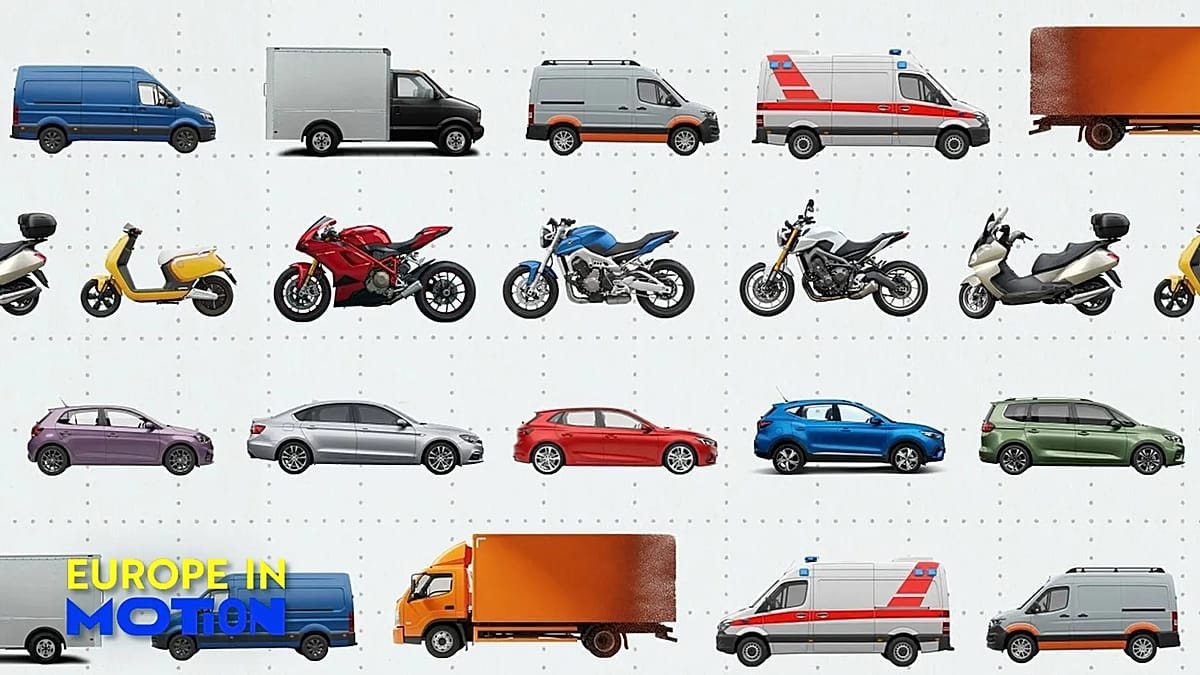
Road traffic — including cars, bikes, and vans, is the number one danger — affecting 92 million people.
Railways are the second most common source of excessive noise, plaguing 18 million residents, followed by aeroplane noise, which affects 2.6 million.
French people are the most affected overall, with more than 20 million residents exposed to street noise above the 55 decibel threshold.
Corsica, as well as most areas bordering Italy in the regions of Provence-Alpes-Côte d’Azur and Rhone-Alpes show some of the worst rates in France.
Neighbouring Italy has a big problem with railways. Around 5.3 million are exposed to excessive railway noise — the highest number in Europe.
Germany, meanwhile, has to reckon with aeroplanes, with almost one million people affected.
In percentage: Where is it most peaceful to sleep at night?
Microstates aside, France leads Europe when it comes to noise nuisance, with 36% of citizens disturbed by sounds above the safe threshold — well ahead of similarly sized neighbours like Italy and Spain (25% respectively) and Germany (26%).
Looking at all countries, Luxembourg (62%) and Cyprus (58%) top the noise charts.
On the flip side, the quietest corners of Europe are Slovakia, Portugal and Estonia, followed by Greece.
Night-time peace is strongest in Estonia, where just 3% of people are reached by dangerous volumes.
And seeking silence isn’t as easy as it seems, as only 34% of the population has access to green and quiet areas within a 400-metre walking distance from their homes, the agency says.
Marine and terrestrial wildlife equally under threat
Beyond human health, high levels of noise pollution can also harm the natural environment.
The EEA report indicates that at least 29% of protected areas in the 2000 Natura network are affected by noise levels that could be detrimental to wildlife, including marine habitats.
Parts of the English Channel, the Strait of Gibraltar, swaths of the Adriatic Sea, the Dardanelles Strait and some regions in the Baltic have been classified as the marine areas with the highest underwater noise exposure in Europe.
How much progress has been made to reduce noise pollution?
“Progress in decreasing the number of people exposed to harmful levels of noise has been slow,” the EEA states.
The 2021 EU action plan ’Towards zero pollution for air, water and soil’ aimed to cut the number of people chronically disturbed by transport noise by 30% in 2030 (compared to 2017 levels).
In reality, estimates show that, between 2017 and 2022, the number of people annoyed by transport noise in the EU declined by only 3%.
The EEA says that in order to get closer to the target, countries should prioritise upstream measures that reduce noise at the source for the largest number of people.
For example, regulating noise emissions from road vehicles, including interaction with pavement and reducing vehicle speed limits in urban areas.
Train-wise, the agency recommends regular rail grinding and maintenance to smooth tracks. For aeroplanes, it suggests optimising aircraft landing/take-off patterns to avoid populated areas, as well as promoting the use of quieter aircraft.
Read the full article here