

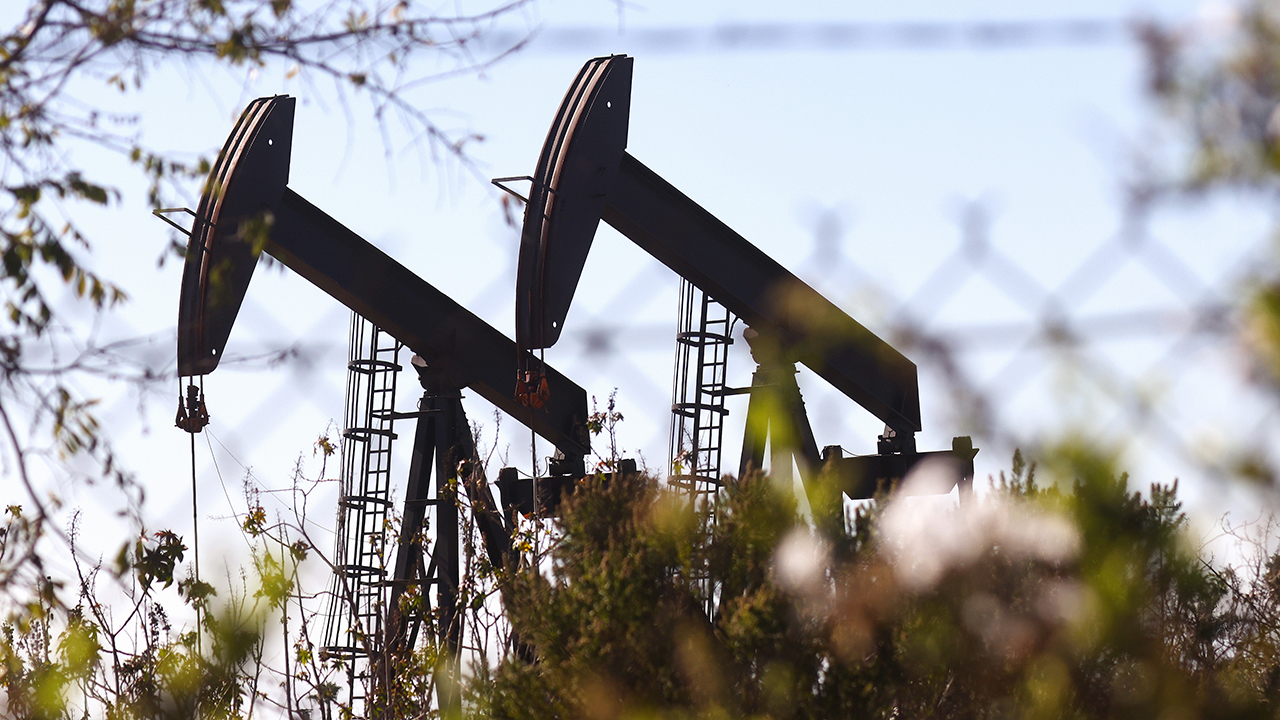
As fears grow that a potential U.S. strike on Iran could choke off global oil supplies and send prices soaring, former Energy Secretary Dan Brouillette says strong American production is keeping a lid on a $100-a-barrel price shock for now.
“What we are not seeing is a lack of supply in the marketplace. That is traditionally what would drive prices higher. That is not the case today,” Brouillette said Monday.
Instead, he said the recent jump reflects traders factoring in the possibility that escalating tensions — including a potential Iran strike — could disrupt oil shipments through the Strait of Hormuz, a narrow waterway that carries roughly 20% of the world’s petroleum liquids.
He told FOX Business that oil is “plentiful” in the marketplace thanks to the U.S. “producing more… than we ever have.”
SCOTT BESSENT SAYS IRAN UNDERSTANDS ‘BRUTE FORCE’ AS TRUMP WEIGHS OPTIONS AMID NUCLEAR STANDOFF
“We’re setting records, and that’s bringing stability to the marketplace,” he said, adding, “so rather than $100 a barrel oil today, we’re seeing prices in the mid-60s.”
His comments came as crude hovered around $66.59 per barrel at the time of broadcast, following a recent jump fueled by rising tensions with the Islamic Republic.
Brouillette said he expects prices to stabilize in the coming weeks, as uncertainty, rather than actual shortages, continues to drive short-term volatility.
“This is really a risk price today. It is not a supply price,” he said. “And I think we’re going to see that for some time to come.”
MADURO;S FALL PUTS IRAN’S DEEP ENERGY AND DEFENSE COOPERATION WITH VENEZUELA AT RISK
Brouillette argued that with supply remaining strong, prices should eventually stabilize rather than spike.
“I think you will see them stabilize over a period of time,” he told Maria Bartiromo. “We’re looking at mid-‘60s today. It won’t surprise me that we see it go down slightly, especially if we have a situation in Iran where they return to what might be referred to as polite society.”
A shift in Iran’s posture — or a broader political change that brings more Iranian crude back onto the global market — could further ease pressure, he said.
“If this regime goes away and that oil becomes available, we’re looking at potentially another million, million-and-a-half barrels of oil coming onto the world market,” Brouillette said.
“That’s going to significantly alter the supply situation, and it could push prices slightly lower.”
Read the full article here