

Big legacy U.S. and European automakers are frantically dialing back their electric vehicle bets, scaling back once-hyped roadmaps to full electrification as demand for these vehicles implodes.
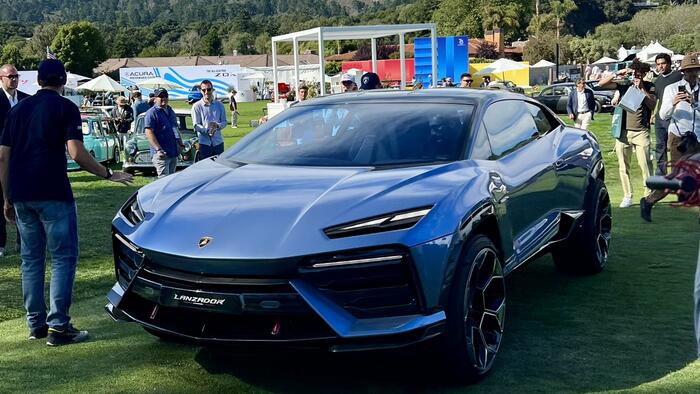
The latest automaker to reverse course is not a mass-market sedan or SUV maker, but a luxury supercar brand: Lamborghini.
CEO Stephan Winkelmann told the UK’s The Sunday Times that he has ended plans to build EVs, saying customers are not seeking quiet supercars and that demand has collapsed.
Winkelmann said that EV development risked becoming “an expensive hobby” for the car company. He stated that the previously announced all-electric concept car, Lanzador, will no longer be part of its future lineup of supercars.
He noted that the “acceptance curve” for EVs in Lamborghini’s target market was flattening and “close to zero.”
Winkelmann said the Lanzador will be replaced by a plug-in hybrid electric vehicle. He added that the Italian carmaker will produce internal combustion engines “for as long as possible.”
“EVs, in their current form, struggle to deliver this specific emotional connection,” Winkelmann explained, pointing out that customers who buy luxury cars seek the sound of a roaring engine.
The slower path toward full electrification, or in some cases partial electrification, is not just a Lamborghini story or limited to the luxury auto market. There has also been a sharp reversal by mass-market automakers over the last six months or so, as they dial back EV ambitions or entirely scrap their electrification plans:
-
Ford: Hit with a $19.5 billion charge, canceled multiple planned EV programs, and redirected spend away from larger EVs toward hybrids and other priorities.
-
General Motors: Announced a $6 billion charge to unwind some EV investments, alongside factory and battery-plant adjustments to better match demand.
-
Stellantis: Booked 22.2 billion euros in charges tied to scaling down EV ambitions; it has also been bringing back more gasoline-powered options in parts of Europe as EV demand sags.
-
Volkswagen Group: Delayed key next-gen EV efforts like Trinity into the early 2030s, and separately took a major hit tied to Porsche slowing parts of its EV rollout.
-
Porsche: Has delayed some EV launches and extended combustion and hybrid plans in parts of the lineup.
-
Mercedes-Benz: Pushed out prior all-EV timeline assumptions, now targeting up to 50% electrified (EVs + hybrids) by 2030, slower than earlier expectations.
-
Volvo Cars: Eliminated its 2030 EV-only target and moved to a more flexible path that includes hybrids.
-
Honda: Slashed planned electrification/software investment and shifted emphasis toward hybrids; it also put a major Canada EV supply-chain plan on hold for about two years.
-
Aston Martin: Delayed its first BEV (again) and emphasized plug-in hybrids first.
-
Bentley: Signaled that hybrids are likely to remain beyond prior all-EV timelines as it adjusts its strategy.
-
Ferrari: Targeted 40% internal combustion engine, or ICE, cars, 40% hybrid, and 20% fully EV sales by 2030. EV target is down from a prior goal of 40% of EV sales.
The pivot by Western automakers comes as the West dials back on “climate crisis” policies, which have crushed manufacturing bases from Germany to the U.S. Midwest. Deindustrialization trends have proven to be nation-killing, and green spending has been nothing more than the most significant misallocation of human resources in history (read here).
Loading recommendations…
Read the full article here