

Stay informed with free updates
Simply sign up to the Management consulting myFT Digest — delivered directly to your inbox.
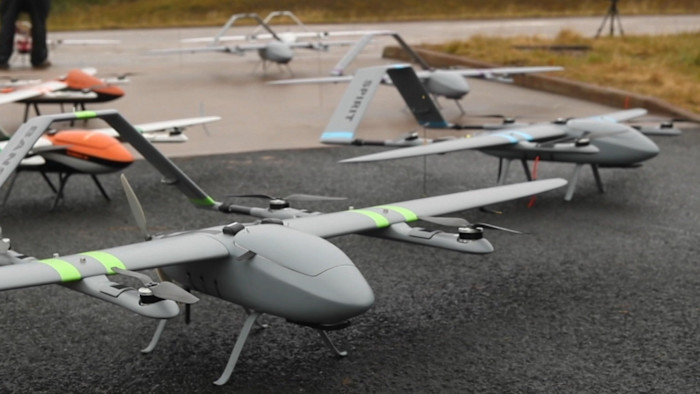
In a dreary field in Cumbria, 20 drones took flight into an ominous sky. They looked innocuous, almost like small white planes, but each carried a potentially deadly payload.
This was a drone swarm. They moved in synchronised formation while just three humans maintained control — a major advance in drone engineering at the time of the trial, five years ago.
The UK government last year signalled that it wanted to incorporate high numbers of these AI-enabled drone swarms into the armed forces, as it boosts its defence spending in response to the Ukraine war and to reduce dependence on the US.
But Europe’s established defence groups have struggled to pivot to design and produce some of the newer technologies the military want.
This has allowed nimbler start-ups, with simpler supply chains, to move in and disrupt parts of the market to deliver some of the equipment needed, including drones.
This environment has led to a surge in work for defence consultants. Firms are increasingly being plied with work, says Hugues Lavandier, who leads McKinsey’s aerospace and defence practice in Europe. “This industry, for the most part for the past 30 years, has been asked to do one thing: produce as little as possible at the lowest cost. And suddenly we’re asking them to produce as quickly as possible, as much as possible, [but] still at a low cost.”
The defence sector has seen a rash of deals and strategic shifts as big contractors choose between building their own expertise or buying smaller companies. Within two years, the relatively unknown Blue Bear Systems Research that led the Cumbria drone swarm trial was bought by Swedish defence group Saab; while BAE Systems has set up FalconWorks, its own technology research centre.
Defence has emerged as a rare bright spot for advisers on those deals. It is seen as one of the fastest-growing pockets of advisory work in Europe when much of the industry has faced sluggish corporate demand for advice since the pandemic.
Source Global Research forecasts UK defence consulting revenues will grow 8 per cent in 2026 to £1.6bn, outpacing last year’s 6 per cent rise and the 3 per cent annual average growth in the previous four years.
Constrained public sector budgets have historically limited the amount spent on consultants. But as defence spending has risen following the outbreak of the Ukraine war and contractors have come under increasing pressure to respond, so demand for external advice has grown.
Some firms have bolstered their teams of defence specialists to tap into the increased demand in Europe. McKinsey has “mobilised and upskilled” its defence teams across Europe, and Boston Consulting Group has given more of its consultants higher security clearance in case there is a sharp rise in demand.
Lessons from Ukraine, where start-ups rapidly deployed AI-enabled drones, have forced Europe’s contractors to rethink how they innovate.
The “shift in mindset” towards newer technologies means traditional players are competing in a “disrupted” sector and need more big-picture strategy advice and rapid execution plans as they look at warding off “disruptive” entrants, says Harry Malins, partner in AlixPartners’s aerospace and defence practice.
AlixPartners partner and managing director Diane Shaw says conversations about defence deals have shot up. “The speed at which people have to respond [to current defence demands] generally pushes towards inorganic growth solutions.”
Contractors are eyeing up their competition and considering whether consolidating would help deliver projects faster.
Fresh capital is reinforcing the trend. Venture capital and private equity have poured into defence technology, with $4.3bn invested globally in aerospace and defence between January 1 and March 16 last year, almost matching the total for all of 2024, according to S&P Global Market Intelligence.
Some buyout firms have launched specialised defence teams, says Shaw. “Everybody’s interested in [defence] now, because there’s a whole wealth of money going in.”
Much of the consulting work is less glamorous than dealmaking though. Contractors building traditional weaponry still rely on supply chains that cannot sustain a jump in demand, and their manufacturing processes have often not been updated in line with technology used elsewhere.
Lavandier’s McKinsey team is focused on helping companies “scale up . . . [with] real urgency”. But increasing manufacturing is “complex by nature, because we are talking very low-volume high-complexity products. Ramping [up] that fast and at low cost is a real challenge”.
Shaw says “you’ve also got to ramp up internally”, describing companies that seek advice on how to execute new strategies fast. “How do you reorganise for efficiency and production and productivity?”
Even so, Diana Dimitrova, who leads BCG’s UK work on defence, says many defence groups remain “cautious” buyers of consulting services. The uptick will be measured. “They’re thoughtful about being cost competitive,” she says, in response to government pressure on keeping costs low, and as a result often seek low-cost avenues for advice before signing consulting contracts.
Back in Cumbria as the drone swarm touched down, Blue Bear Systems managing director Ian Williams-Wynn remarked that the technology would swiftly be copied by others: “We have to stay one step ahead of all of our adversaries and ensure that we are delivering next-generation technology today.” As Europe races to rebuild its defence capabilities, consultants will be central to the work of brokering deals and shaping strategy.
Read the full article here