

FT Alphaville had not previously seen this chart set, which is a shame because it is very funny:
This interesting comparison by the Borg was brought to our attention because it appears in a newly launched court case against Valve, the PC gaming leviathan. Reuters:
New York’s attorney general sued Valve, a video game developer whose franchises include Counter-Strike, Team Fortress and Dota, accusing it of promoting illegal gambling and threatening to addict children through its use of “loot boxes.”
In a complaint filed on Wednesday in a state court in Manhattan, Attorney General Letitia James said Valve’s loot boxes amounted to “quintessential gambling,” violating the state’s constitution and penal law, with valuable items often hard to win and many items worth pennies.
Valve, a video game developer, has made billions of dollars by letting children and adults illegally gamble for the chance to win valuable virtual prizes.
These features are addictive and harmful.
That’s why I’m suing to stop Valve’s unlawful conduct and protect New Yorkers.
— NY AG James (@NewYorkStateAG) February 25, 2026
You can read the press release here, and the full complaint here — it’s not very long (about fifty pages) and pretty clearly written. You can also check out our deep-dive into Valve from last year here, but the tl;dr is it’s an odd, very private company that — thanks to its platform Steam, the dominant market for PC games and add-ons — gets money like Charles Dickens.
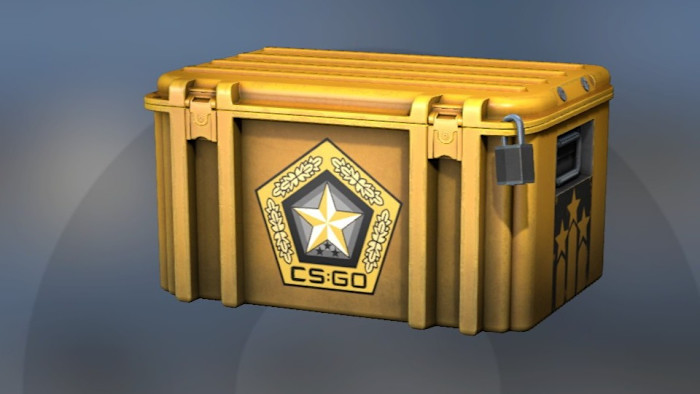
New York’s beef is all about Valve’s selling loot boxes, purchasable add-ons that give players a random in-game item, usually cosmetic. Many people who have played video games in the past couple of decades are likely to be familiar with this concept, which manifests in slightly different guises across a huge swath of titles, particularly in the free-to-play genre (where titles are normally supported by so-called ‘microtransaction’ income).
For James and New York, opening loot boxes has a simpler name: gambling.
From the complaint:
For most loot boxes, Valve charges users for a key that “opens” the loot box and awards the user one of several dozen virtual items. The virtual items have no impact on gameplay. Instead, they are used to decorate users’ weapons and characters as a display of status and affluence to other game players. Despite having no in-game functionality, these virtual items can be extremely valuable, with the rarest items worth thousands of dollars.
These virtual items, usually called “skins”, offer no advantage within a game. Instead, they change the appearance of something superficial, like the player’s character or their weapons. People like spending money on them for all the regular reasons people like spending money on frivolous cosmetic things: they make them feel special.
Valve was a pioneer of this business model through titles like Team Fortress 2. The concept is simple: you give people a game for free, then sell them digital packs which contains one or more random in-game items of variable rarity. This sometimes happens within a marketplace where users can also buy those items directly.
To be clear, this isn’t a hot or entirely unexpected thing for the Empire State to pick a fight over: loot boxes have been making people mad for years, with the Danes and the Quinault Indian Nation among those to have clashed with Valve over skin sales in the past. As Polygon notes, however, these previous clashes have tended to fizzle out:
This is far from the first time a game developer or publisher has faced legal troubles over loot boxes, but these lawsuits rarely go anywhere. In late January, the Austrian Supreme Court ruled that loot boxes fall outside the jurisdiction of the country’s traditional gambling laws. Back in July 2022, the UK released a report with a similar statement, saying that it had no plans to amend gambling laws to include loot boxes. Belgium has banned loot boxes since 2018, but a 2022 study found that the law is rarely enforced.
Part of the reason for the loot box hate is that — across many titles — they can contain powerful in-game items, producing a “pay to win” dynamic in which users are in effect trading money for a chance to potentially improve their performance. As far as we understand, this isn’t an issue with many of Valve’s loot boxes, which are instead orientated towards cosmetics.
Another reason is that loot boxes often offer poor value against available benchmarks, with many gamers frustrated to receive chaff items (cosmetic or otherwise) that could be bought for less than the cost of the pack. This is where the gambling element comes in: players may be tempted to spend, say, £2 on a loot box (or equivalent), hoping that it might contain something “worth” £20. Or £200. Or more.
Here, Valve appears to have an issue. From the complaint:
When it first introduced loot boxes, Valve believed it was important to ensure that users would not feel they had chosen the wrong option—i.e., paid more for the key than the value of the item they won. As one senior Valve developer explained in 2014, Valve wanted to avoid a situation where a user who spent $2.49 to open a crate and received an item available for purchase on Steam for $0.50 would feel like they “just lost $2 of actual value.”
That concept was abandoned, however, and soon after their introduction, Valve’s loot boxes became losing propositions for users. Today, nearly every user who purchases a key and opens a loot box receives an item that is common, and worth less than what the user spent on the key. In such cases, users’ money would be better spent purchasing the item directly through the Steam Community Market at a far lower price. Indeed, in most cases users could have purchased 10 or 20 of the same item on the Steam Community Market with the money they spent to open the loot box.
The other reason is that these packs are just incredibly addictive. The New York complaint aptly compares them to a slot machine: most times that a player opens a loot box, they’re likely to get a common, low-value item. But every now and then, the algorithm will give them something ultra-rare, the equivalent of a big payout. Needless to say, this is an effective way to take advantage of human behaviour.
Complaint:
64. Valve designed the experience of opening a case [in Counter-Strike] to appear similar to the spin of a slot machine. When a user clicks the button labeled “Open to Keep,” an animation is displayed showing the unlocking and opening of the case, followed by a simulated spinning wheel with images of the various skins in the case’s drop list rotating across the display. Like a slot machine, the wheel spins rapidly at first and then gradually slows. When the wheel finally stops, the skin that appears in the center of the display, denoted with a yellow vertical line, is added to the user’s Steam inventory.
65. As shown in Figure J, the spinning wheel may come to rest immediately next to the icon for the rare and valuable item. This visual gives users the impression that they “almost” won the valuable item, a design feature associated with slot machines known as a “near miss.” In reality, the item that the user is awarded is determined by a random number generator on Valve’s server after the user clicks the button to open the case.
(The loot box system is roughly the same for other Valve titles like TF2 and DotA 2.)
On Steam, Valve’s platform, there’s an added edge to this. Users who have acquired cosmetic items via loot boxes can then sell those items on to other users, enabled by Steam’s “Community Market” or across a number of different reselling websites.
The (artificial) scarcity of rare items drives up prices for those items, resulting in instances like an (artificially) unique Counter Strike 2 AK-47 skin reportedly selling for a seven-figure dollar sum in 2024. In other words, users open these packs in the hope that they might contain a cosmetic item of extraordinary value.
The reality is normally more disappointing. Resale sites are flooded with the cheapest items, which are invariably worth less than a single loot box. In an uncited calculation, New York alleges — based, presumably, on resale prices — that roughly 96 per cent of Counter-Strike loot boxes contain an item worth less than the box cost.
Cosmetic items can be converted to cash without much difficulty. After a user sells a cosmetic item from one of Valve’s games on Steam, funds are paid into their Steam Wallet — forming a cash balance that can be spent on other things within the platform. Notably, this includes video game hardware, providing users with a means to convert virtual gains into durable goods. Complaint:
Steam users also can readily convert virtual items to cash by purchasing Steam hardware and then reselling it off platform. Indeed, an OAG investigator did so, converting a Counter-Strike skin called a “Stiletto Knife” to $180 by: (a) selling the skin on the Steam Community Market for Steam Wallet funds, (b) using the Steam Wallet funds received from the sale of the skin to purchase a Steam Deck, and (c) selling the Steam Deck for $180 in cash at a store that buys and sells electronics.
Alternatively, the large number of third-party sales platforms that exist will simply pay good, old-fashioned regular money. The existence of these sites, the complain alleges, is a key motivation for users who hope a loot crate might contain something worth far more than the cost of opening it:
Valve has long understood that third-party marketplaces are important to the economy of the virtual items it has created. By providing a means for users to sell their virtual items for cash, these marketplaces motivate users to purchase keys from Valve in the hopes of opening a loot box and winning a high-value item they can cash in. More loot box openings also means more virtual items will be sold, which drives transactions and Valve commissions on the Steam platform itself.
On top of these marketplaces, there are also sites are explicitly involve gambling. Valve says it cracks down on the latter variety of site, but New York’s contention is that the regular marketplaces encourage and enable gambling as well:
Indeed, Valve has expressly exempted sites that operate as marketplaces for Steam virtual items from its enforcement efforts against skins gambling sites and repeatedly restored Steam accounts operated by marketplace sites when those accounts were inadvertently suspended by Valve. Valve’s internal communications demonstrate that employees were well aware these marketplaces enabled Valve’s virtual items to be bought and sold for fiat currency, regularly referring to them as “cash out services,” “real money out sites,” and “trading sites.”
Much of the latter part of New York’s complaint hinges on the general harms of gambling, and the specific risk that (alleged) in-game gambling offerings presents to children. It’s unclear whether New York actually considers harms to children as specific grounds for restitution, or a useful way to win sympathy in court. (Counter-Strike and Team Fortress 2 are rated as Mature 17+, while DotA 2 is 13+. Steam does not enforce age checks.)
Regardless, here’s an excellent video from People Make Games that covers the (alleged) gambling markets adjacent to Valve products and the people who have fallen victim to them:
The causes for action, instead, are based much more around the wider “oops, we re-invented gambling” issue that seems to be cropping up a lot across America at the moment. New York:
Valve has knowingly engaged in a variety of conduct that materially aids gambling activity, including creating and establishing loot boxes, maintaining systems that enable users to open loot boxes, and soliciting and inducing users to open loot boxes. Valve also has knowingly profited from gambling activity through the sale of keys and loot boxes pursuant to an agreement or understanding whereby Valve participates in the proceeds of gambling.
We think this will be a fascinating case (and one that may offer another interesting view inside the Valve black box). FTAV is certainly not a lawyer, but the long-standing argument that loot boxes represent a form of gambling seems … pretty compelling? Valve makes perfect sense as a target due to its dominant position and the unique nature and scale of its resale markets — the huge amount of affection the company many gamers hold for the company is neither here nor there.
The consequences — should New York win — could of course go way beyond Valve. We can’t emphasise enough how prevalent loot boxes are: other games companies will be watching carefully to see how this one plays out.
Further reading:
— Valve conquered PC gaming. What comes next?
— Prediction markets barely make money; sportsbooks make money
Read the full article here