


The taxman cometh. In February, the tax authorities of four countries began to reconsider how they tax crypto.
In the US, the number of crypto ATMs hit nearly 40,000, returning to 2021 levels of interest in crypto kiosks. The number of installations had dipped significantly after the crypto crash of 2022.
Japan’s inflation dipped below 2% in February, less than in the United States. Berkshire Hathaway CEO Warren Buffett said earlier this year that dollar investments were looking less attractive as the yen is providing a more stable currency.
Bitcoin (BTC) was stuck below $70,000 this month. Many crypto observers have noted that US tariffs are putting pressure on the asset. US President Donald Trump’s new 10% levy has done nothing to alleviate this.
Here’s February by the numbers:
Four countries consider changes to crypto tax laws in February
The Netherlands’ House of Representatives, the lower house of the country’s parliament, advanced a tax proposal on Feb. 12. The draft law would introduce a 36% capital gains tax on unrealized gains on savings and liquid investments, including crypto.
Critics say the tax, which is supported by 93 of the 150 representatives, will chase money out of the country.
Detractors appear to have won out. The new Dutch cabinet said that it will reconsider the measure.
“There is a lot of criticism of the Actual Return Act. We are not deaf to that … The bill needs to be amended. The Minister and State Secretary will discuss this with the Senate and parliament,” a cabinet spokesperson said.
In Israel, the Israeli Crypto Blockchain & Web 3.0 Companies Forum launched a lobbying effort to reform the country’s crypto tax laws. Forum leader Nir Hirshmann-Rub said there is broad public support to relax laws on stablecoins and tokenization, as well as simplify compliance.
He noted that many Israelis already own and invest in crypto. “More than 25% of the public already has had crypto dealings in the last five years and more than 20% currently hold digital assets,” he said.
In Hong Kong, Financial Secretary Paul Chan said that the special administrative region is tweaking its tax laws. He said the Inland Revenue Ordinance will implement the Organisation for Economic Co-operation and Development’s Crypto-Asset Reporting Framework (CARF).
The CARF is a global tax exchange standard for crypto that aims to tackle tax evasion. It requires crypto service providers to report on client activity.
Vietnam has proposed a crypto transaction tax. Crypto transfers and trading would be exempt from the usual value-added tax. But transferring crypto assets through licensed service providers would incur a 0.1% personal income tax on the transaction value.
In India, which imposes a flat 30% tax on crypto gains and doesn’t allow users to offset losses, calls to reform the law have fallen on deaf ears. Despite intense lobbying, the proposed 2026 Union Budget did nothing to reform crypto tax.
Bitcoin stays below $70,000; Trump raises tariffs 10%
Bitcoin has had a rough past couple of months, and in February, it struggled to breach the $70,000 mark.
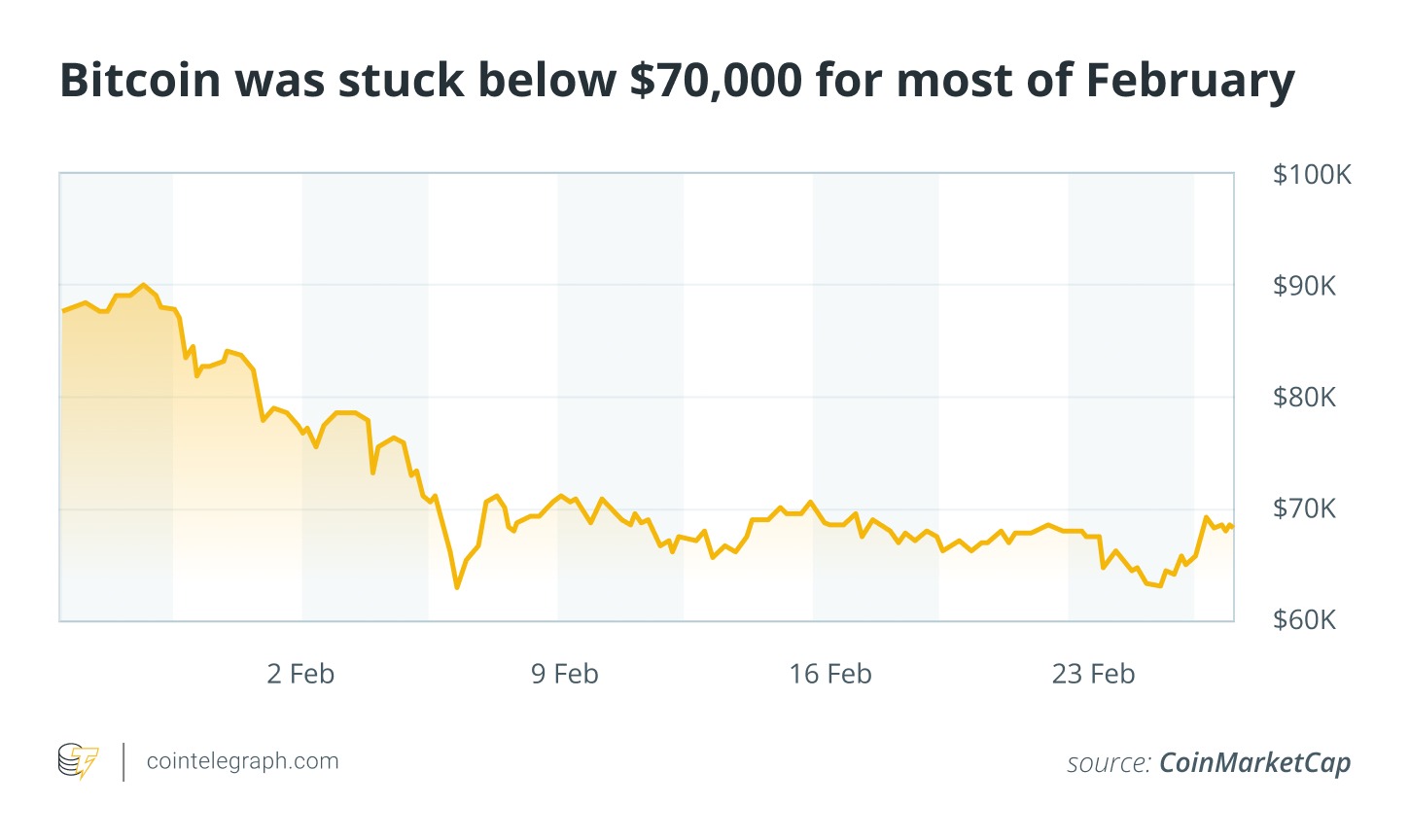
Analysts have cited several macro pressures on Bitcoin’s price. One is the lack of progress on the CLARITY Act, the US’ proposed framework for cryptocurrency markets. Lawmakers can’t agree on ethics provisions or possible bailout provisions, and prominent lobbies, namely the crypto and banking lobbies, are at loggerheads over stablecoin interest.
Related: When will crypto’s CLARITY Act framework pass in the US Senate?
Chris Waller, a governor of the United States Federal Reserve, said, “The lack of passing of the CLARITY Act I think has kind of put people off on this.”
Another issue is tariffs. The US Supreme Court invalidated the tariffs Trump implemented using the 1977 International Emergency Economic Powers Act (IEEPA). Trump responded by hiking global tariffs 10% using the Trade Act of 1974 as a legal foundation.
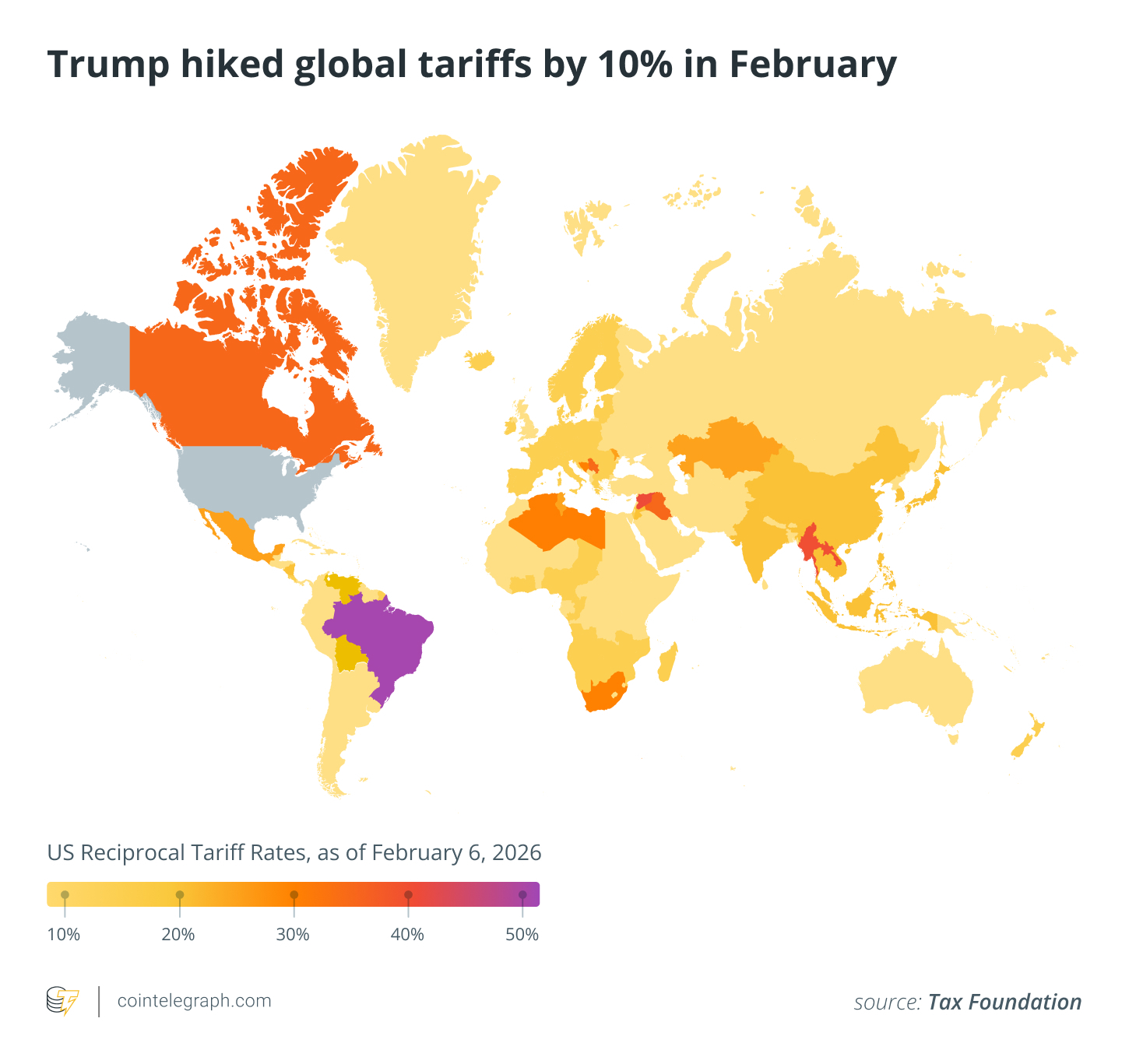
Crypto analysts and observers have noted the negative effect Bitcoin has on markets. Swan CEO Cory Klippsten said, “The biggest drag on Bitcoin price the past year has been tariffs … That’s the drag on risk assets in general, and in particular [with] Bitcoin, there’s just uncertainty around what’s gonna happen.”
Japan’s inflation dips below 2%, and Takaishi takes elections
The inflation rate of the Japanese yen has dipped below that of the dollar, falling below 2%, its lowest in three years.
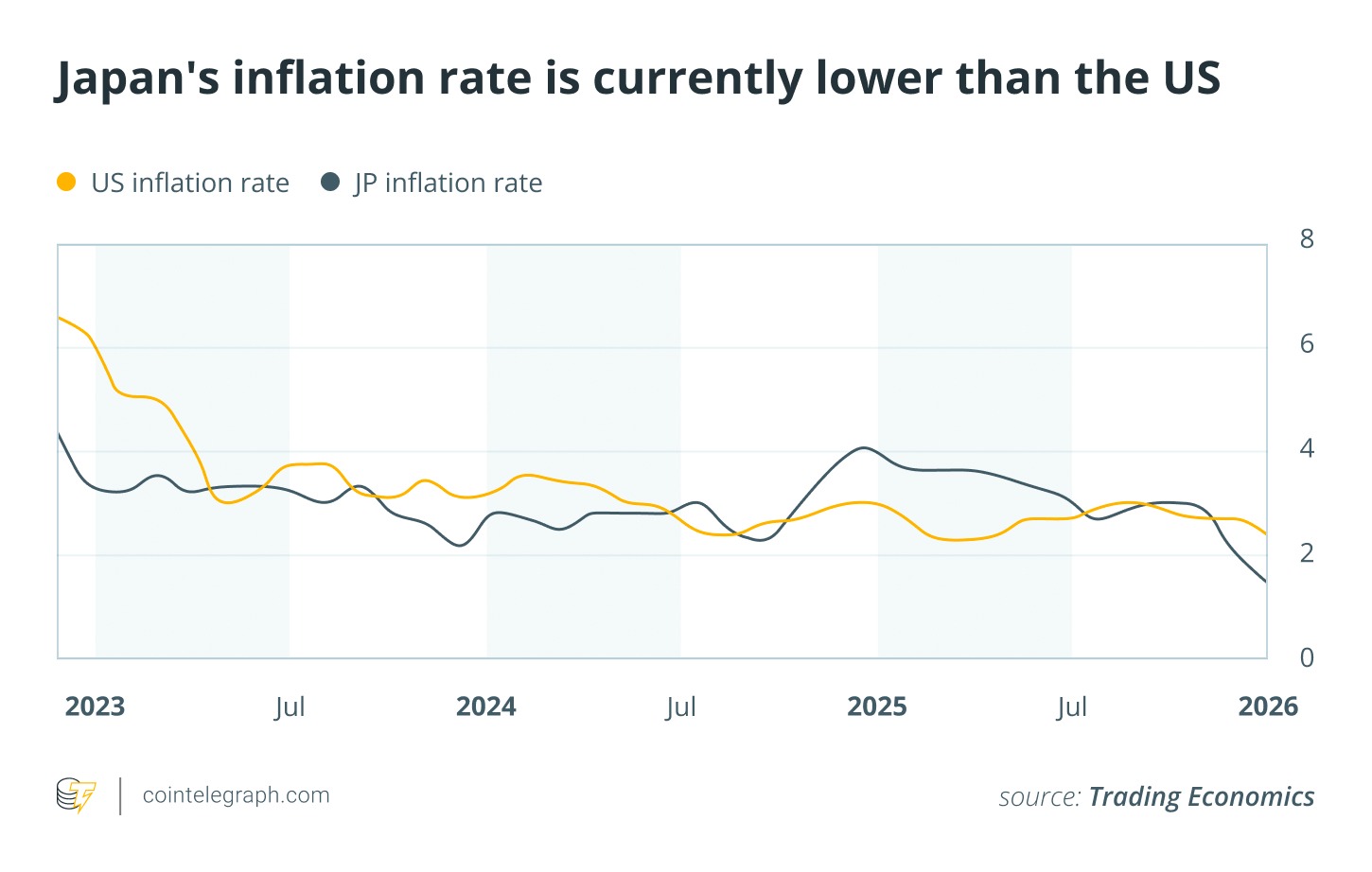
The new inflation low for the yen comes after Prime Minister Sanae Takaichi called for snap elections. The gamble hoped to restore the majority of the Liberal Democratic Party (LDP) to a parliamentary majority.
The gambit paid off, and now the LDP dominates the Japanese House of Representatives, the National Diet’s lower house, with a 316-member two-thirds majority.
Stock markets in Japan responded well. The Nikkei 225 (JP225) increased 10% on the month, spiking significantly after the Feb. 9 election.
[chart]
Japanese JP225 is up over 10% in February.
This could spell short-term trouble for Bitcoin, which tends to correlate with US equities, according to XWIN Research Japan. The increasing attractiveness of Japanese bonds could slow into US equity exchange-traded funds.
Related: BTC traders wait for $50K bottom: Five things to know in Bitcoin this week
Buffett said that his company will increase its investments in Japanese trading houses. These include five major “sogo shosha,” or wholesale companies: Itochu, Marubeni, Mitsubishi, Mitsui and Sumitomo.
Crypto ATMs number 40,000 as companies add new requirements
The number of cryptocurrency kiosks worldwide grew by 290 in February, bringing the total number up to nearly 40,000, according to data from Coin ATM Radar.
[graph]
290 crypto ATMs opened globally in February.
The number of cryptocurrency kiosks has fluctuated over the years. The total number dropped significantly after the crypto crash of 2022.
[graph]
Crypto ATMs globally now number nearly 40,000.
Regulators worldwide have raised concerns over crypto ATMs and the possibility of their use in money laundering, as well as scams. Some companies have taken strides to allay these concerns.
In February, the biggest Bitcoin ATM operator in the US, Bitcoin Depot, began phasing in user ID requirements for its terminals in the United States. The move followed pressure from regulators and lawmakers nationwide.
Magazine: Would Bitcoin really be at $200K if not for Jane Street? Trade Secrets
Cointelegraph Features and Cointelegraph Magazine publish long-form journalism, analysis and narrative reporting produced by Cointelegraph’s in-house editorial team and selected external contributors with subject-matter expertise. All articles are edited and reviewed by Cointelegraph editors in line with our editorial standards. Contributions from external writers are commissioned for their experience, research or perspective and do not reflect the views of Cointelegraph as a company unless explicitly stated. Content published in Features and Magazine does not constitute financial, legal or investment advice. Readers should conduct their own research and consult qualified professionals where appropriate. Cointelegraph maintains full editorial independence. The selection, commissioning and publication of Features and Magazine content are not influenced by advertisers, partners or commercial relationships.
Read the full article here