

Welcome back to the working week. In today’s newsletter:
-
The Middle East war spreads to Lebanon and Cyprus
-
Carney and Modi agree expanded trade deal
-
Inside Paramount’s battle plan to buy Warner Bros Discovery
-
And the alternatives to toxic sportswear
We begin in the Middle East as Operation Epic Fury enters its third day. What follows is a full briefing of the widening conflict.
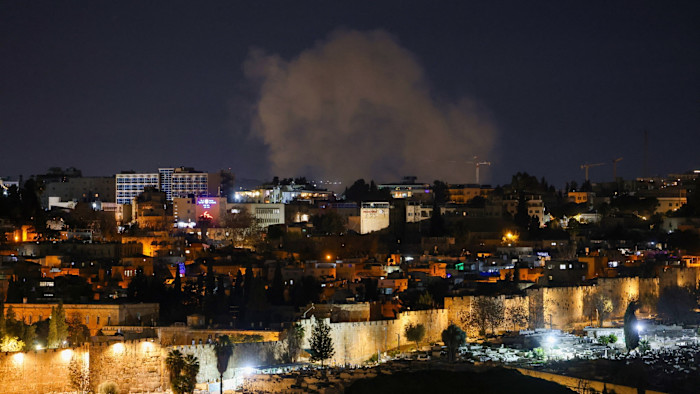
Conflict spreads: Israel has struck targets in southern Lebanon, killing 31 people and injuring 149, according to the Lebanese health ministry, after the Iran-backed militant group Hizbollah launched rockets at Israel overnight, expanding the war which began on Saturday morning. Israel’s military said it had carried out a wave of strikes targeting Hizbollah sites and a spokesperson refused to rule out a major ground offensive in Lebanon.
Meanwhile, Israel and the US resumed air strikes in Iran. Iranian state media said areas targeted this morning included the capital, Tehran, as well as Isfahan in central Iran, Yazd in the south and Sanandaj in the north-west. Iran’s Red Crescent humanitarian group said 555 people had been killed in the country so far and Kuwait’s Ministry of Defence said several US military aircraft crashed earlier in the day but said all crew members had survived.
The conflict also spread to the EU when a British military base in Cyprus was attacked by a suspected Iranian drone, the UK defence ministry said earlier today. The strike came an hour after Prime Minister Sir Keir Starmer announced he had granted the US permission to use British bases to launch sorties against Tehran. UK officials said there were no casualties in the Cyprus attack.
US President Donald Trump said the military campaign against Iran could last a month. “It’s always been a four-week process. We figured it will be four weeks or so . . . it’s a big country,” he told the Daily Mail yesterday.
In a six-minute video posted on his Truth Social platform on Sunday, Trump vowed that the military campaign in Iran would “continue until all of our objectives are achieved”. It was likely that more US soldiers would be killed, he said.
Market reaction: Energy prices surged today as trading resumed after the weekend. Oil prices rose as much as 13 per cent in Asia while the price of Brent crude, the international benchmark, hit $82.37 a barrel, its highest level in more than a year, before trimming some of the gains.
Most shipments of energy and commodities through the Strait of Hormuz, a vital waterway which runs along Iran’s southern coast, were suspended over the weekend. About a fifth of the world’s crude oil and liquefied natural gas passes through the strait, as well as vital commodities.
European gas prices surged 24 per cent in opening trading. Europe has increased its imports of LNG over the past few years as it seeks to phase out Russian gas imports. A rise in energy prices risks reigniting inflation around the world.
Commodity prices elsewhere rose today. Aluminium prices jumped nearly 4 per cent and methanol prices surged 6 per cent. The Middle East accounts for nearly a tenth of global aluminium production, most of which is exported through the strait, and Iran is the world’s second-largest producer of methanol, which is used in the production of chemicals, fertilisers and solvents.
The impact of the war was also felt in currency and equity markets. The US dollar rose 0.9 per cent against a basket of peers, including the euro and pound, and is on track for its biggest one-day gain since July.
Futures tracking the S&P 500 and the Nasdaq 100 indicated the indices would drop 1 per cent when Wall Street reopens later today. The price of gold jumped 2.6 per cent and airline shares dropped around the world.
The price of insurance covering ships travelling through the strait could rise as much as 50 per cent in the coming days, brokers have told the FT.
International travel: Air travel across the world has been disrupted after thousands of flights were cancelled over the weekend, leaving tens of thousands of travellers stranded.
Airports in Dubai, Abu Dhabi and Qatar remained closed on Monday. The Middle Eastern hubs are a major travel artery, with millions of passengers travelling between Asia and Europe or America using the centres for connecting flights.
Several airports in the Gulf were hit in the crossfire as Iran sent missiles and drones across the region. Dubai’s main airport, the world’s busiest international hub, was closed while airlines across the Middle East cancelled almost all of their flights on Sunday and Monday.
European and American companies cancelled travel to the region and told staff in Gulf countries to work from home.
The impact on Iran: Hassan Khomeini, the grandson of the founder of the Islamic republic and a potential candidate to become Iran’s next supreme leader, urged Iranians on Monday to place their trust in the interim leadership council.
Iran’s top political and military figures have tried to project an air of continuity and defiance since the death of the supreme leader Ayatollah Ali Khamenei was announced. They insist the succession will be conducted as laid out by the constitution as the country prepares for only the third handover of power since the 1979 revolution. Iran’s top security official ruled out negotiations with the US.
The leadership council is made up of President Masoud Pezeshkian, Gholam-Hossein Mohseni-Ejei, judiciary chief, and Guardian Council member Alireza Arafi, a powerful hardliner and potential succession candidate himself. The council is currently running the country and will oversee the succession.
Donald Trump said the leading candidates to run Iran had been killed during the military operation, complicating efforts by Washington to quickly engineer a political succession in Tehran. For the latest news follow our live blog.
Five more top stories
1. Canada’s Prime Minister Mark Carney and his Indian counterpart Narendra Modi have agreed to accelerate trade talks. The leaders met in New Delhi earlier today, where Carney announced the Comprehensive Economic Partnership Agreement that he said was aimed at doubling two-way trade to C$70bn ($51bn) by the end of the decade. Here’s more on the agreement.
2. Wealthy investors who ploughed hundreds of billions of dollars into private credit are pulling back, cutting off a key source of funds that investment giants including Blackstone, Blue Owl and Ares Management have used to fuel growth. Here’s more on what the slump means for the industry.
3. Barclays began blocking months ago certain transactions linked to Market Financial Solutions, a UK-based mortgage provider that collapsed suddenly last week amid fraud allegations, before freezing all accounts tied to the company in early January. Read the full story.
4. BYD sales fell by their biggest amount in five years in February as the Tesla rival’s pivot to export markets failed to offset slowing growth at home. The world’s biggest electric vehicle maker today reported that February sales dropped 41 per cent year on year.
-
More car industry news: Toyota has raised its offer to privatise its largest subsidiary, bowing to pressure from activist investors.
5. Zambia is refusing to pick sides in the race between global powers for critical minerals, its leader said. President Hakainde Hichilema argues that resource-rich African countries should resist pressure to align politically in exchange for investment because they are in strong negotiating positions.
Today’s big read
David Ellison, the son of Oracle co-founder Larry, has propelled himself into the Hollywood power structure in a few short years. If approved, Paramount’s plan to buy Warner Bros Discovery will fundamentally reshape the entertainment landscape. Here’s the inside story of how the 43-year-old former wannabe actor secured the prized Hollywood studio.
We’re also reading . . .
-
Trump’s epic gamble: The American president’s war against Iran dwarfs all his other interventions in ambition, recklessness and risk, writes the FT’s editorial board.
-
Lloyd Blankfein: People are complacent about risk of financial crisis, says the former Goldman Sachs chief executive.
-
Women in business: The numbers show pay gaps are lower when the CEO is a woman. Shame there are so few of them, writes Pilita Clark.
Map of the day
Trump has repeatedly rebuked his predecessors for their foreign misadventures. But the US president’s newly rebranded Department of War has been busier during the past 12 months than in his entire first term. Our visual story details Trump’s pivot to military interventionism.
Take a break from the news . . .
Most workout wear that clings to our skin is laden with chemicals. Laboratories are concocting ideas to bring alternatives to market.
Read the full article here