
DTF St Louis review — Jason Bateman and David Harbour bond darkly in brilliantly surreal infidelity drama

Unlock the Editor’s Digest for free
Roula Khalaf, Editor of the FT, selects her favourite stories in this weekly newsletter.
If True Detective had possessed even a sliver of a funny bone, it might have looked something like DTF St Louis. Creator, writer and director Steven Conrad has produced an eerie, unsettling and tragic new series ostensibly about men but really about desire and loneliness in the Missouri suburbs. It is both surreal and wry, unexpectedly tender and viciously humorous. This is a brilliantly, brutally fresh TV show.
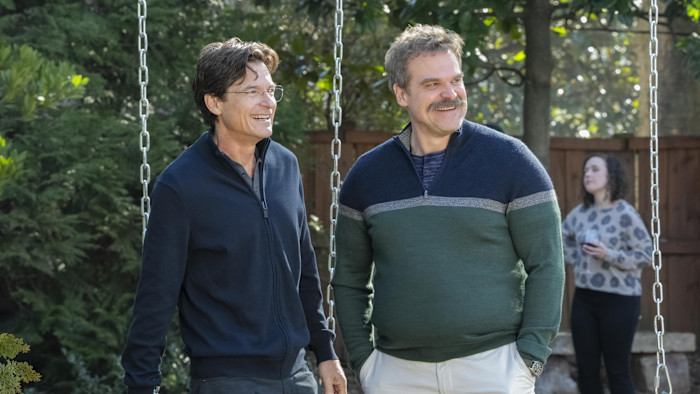
Ozark star Jason Bateman, who has carved out a career in slippery men, plays St Louis weatherman Clark Forrest, who rides a recumbent “nerd bike” to work and plays wholesome board games with his wife and children. While reporting on a tornado, ASL interpreter Floyd Smernitch (David Harbour) saves Clark from being clattered with a road sign. The two strike up a friendship over steak, yoga and backyard games of cornhole.
This blossoming bromance takes a darker turn when Clark introduces Floyd to a local app called DTF St Louis, an Ashley Madison-style hook-up service to facilitate married people having affairs. Floyd’s marriage to Carol (an icy, brittle Linda Cardellini) is struggling, and Floyd seems all too keen to investigate other options. Clark’s true role in the story unfurls slowly, but little is as it seems.
The show is shot beautifully and strangely, with a Lynchian eye for the uncanny gothic of the suburbs. Floyd has a stepson, Richard (Arlan Ruf) — think AJ Soprano at his most belligerent — who hates him, despite Floyd’s best efforts to bond. In therapy, when they are forced to hug, the camera looks up at them from the place where Floyd’s sizeable belly should be. These disorientating perspectives, from the edge of a moving garden swing or from a woman’s feet, give the sense that reality is warping.
DTF is too funny and absurd to be pretentious, but nevertheless, it has a stagey, theatrical feel, particularly in the dialogue. Characters repeat lines and talk over each other. Their references are ordinary and mundane — they visit or talk about Jamba Juice or a bland hotel called the Quality Garden Suites, where an affair takes place — but the characters twirl their words around as if they’re on a dancefloor. Entire storylines take place in montage, with a single-note soundtrack to ramp up the weirdness. It feels different to anything else, though in a similar galaxy to the work of Nathan Fielder or Tim Robinson.
If the series starts out as a skewed comedy looking at infidelity in middle age — one can only imagine how producers reacted to Harbour being turned into a real-life emblem of betrayal on his ex-wife Lily Allen’s album West End Girl — then it screeches to a halt midway through the first episode. A key character is found dead and the series evolves into a knotty murder mystery. The introduction of two detectives, Donoghue (Richard Jenkins) and Jodie (Joy Sunday), takes it further down the road of David Lynch, as they trade insights on terms such as “porn positive”, “intimacy play” and the existence of Indiana Jones-themed erotica. Both Sunday and Jenkins are dry and excellent.
DTF St Louis is grubby and banal, silly and deadpan, and then Harbour signs along to a camp pop act performing on stage and it becomes all those things at once, with an extra dose of poignancy. It is rare that a show arrives as fully formed as this.
★★★★★
On Sky and NOW in the UK and on HBO Max in the US now
Read the full article here