

Good morning. The Indian government is in a bit of a bind after the US sank an Iranian ship in the Indian Ocean. The vessel was on its way back from a ceremonial parade in Visakhapatnam last month. The government has yet to issue a statement on the attack. Meanwhile, airspace restrictions continue but rescue flights have managed to return some stranded passengers to India.
In today’s newsletter, India is closely watching the results of elections in Nepal. But first, the war raises concerns over gas and oil supply in India.
Supply constraints
With the war in the Middle East expected to continue for several weeks, India is seeking ways to minimise the impact of a potential energy shock.
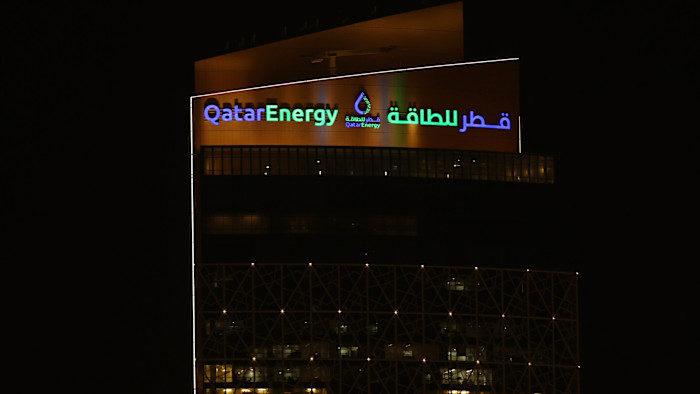
India’s biggest gas importer, Petronet LNG, said on Wednesday that it had issued force majeure notices to its supplier QatarEnergy, as well as some customers, because ships are unable to access the Ras Laffan port near Doha for loading. The notice exempts Petronet from its contractual obligations, given that events are beyond its control. QatarEnergy has invoked the same clause in its client contracts because it is unable to ensure supplies. About 40 per cent of India’s gas supply comes from Qatar. Petronet’s major customers are oil and gas marketers such as Gail and the Indian Oil Corporation, which supply to a wide swath of corporate and retail clients.
The situation with oil is somewhat better. On Tuesday, petroleum minister Hardeep Singh Puri told local media that the country had sufficient reserves of crude oil and petroleum products to ride out supply constraints. Government sources have been quoted this week as saying the country has enough crude, petrol and diesel for about 50 days. Last month, the minister told parliament that India’s strategic oil reserves could sustain the country for 74 days, though his goal was to build reserves covering 90 days. It’s too late for that now, at least in the present crisis.
The real conundrum is where the country will source crude from. After spending the past few months reducing its purchases, India will now have to revert to buying more crude from Russia. But this risks drawing the wrath of US President Donald Trump and jeopardising New Delhi’s relationship with Washington. At the same time, India cannot afford to wait for the supply situation in the Middle East to improve. It is a damned-if-you-do, damned-if-you-don’t situation. A return to larger volumes of Russian oil now appears inevitable.
Crude prices have risen 16 per cent in the past week. The impact of this on the rupee is already visible, with the currency falling to its lowest ever level of Rs92.30 against the dollar. Despite the central bank’s efforts, the currency is likely to continue weakening, at least for as long as crude prices remain elevated. Higher oil costs will inflate India’s import bill and widen the current account deficit. Inflation, which has largely been in check, will begin to increase if oil prices continue to rise. India is also a big importer of fertilisers, which are another crucial commodity now under pressure because of shipping difficulties. The subsequent rise in costs will mean a proportionate increase in the government’s existing subsidies for fertilisers, further straining national coffers.
At the retail level, things are stable for now. There is no run on petrol stations, even though Indian WhatsApp groups are beginning to fill up with advice urging people to fill up their fuel tanks. Since the government had not intervened to cut the prices of petrol and diesel when crude prices had been low, oil marketing companies now have some buffer to absorb higher costs for the moment.
Are you worried about India running out of fuel? Hit reply or email me at [email protected]
Recommended stories
-
Iran could wage a new “tanker war” in the Strait of Hormuz. Meanwhile, the Pentagon is eyeing Ukrainian interceptor drones to counter Iran.
-
China has cut its growth target.
-
Europe is braced for the Middle East refugee wave.
-
Pakistan has thwarted JPMorgan Chase’s efforts to buy a historic New York hotel.
-
KPMG has picked ex-Australia boss Gary Wingrove as its next global chief.
-
Here’s where New York’s top chefs eat after service.
New in Nepal
Nepal will elect a new leader today. The “millennial rapper” Balendra Shah is a frontrunner to win the election in the Himalayan kingdom, which has been governed by an interim government since September 2025.
The 35-year-old Shah began his career as a rap artist, often taking on the themes of corruption, political stagnation and rising unemployment in the country. He later entered politics, contesting the mayoral election in Kathmandu in 2022 as an independent candidate, which he won by a thumping margin of more than 23,000 votes.
His main opponent is the country’s former prime minister KP Sharma Oli, who was forced to resign after a huge youth uprising last year. While his government’s decision to ban some social media sites was the immediate trigger for the violence, it came after years of simmering resentment about corruption, nepotism and the lack of economic opportunities for young people in the country. The median age of the population in Nepal is 25, which is below the Asian average of 32.
For India, neither Shah nor Oli are easy options. Shah is fighting the election as part of the Rastriya Swatantra Party, which is politically centrist, although anti-India sentiment remains fairly widespread among many of its young supporters. Oli’s Communist Party of Nepal, meanwhile, has traditionally leaned closer to Beijing.
Once the results are out, New Delhi will have to launch a charm offensive in Kathmandu, much like the one it is attempting in Bangladesh at present. Although the Modi government has often articulated a neighbourhood-first policy, its effectiveness has been limited; in fact, relations in the region have only deteriorated in the past few years. Longstanding border issues with Nepal remain, and New Delhi has often been accused of interfering in its neighbour’s internal affairs.
As India grapples with a changing global order, taking control of the neighbourhood is key, with China having already made several inroads. The fresh start in Nepal and Bangladesh provides an opportunity for New Delhi to wipe the slate clean and begin again. Will they take it or blow it?
Go figure
As SpaceX prepares to go public, FT Alphaville has done a deep dive into the unconventional exercise in price discovery that this jumbo offer will entail. Elon Musk’s sharp financial engineering has helped SpaceX and xAI gain more than $1tn in valuation in less than 18 months.
Read, hear, watch
I am watching How to Get to Heaven from Belfast, a hilarious comedy-thriller series on Netflix. It’s about three friends who reunite after the death of their old classmate and get sucked into a mystery they really don’t have the skills to solve. It’s a quintessential Irish comedy.
I also have tickets for a concert by Vishal and Rekha Bhardwaj this weekend, which I am looking forward to. I love their music even more than his films, which is saying quite a lot.
Buzzer round
Which 103-year old company, that was recently the subject of a frenzied bidding war, first brought synchronised music and dialogue to cinema?
Send your answer to [email protected] and check Tuesday’s newsletter to see if you were the first one to get it right.
Quick answer
On Tuesday, we asked if you think the Indian economy is reasonably insulated from global events? Here are the results. Almost 60 per cent of you are not confident that it is.
Thank you for reading. India Business Briefing is edited by Tee Zhuo. Please send feedback, suggestions (and gossip) to [email protected].
Read the full article here