
These Are The Retailers That Change Prices Most Often…And When They Offer The Largest Discounts

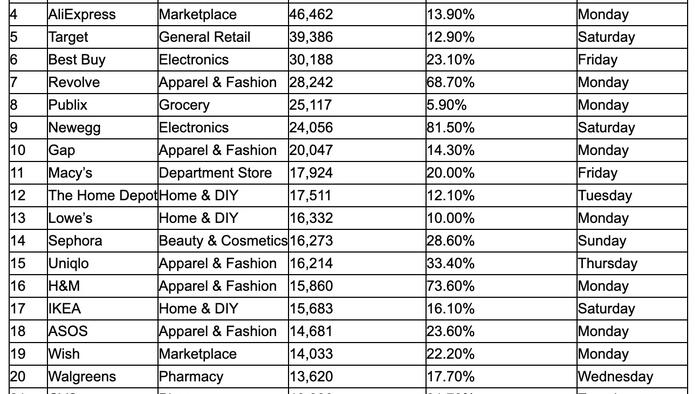
Dynamic pricing is becoming a defining feature of modern retail, with more of America’s best-known brands adjusting prices in real time based on demand, timing, and market conditions, according to Decodo.
A new report from Decodo, which analyzed more than 1.5 million data points across 120 global eCommerce retailers, reveals which companies are changing prices most often — and when shoppers are most likely to find a deal.
At the top of the list is Amazon, which recorded 116,509 price changes over the past year — far more than any other retailer analyzed. The online marketplace also offered the deepest average discounts, with prices dropping by 35.3% on average. According to the data, Wednesday is the best day for shoppers to find bargains on Amazon. Walmart ranked second with 68,926 price adjustments and an average discount of 10.6%, while Kroger came third, making 55,601 changes with an average 9.1% reduction. For both Walmart and Kroger, Monday emerged as the most favorable day for deals.
Other major retailers also showed significant pricing activity. Target recorded 39,386 changes, with Saturday offering the best savings. In electronics, Best Buy posted over 30,000 price shifts, with Friday standing out for discounts. Fashion brands were particularly active, with companies such as H&M, Uniqlo, and ASOS frequently adjusting prices to keep pace with trends and demand.
The United States leads the world in dynamic pricing activity, accounting for 542,946 price changes — far ahead of Germany, India, the United Kingdom, and Korea. Notably, U.S. price shifts were almost evenly split between increases and decreases, reflecting a highly competitive retail environment. This challenges the perception that dynamic pricing primarily pushes costs upward, as roughly half of all recorded adjustments were price reductions.
Decodo found that that by sector, fashion experienced the greatest volatility, with 427,340 pricing changes over the past year. Electronics followed with more than 351,000 adjustments, and groceries saw nearly 319,000 changes. Health and beauty, DIY and home, and online marketplaces also recorded substantial fluctuations, underscoring how widespread automated pricing strategies have become across industries.
The report comes amid growing political scrutiny of dynamic pricing practices in several U.S. states, where lawmakers are questioning whether constantly shifting prices disadvantage consumers. Decodo’s leadership argues that the approach allows businesses to respond quickly to demand, manage inventory more efficiently, and remain competitive in fast-moving markets. Company representatives also note that about half of all price changes tracked in the study resulted in lower prices, meaning shoppers regularly benefit from real-time discounts.
The findings are based on a year-long analysis conducted between January and December 2026, during which researchers monitored 12 products on each of more than 120 eCommerce websites across 40 countries. Prices were recorded every four hours, generating more than 1.5 million data points. As dynamic pricing becomes increasingly common, the data suggests that shoppers who pay attention to timing — particularly specific days of the week — may improve their chances of securing better deals.
Loading recommendations…
Read the full article here